Introduction
An honest conversation about
BBL and acne.
When patients ask whether BBL can help with acne, the answer requires nuance. BBL is not an acne treatment in the traditional sense — it will not replace a well-designed medical acne management plan, topical protocols, or hormonal assessment when those are relevant. But dismissing it entirely misses the real value it can bring to a certain part of the acne picture.
What BBL can do meaningfully is address the aftermath — the redness, the discoloration, the vascular and pigment markers that persist long after an acne lesion has resolved. For many acne patients, this aftermath is what they see in the mirror every day and what affects their skin confidence most. That is where BBL earns a genuine, clinically honest role.
This guide explains exactly where BBL fits in acne care, what it may help improve, what it does not replace, and how Amy Robbins approaches acne-supportive laser planning at Youthful Magnolia in Fort Worth.
Where It Fits
Where BBL fits
in the acne care picture.
Acne care is typically divided into two categories: active management (controlling new breakouts) and sequelae management (addressing the marks, discoloration, and scarring left behind). BBL occupies a specific and valuable place in the second category — particularly for the vascular and pigmentary changes that follow inflammatory acne.
BBL's mechanism is selective photothermolysis — delivering light energy that is preferentially absorbed by specific chromophores. For acne-related concerns, two chromophores are most relevant: oxyhemoglobin in dilated capillaries (contributing to post-inflammatory redness and PIE) and melanin in post-inflammatory hyperpigmentation (PIH). BBL can target both, which is why it can be a genuinely useful tool in acne care — even if it is not a direct acne treatment.
There is also some clinical basis for BBL's effect on Cutibacterium acnes — the bacteria involved in inflammatory acne — particularly with the 420nm filter. While the evidence here is less robust than for photorejuvenation applications, some patients do experience reduction in active breakouts as part of a BBL series. This should be framed as a supportive benefit rather than a primary indication.
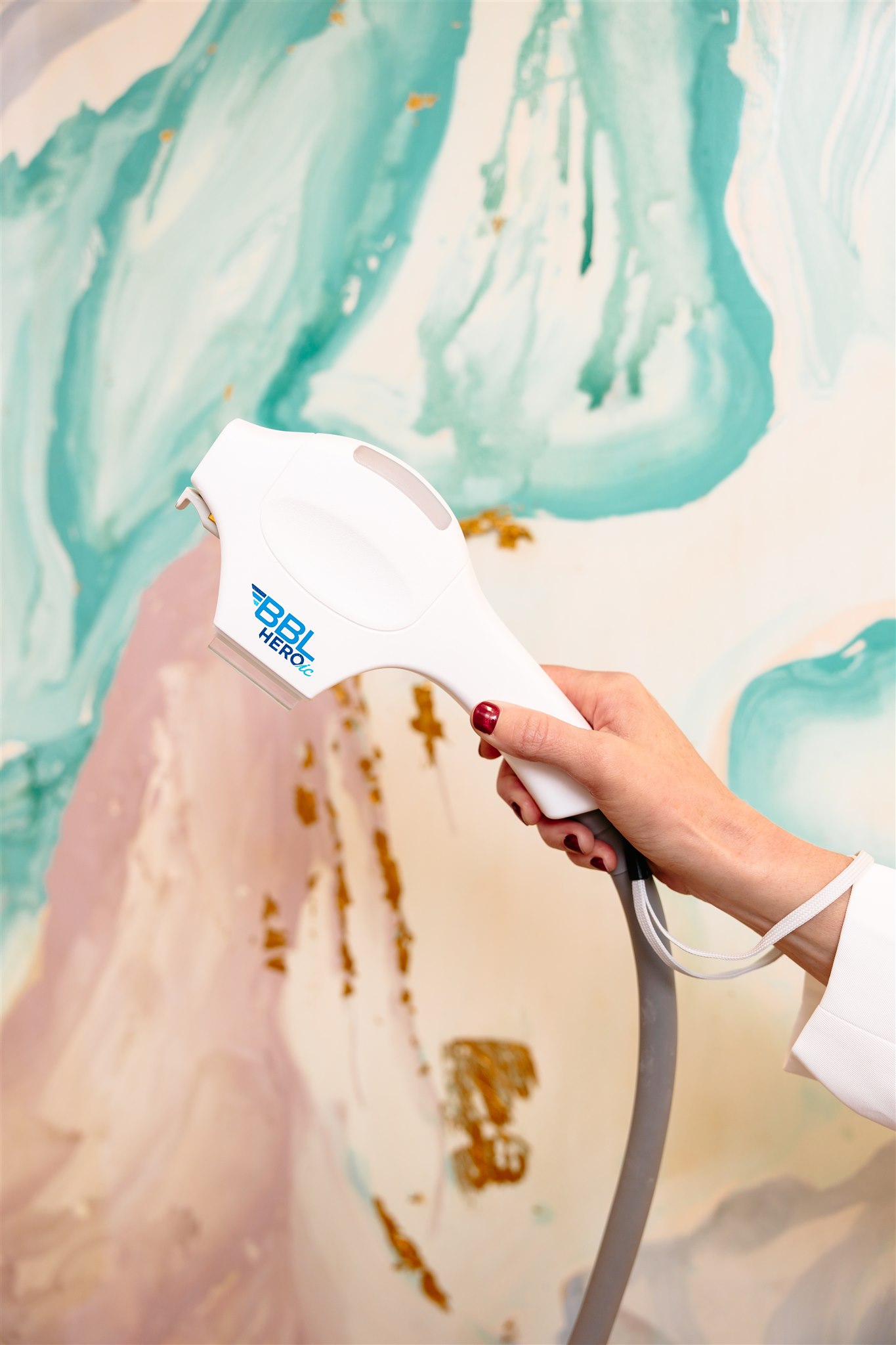
Acne-related laser planning at Youthful Magnolia is built around understanding both the active concern and the aftermath — and designing a protocol that addresses the right part of the picture.
What It May Improve
What BBL may realistically
help with in acne patients.
Post-Inflammatory Erythema (PIE)
The pink and red marks that linger after an inflammatory acne lesion heals. These are vascular in nature — caused by dilated superficial capillaries — and are well within BBL's targeting capability. PIE that might take months to fade naturally can often be significantly improved in 2–3 BBL sessions.
Post-Inflammatory Hyperpigmentation (PIH)
The brown or tan discoloration that can follow acne, particularly in patients with more melanin-rich skin or history of UV exposure. BBL's melanin-targeting wavelengths can address PIH — though results are more variable by skin type, and darker Fitzpatrick types require careful evaluation before treatment.
Inflammatory Redness & Skin Tone
Diffuse facial redness associated with acne-prone or rosacea-overlapping skin presentations can be meaningfully improved with BBL's vascular targeting. For patients whose overall skin tone is chronically red or inflamed in appearance, BBL can help bring the baseline down.
Active Inflammatory Acne (Supportive Role)
Some clinical evidence supports BBL's antibacterial effect on C. acnes bacteria, particularly at shorter wavelengths. Patients in a BBL series often notice some reduction in active breakout frequency. This is a supportive benefit — not a replacement for medical acne management — and is most relevant when other acne triggers are already being addressed.
What It Doesn't Replace
What BBL does not
replace or substitute for.
Being clear about this matters. BBL is a light-based treatment that operates at the surface and upper dermis. It is not a hormonal regulator, not a prescription-strength antibacterial, not a skin barrier repair protocol, and not a structural scar treatment. Patients who pursue BBL expecting it to clear acne itself — rather than support the aftermath — are likely to be disappointed.
Medical acne management
Topical retinoids, antibiotics, benzoyl peroxide, hormonal therapies, and oral medications address the root mechanisms of acne. BBL does not. Patients with moderate to severe active acne should have a medical management plan in place before pursuing laser treatments.
Skincare protocol and barrier support
A well-designed skincare routine — appropriate cleansers, non-comedogenic moisturizers, sun protection, and targeted actives — is foundational to acne management and to getting the most from any laser treatment. BBL does not substitute for this layer.
Atrophic acne scar treatment
BBL does not remodel scar tissue or address textural acne scarring — the pitting, indentations, and ice-pick scars that develop from deep inflammatory lesions. For structural scarring, ProFractional, TriBrid, or a HALO treatment are more appropriate modalities. BBL and resurfacing treatments are complementary: BBL for discoloration, fractional resurfacing for structural correction.
Hormonal and internal acne triggers
For patients whose acne is hormonally driven — cyclical breakouts, cystic jaw and chin patterns — no laser treatment addresses the upstream hormonal environment. This requires medical evaluation. BBL can address what hormonal acne leaves behind; it cannot prevent the acne itself.
Amy Robbins · Founder
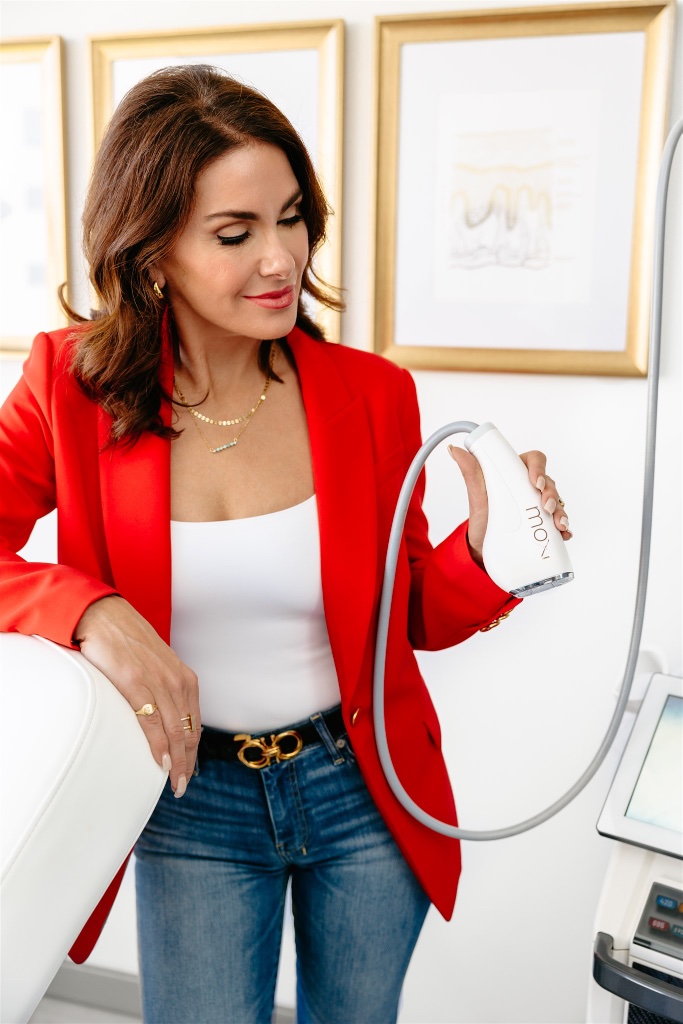
My role in acne-related laser planning is to help patients understand what BBL can genuinely do for them — and what it cannot. Discoloration and redness after acne? BBL can meaningfully help. Preventing future breakouts or treating deep scarring? That is a different conversation entirely.
Amy's Perspective
Amy
Robbins
"The patients I see with acne are often dealing with two separate problems — the active acne itself, and the marks it has left behind. BBL has a genuine, evidence-supported role in addressing the second problem. But I always make sure patients understand what it can and cannot do — because overpromising serves no one."
— Amy Robbins, Founder · Youthful Magnolia
Amy approaches acne-related laser planning with the same evidence-first mindset she brings to all treatment decisions — identifying precisely where BBL fits, what it does not replace, and how it integrates into a comprehensive skin health strategy for each patient.
Book a ConsultationCandidacy
Who may be a good candidate
for BBL with acne-related goals.
Patients with post-inflammatory redness (PIE)
Those with persistent pink or red marks following acne breakouts are among the strongest candidates for BBL. PIE responds predictably to BBL's vascular targeting and is one of the most satisfying applications in this category.
Patients with post-acne discoloration (PIH)
Brown marks following acne — particularly in lighter Fitzpatrick skin types — can be meaningfully improved with BBL. Darker skin types require careful evaluation to determine appropriateness and settings.
Patients with controlled or mild active acne
BBL can be performed on patients with mild to moderate acne, particularly when active breakouts are not severe or widespread. Patients with controlled acne and residual discoloration are well-positioned for a BBL series.
Patients already on a medical acne management plan
BBL works best as a complement to — not a replacement for — a thoughtful acne management approach. Patients who are already managing active acne medically and want to address the residual discoloration are the ideal use case.
Patients NOT currently on isotretinoin
Isotretinoin (Accutane) is a contraindication for laser treatments. Patients must be off isotretinoin for at least 6 months before BBL is appropriate. This is non-negotiable and will be confirmed at your consultation.
Fitzpatrick types I–IV (assessed individually)
BBL is most predictably safe and effective for lighter skin types. Fitzpatrick type IV requires careful parameter selection. Types V–VI are generally not candidates for standard BBL protocols. Skin type is always assessed at consultation.
Our Approach
How Youthful Magnolia approaches
acne-supportive laser planning.
At Youthful Magnolia, we do not position BBL as an acne cure. We position it as a precision tool for a specific part of the acne picture — one that can meaningfully improve the residual discoloration and redness that patients often find most distressing.
Every acne-related laser consultation begins with an honest assessment of where a patient actually is in their skin journey: is their acne currently active? Is it medically managed? What specific concerns are they trying to address — active inflammation, PIE, PIH, textural scarring? The answers determine whether BBL is appropriate, what settings are right, and how it fits alongside the rest of their management plan.
For patients with both discoloration goals and textural acne scarring, we may recommend a staged or combined approach — addressing the surface pigment and redness with BBL before moving to a fractional resurfacing option for structural correction. For patients whose primary concern is ongoing active acne without good management, we will have an honest conversation about addressing that first.
01
Skin Assessment
Understanding your acne history, current activity, skin type, and the specific marks you want to address — before any treatment is discussed.
02
Honest Fit Assessment
Determining whether BBL is the right tool for your specific concerns, your current acne state, and your skin type — with no upselling of treatments that do not fit.
03
Integrated Plan
Positioning BBL within a broader skin strategy — coordinated with any ongoing acne management, skincare, and any additional treatments needed for scarring or other concerns.

"The discoloration is often what patients see most — and that is exactly where BBL earns its place."
PIE and PIH can linger for months or years after acne resolves. BBL addresses both the vascular redness and the pigment discoloration — giving patients a meaningful, realistic path to clearer-looking skin even while active acne is being managed separately.
— Amy Robbins, Founder
Common Questions
BBL for acne —
answered honestly.
Can BBL treat active acne?
How many BBL sessions are needed for acne-related concerns?
Will BBL clear my acne completely?
What is post-inflammatory erythema (PIE) and can BBL help?
What is post-inflammatory hyperpigmentation (PIH) and can BBL help?
Is BBL safe for acne-prone skin?
Can I do BBL while on acne medication?
How does BBL compare to other acne-related laser options?
Does BBL for acne cause breakouts to worsen?
Where can I get BBL for acne-related concerns in Fort Worth?
Related Treatments
Continue Reading
What Is Forever Young BBL? A Fort Worth Guide
The research behind long-term BBL maintenance and why consistent treatment builds durable skin quality over time.
Can BBL Help Redness and Rosacea? A Fort Worth Guide
An honest, clinical overview of what BBL can and cannot do for redness-prone and rosacea-affected skin.