
Introduction
Regenerative aesthetics is often
misunderstood.
The phrase "regenerative aesthetics" is becoming more familiar. It shows up in wellness conversations, in clinic marketing, and increasingly in the vocabulary of patients who are thinking more carefully about how they age and how they care for their skin over time. The problem is that it is being used to describe a wide range of things — some thoughtful, some not.
At Youthful Magnolia, regenerative aesthetics is not a marketing category. It is a genuine philosophy of care — one that emphasizes long-view planning, biological support, natural-looking outcomes, and treatment integration over trend-chasing or disconnected service accumulation.
Peptide therapy is one part of that conversation for some patients. Not all patients — and not automatically. Whether and how peptide therapy fits into a regenerative aesthetic plan depends on the individual, their goals, their existing care context, and what they are actually trying to support. That determination requires a real consultation, not a default recommendation.
This article explains what regenerative aesthetics actually means in clinical practice, why it is different from trend-based approaches to aesthetic care, and how peptide therapy may — for the right patient — fit meaningfully into a broader, more thoughtful plan.
The Foundation
What regenerative aesthetics
actually means.
Regenerative aesthetics, at its core, is about supporting the body's own capacity to maintain, repair, and improve over time. It is not about doing more treatments. It is not about filling, tightening, or correcting as much as possible. It is about working with biology — understanding how skin ages, how tissue recovers, how collagen is built and lost, and how thoughtful care can support better outcomes over years, not just days.
The treatments that fall within this category — PRF, peptide therapy, NAD+ therapy, IV therapy, recovery support — are not interchangeable. Each has specific mechanisms, specific applications, and specific candidacy criteria. Using the word "regenerative" to describe all of them equally is often a simplification that obscures more than it clarifies.
What connects them is a shared orientation: these approaches aim to support rather than replace. They work with the body's existing biology rather than overriding it. And they tend to produce results that accumulate over time rather than appearing instantly and fading just as fast.
Long-View Planning
Thinking about skin and wellness health across months and years — not just the next appointment.
Biological Support
Working with the body's own repair and renewal mechanisms rather than bypassing them.
Treatment Integration
Understanding how different modalities interact and complement each other over time.

Every regenerative aesthetic conversation at Youthful Magnolia begins with understanding the full picture — not just the immediate concern.
The Distinction
Why regenerative planning is different
from trend-based aesthetics.
Trend-based aesthetics is driven by what is popular. A treatment appears in social media feeds, in magazine editorials, in wellness podcasts — and demand rises. This is not inherently wrong. Trends sometimes reflect genuine clinical advances. But trend-based planning has a structural flaw: it treats each treatment in isolation, without asking how it fits into the patient's broader picture.
Regenerative planning starts differently. It begins with a question about the whole: What is this patient trying to support over the long term? What are the actual biological dynamics at play? What treatments fit this patient's specific goals, timeline, and body — and which do not?
The result is often a more restrained, more coherent, more durable plan. Not because restraint is a virtue for its own sake, but because thoughtful integration tends to produce better outcomes than accumulated trend-chasing. A patient who has built a consistent, well-timed plan with appropriate biological support often looks better over ten years than one who has collected a series of disconnected interventions.
Trend-Based Approach
- Isolated treatments driven by what is popular
- Goals defined by trend cycles rather than biology
- Results that may be dramatic short-term but inconsistent over time
- Service accumulation without strategic coherence
- Provider changes with each new treatment decision
Regenerative Planning
- Integrated treatments built around individual biology and goals
- Long-view thinking across months and years
- Results that accumulate and improve with consistency
- Coherent plans where each element supports the others
- A trusted provider relationship that evolves over time
The Entry Point
Where peptide therapy
enters the conversation.
Peptide therapy does not belong in every regenerative aesthetic plan. This is an important distinction — and one that separates thoughtful clinical practice from trend-driven recommendation. The question is not whether peptides are interesting. They are. The question is whether they are appropriate for this patient, for these goals, at this moment.
The conversations where peptide therapy may become genuinely relevant tend to share certain characteristics. The patient is thinking beyond a single treatment. They are asking about wellness, about recovery, about why some people seem to age differently than others. They are interested in how the body can be better supported over time — not just corrected in isolated areas.
In those conversations, peptide therapy may enter as one component of a broader regenerative strategy — sitting alongside laser work, aesthetic injectables, regenerative wellness, or recovery support depending on what the individual patient is working toward. Not as a headline. As a piece of a coherent whole.
Applications
How peptides may fit into wellness, recovery,
and skin-supportive planning.
The biological mechanisms that peptides may support are varied — and this is part of what makes thoughtful provider guidance so important. Different peptides work differently, at different sites in the body, through different pathways. Grouping them into a single category obscures rather than clarifies. What matters is matching the right approach to the right patient and the right goal.
With that context, here are some of the areas where peptide therapy may become relevant within a regenerative aesthetic framework:
Wellness Support
For patients whose regenerative planning includes a wellness dimension — energy, vitality, general biological optimization — certain peptides may be considered as part of a broader wellness strategy alongside IV therapy, NAD+, and lifestyle support. This is never a standalone fix, but may be a meaningful component of a thoughtfully constructed plan.
Recovery Support
Patients undergoing more intensive aesthetic treatments — including deeper laser resurfacing, PRF, or combined protocols — may be interested in how recovery can be better supported. Certain peptides may support tissue repair processes and recovery biology. Whether this applies to a specific patient depends on context, health history, and clinical judgment.
Collagen-Aware Planning
Collagen is central to skin quality, structure, and aging. Certain peptides are of interest in the context of collagen biology — how collagen is synthesized, maintained, and supported over time. When skin strategy includes a collagen-supportive dimension, peptide therapy may be part of that conversation for appropriate patients.
Body-Focused Regenerative Goals
Some patients are pursuing <Link to="/weight-body-treatments-fort-worth">body-related</Link> goals alongside their aesthetic plan — metabolic support, body composition strategy, or integrated wellness planning. Depending on the individual, peptide therapy may be one layer of a broader body-focused regenerative conversation.
Long-Term Skin Strategy
For patients thinking about their skin across years rather than appointments, the question of what supports long-term skin quality — beyond topical care and laser maintenance — may include a conversation about peptide therapy. This is always individualized and always discussed in the context of the full care plan.
Note: all applications are patient-specific and discussed within individual health history and care context. No outcomes are guaranteed.
The Bigger Picture
Why integrated treatment strategy
matters more than any single tool.
The most thoughtful aesthetic plans are rarely built around one isolated treatment. They are built around a coherent understanding of what the patient is trying to achieve — and then structured to approach that goal from multiple angles in a coordinated way.
A patient working on long-term skin quality might combine consistent laser maintenance with collagen-supportive strategies and, where appropriate, wellness-level regenerative support. A patient focused on facial structure and natural-looking results might combine thoughtfully placed aesthetic injectables with skin quality treatments and recovery-oriented care. In some cases, peptide therapy may be one layer of that integrated picture.
What makes integration meaningful rather than just additive is coherence. Each treatment in the plan should have a clear reason for being there, a clear relationship to the others, and a clear contribution to the overall goal. Peptides, when they fit, fit because they support something specific — not because they are trending or because someone read about them online.
How the plan may connect
Laser & Light
Skin quality, tone, collagen
Injectables
Structure, volume, expression
Wellness
Energy, recovery, vitality
Peptides
Biological support layer
IV & NAD+
Cellular restoration
Recovery
Healing, tissue support
Not every element is appropriate for every patient. The right combination is determined at consultation.

"The best plans feel effortless because they were built with intention."
Treatment integration is not about layering more onto a patient's plan. It is about understanding which pieces genuinely support each other — and having the discipline to leave out what does not serve a clear purpose.
— Amy Robbins, Founder
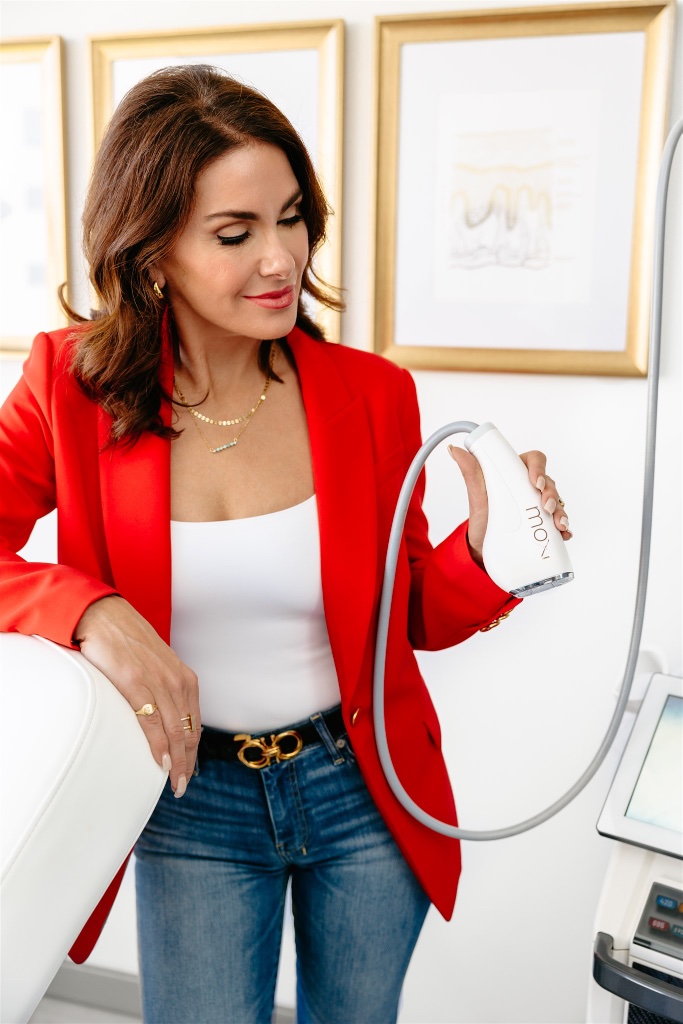
Amy's Perspective
Amy
Robbins
"Regenerative aesthetics is not about doing everything. It's about understanding what fits, what supports the skin and the patient well over time, and what creates the most natural, sustainable result."
— Amy Robbins, Founder · Youthful Magnolia
Amy Robbins founded Youthful Magnolia around a specific belief: that intelligent, integrated care produces better long-term outcomes than chasing isolated results. Her training as a nurse anesthetist and her background in advanced practice and functional medicine give her a clinical lens that most aesthetic providers simply do not have. She approaches regenerative aesthetics not as a service category, but as a philosophy of how care should work.
When Amy discusses peptide therapy with patients, she is not asking "which peptide do you want?" She is asking: What are you trying to support? What does your full health and wellness picture look like? And does peptide therapy genuinely serve that goal — or is something else more appropriate?
Book a Consultation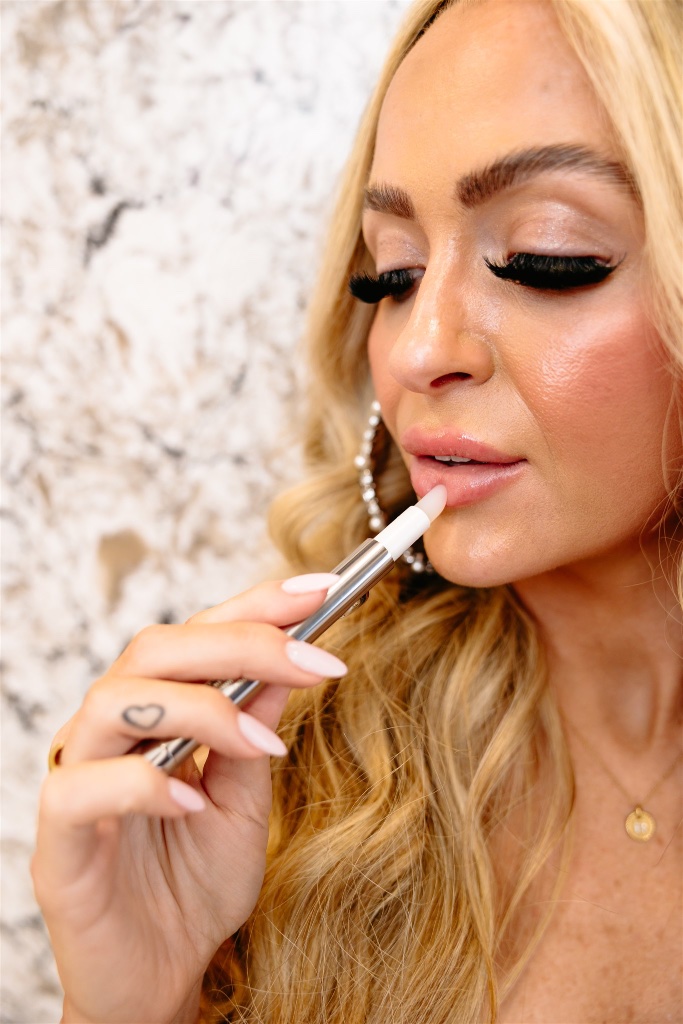
The treatment environment at Youthful Magnolia — designed to reflect the thoughtfulness, precision, and calm of the care delivered within it.
The Care Philosophy
How peptides may complement
a broader care philosophy.
The phrase "peptide therapy" is increasingly being used as shorthand for an entire category of regenerative-adjacent wellness. But at Youthful Magnolia, what matters is not the category — it is the purpose. When peptides are discussed, they are discussed in the context of a patient's full care philosophy: their aesthetic goals, their wellness priorities, their recovery needs, and their long-term vision for how they want to age.
That broader philosophy may include consistent laser maintenance to support skin quality and tone over years. It may include thoughtfully placed injectables that preserve natural-looking structure as the face changes. It may include PRF or other regenerative approaches for specific tissue-level goals. And for some patients, in the right context, it may include peptide therapy as a biological support layer that complements everything else in the plan.
The key word is "complement." Peptides are not the foundation of a regenerative aesthetic plan. The foundation is understanding what the patient is actually working toward — and building a coherent, honest, well-reasoned plan around that goal.
Amy Robbins · Founder
The most natural-looking results don't come from doing more. They come from doing the right things, in the right order, with the right biological context supporting each step.
Why It Matters
Why personalization matters
in regenerative aesthetics.
No two patients have the same biology, the same goals, or the same history. This is a truism in medicine — and it is especially significant in regenerative aesthetics, where the plan depends so heavily on the full picture of who the patient is and what they are trying to support.
Timing matters. A patient in their early forties thinking about preventive collagen support has different needs than a patient in their fifties managing significant structural change. Goals matter. A patient focused primarily on skin quality has a different plan than one integrating wellness and aesthetic care together. Lifestyle matters. Recovery capacity, sleep, nutrition, stress, and existing care protocols all interact with any regenerative approach and shape what is likely to be effective.
Personalization in regenerative aesthetics means all of these factors are actually considered — not referenced as a talking point, but built into the plan from the start. It is why a consultation is not a formality at Youthful Magnolia. It is the foundation of every decision that follows.
What to Expect
What a thoughtful regenerative
consultation may include.
A clear goals conversation
Before any treatment is discussed, the conversation begins with what you are actually trying to support — aesthetically, wellness-wise, and in terms of how you want to feel over time. Vague goals produce vague plans. Clear goals produce coherent ones.
A review of broader priorities
Aesthetic goals do not exist in isolation. Wellness priorities, recovery needs, lifestyle context, and existing care protocols all shape what is appropriate and what will be most effective for you specifically.
Honest fit assessment
Which treatments genuinely serve your goals — and which do not. At Youthful Magnolia, you are as likely to hear "this does not fit your situation" as you are to hear a recommendation. Honesty is a core part of the care philosophy.
Realistic expectations
What results are plausible, over what timeframe, and what role consistency and maintenance play in achieving them. Patients who are well-informed about what to expect consistently report higher satisfaction.
A plan for how treatments work together
Not just a list of individual treatment recommendations — but a coherent picture of how different modalities may complement each other and how they should be sequenced or combined for the best outcome.
A follow-up mindset from the start
Regenerative planning is not a one-time event. The plan evolves as your goals evolve, as treatments produce results, and as new options become relevant. Building that follow-up relationship into the plan from the beginning is what makes regenerative aesthetics different from one-off appointment booking.
Why Us
Why Fort Worth patients choose
Youthful Magnolia.
Founder-Led, Personally Delivered
Every regenerative aesthetic consultation is led by Amy Robbins personally. Patients benefit from her clinical depth, her nuanced judgment, and her genuine investment in long-term outcomes — not a template.
Education-First Philosophy
Amy will explain what is being recommended and why before any protocol begins. The consultation is a teaching moment as much as a planning session — because informed patients make better decisions and achieve better results.
Honest About What Fits
If a treatment does not genuinely serve your goals, you will hear that. If peptide therapy is not appropriate for your situation, Amy will say so. This honesty is not a limitation — it is the foundation of trust.
Integrated, Coherent Planning
Treatments at Youthful Magnolia are planned in relationship to each other — not sold as isolated services. The coherence of the plan is as important as the quality of any individual treatment within it.
Long-Term Relationship Model
Regenerative aesthetics is a long game. Amy approaches every patient relationship with the expectation that it will evolve over years — and the plan is designed to be adaptable as goals and biology change.
Natural-Looking, Sustainable Results
The goal is never dramatic transformation for its own sake. The goal is skin and wellness that looks and feels genuinely healthy — in a way that lasts and improves with consistency over time.
Common Questions
Regenerative aesthetics and peptides —
answered honestly.
What is regenerative aesthetics?
How does peptide therapy fit into regenerative aesthetics?
Are peptides part of every aesthetic plan?
Can peptide therapy support a long-term skin strategy?
Why does personalization matter in regenerative care?
What does a regenerative consultation include?
How do I know if peptide therapy fits my goals?
Can wellness and aesthetics be planned together?
Why does provider oversight matter in regenerative aesthetics?
Where can I find regenerative aesthetic care in Fort Worth?
Continue Reading
Peptide Therapy in Fort Worth: What's Real, What's Hype, and How to Build the Right Plan
A clear, medically credible guide to understanding peptide therapy beyond the wellness noise.
What Are Peptides Actually Used For? A Fort Worth Guide
A clear, modern guide to understanding what peptide therapy may actually support — and why personalization matters more than trends.
Are Peptides Worth It for Women in Fort Worth?
A smarter guide to personalized wellness support for women thinking about peptide therapy.
Peptide Therapy vs Supplements: What's the Difference?
Why provider-guided peptide therapy and over-the-counter supplements are not the same thing — and why that distinction matters.