
Introduction
There is a lot of noise
in the peptide space right now.
If you have been paying attention to wellness conversations over the past few years, peptides are showing up everywhere — in longevity discussions, in regenerative medicine, in fitness recovery circles, and in social media feeds that range from genuinely educational to aggressively promotional. The result is a lot of patients who are curious, a lot who are confused, and a lot who are getting information from sources that are more interested in selling than educating.
The real question is not whether peptide therapy is interesting. It is. The question is whether the conversation you are having about it is grounded in clinical reality, personalized to you, and led by someone whose judgment you can trust.
At Youthful Magnolia, we approach peptide therapy the way we approach everything else in regenerative medicine — with a genuine commitment to education, an honest assessment of what the evidence supports, and a patient-specific plan that makes sense for the individual in front of us. Not a trend-driven protocol. Not a stack pulled from a wellness influencer's feed. A plan built around you.
This guide is designed to help you cut through the noise — understand what peptide therapy actually is, what is worth taking seriously, what is overhyped, and what thoughtful, provider-guided peptide planning looks like in practice.
Why Now
Why peptide therapy is getting
so much attention right now.
The growth of interest in peptide therapy is not an accident of social media trends. It reflects a broader, meaningful shift in how patients — and increasingly, clinicians — are thinking about health optimization, recovery, and regenerative support.
Several converging factors are driving this attention. The longevity medicine movement has placed regenerative strategies at the center of a sophisticated conversation about how people age and how that process might be supported rather than simply managed. GLP-1 medications have introduced millions of patients to the idea of peptide-based interventions, making the broader category far more familiar. And a generation of patients who have grown up with access to information are asking more specific, nuanced questions about their own biology — and expecting answers that go beyond generic lifestyle advice.
At the same time, the increased attention has attracted a wave of wellness entrepreneurs who have recognized the commercial opportunity. The result is a landscape where genuinely interesting clinical work exists alongside a flood of overpromised, underqualified, one-size-fits-all peptide recommendations that blur the line between medicine and marketing.
The sophistication of your provider — and the quality of the conversation you have with them — is what determines which kind of experience you have.

Peptide therapy at Youthful Magnolia begins with a thorough consultation — goals, history, and context — before any protocol is designed.
The Foundation
What peptide therapy
actually is.
Peptides are short chains of amino acids — the building blocks of proteins — that act as signaling molecules in the body. The body produces peptides naturally, and they play roles in virtually every biological process: how cells communicate, how tissue repairs, how hormones are regulated, how the immune system responds, and much more.
Peptide therapy refers to the clinical use of synthetic or bioidentical peptides to support, stimulate, or modulate specific biological processes. The key word is "specific." Different peptides have different mechanisms. A peptide of interest for tissue repair works differently than one relevant to metabolic support, which works differently again from one relevant to sleep, immune function, or collagen synthesis. This is foundational to understanding why "peptide therapy" is not a single category of treatment — it is a broad platform.
This is also why the phrase "I want to try peptides" — while completely understandable — is not yet a clinical question. It becomes a clinical question when paired with a clear goal, a thorough evaluation, and a provider capable of matching the biology to the individual.
Important Distinction
Peptide therapy is:
- A provider-guided clinical approach
- Personalized to the individual
- Part of a broader health strategy
- Evidence-informed and goal-directed
- Supported by ongoing monitoring
Peptide therapy is not:
- A supplement you order online without oversight
- A one-size-fits-all stack for everyone
- A shortcut to any health outcome
- Interchangeable between individuals
- A replacement for broader lifestyle foundations
Why Context Matters
"Peptides" is not
just one thing.
One of the primary reasons patients feel confused by the peptide conversation is that the category is genuinely broad — and online discussions rarely acknowledge this. When someone mentions "using peptides," they could be describing something relevant to recovery, something aimed at body composition, something intended to support sleep or cognitive clarity, or something with collagen or skin-supportive applications. These are not the same biological mechanisms, and they are not interchangeable recommendations.
This breadth is actually a sign of scientific legitimacy — it reflects the fact that peptides operate across many systems in the body. But it also means that the specificity of the recommendation matters enormously. A generic peptide recommendation without knowing the patient's history, goals, medications, and lab context is not a clinical recommendation. It is a guess.
Knowing what the goal is — and what the patient's individual context looks like — is what separates a meaningful peptide protocol from a trend-driven one. This is where the quality of the consultation and the depth of the provider's assessment make the real difference.
Amy Robbins · Founder
When a patient asks me about peptides, the first thing I want to understand is what they are actually trying to support. Not which peptide they read about. What is the goal? What does their health picture look like? Those two questions change everything.
Clearing the Noise
What's hype in
the peptide world.
The growth of interest in peptide therapy has attracted a corresponding wave of hype — and distinguishing between the two requires a framework. Here are the patterns that signal marketing over medicine:
What you might hear
"Just take this peptide stack — everyone is using it."
What the reality is
There is no universal peptide protocol. Which peptides are appropriate depends entirely on the individual — their goals, health history, medications, and what other care is in place. "Everyone is using it" is not a clinical rationale.
What you might hear
"Peptides will fix your metabolism / recovery / aging."
What the reality is
Peptides may support specific biological processes — but they do not fix, reverse, or replace. They work alongside a broader plan, not instead of one. Any provider or product claiming otherwise is overselling.
What you might hear
"You can get the same thing from supplements online."
What the reality is
Peptide quality, bioavailability, purity, and appropriate dosing matter enormously. Clinical peptides prescribed by providers operate under different oversight than unregulated supplement products marketed with similar language.
What you might hear
"Peptide therapy is just for biohackers and athletes."
What the reality is
Peptide therapy is increasingly relevant to a broader population — including women focused on recovery, metabolic support, wellness optimization, and regenerative health. It is not a niche tool for performance athletes.
What you might hear
"Results happen fast — within a few days."
What the reality is
Meaningful biological changes require time. Collagen synthesis, metabolic shifts, tissue repair — these are not overnight outcomes. Realistic timelines are discussed at consultation, and patience is a foundational part of any good wellness plan.
The bottom line on hype: The most reliable signal that a peptide conversation is not clinical is the absence of individualization. If the recommendation does not account for your specific goals, your health history, and your current care context, it is not a medical recommendation — regardless of who is making it.
What Good Planning Looks Like
What's real in a provider-guided
peptide plan.
A well-conducted peptide consultation is substantively different from a trend-driven one. Here is what it actually looks like when peptide therapy is being approached with clinical rigor and genuine patient-centeredness:
It starts with a clear, specific goal
Not "I want to feel better" — but a specific, articulable goal that informs which biological pathway is relevant, what tool makes sense, and what success actually looks like. Vague goals produce vague plans.
It includes a thorough evaluation
Health history, current medications, relevant lab work, lifestyle context — all of this is part of understanding whether a given peptide approach is appropriate, effective, and safe for the individual patient.
The protocol is genuinely personalized
The specific peptide (or peptides), the dosing, the timing, the delivery method, and the duration are calibrated to the individual. Not copied from a protocol sheet. Not taken from a social media recommendation.
Expectations are set honestly
Results from peptide therapy are real but gradual, individual, and dependent on broader lifestyle and health context. Honest expectation-setting at the outset is a sign of a provider who is more invested in your outcome than your appointment count.
There is a plan for ongoing reassessment
Peptide therapy is not a one-time recommendation. How your body responds, whether the goal is being addressed, and how the broader plan is evolving are all part of the ongoing conversation. Follow-up is not optional — it is how the plan stays calibrated.
It exists within a broader wellness strategy
The best peptide plans are one component of a thoughtfully constructed wellness approach — not a standalone fix. Sleep, nutrition, recovery, movement, and whatever other clinical support is relevant all interact with peptide therapy and inform its effectiveness.

"Good peptide therapy should feel thoughtful, not flashy."
The quality of the conversation matters as much as the protocol itself. A treatment plan built around your biology, your goals, and your broader health context is what separates meaningful peptide therapy from wellness trend-chasing.
— Amy Robbins, Founder
Amy's Perspective
Amy
Robbins
"Peptide therapy should never start with hype. It should start with a clear goal, a thoughtful evaluation, and a plan that makes sense for the individual in front of you. The space is genuinely interesting — but interesting does not mean appropriate for everyone, and appropriate does not mean the same for any two patients."
— Amy Robbins, Founder · Youthful Magnolia
Amy brings a rare combination of credentials to regenerative wellness planning — clinical training as a nurse anesthetist, advanced practice nursing, and deep experience in functional and regenerative medicine. Her approach to peptide therapy is the same as her approach to all care: evidence-aware, strategy-driven, and patient-specific.
Book a ConsultationAreas of Application
What peptide therapy
may be used to support.
The following areas represent goals for which peptide therapy has generated meaningful clinical interest. They are not guarantees of outcomes — they are potential areas of application that may be relevant depending on the individual's goals, health context, and what specific peptides are being considered. Every application is discussed, evaluated, and calibrated at your consultation.
Recovery Support
Tissue repair, reduction of recovery time, and support for the biological processes that underlie healing. Relevant for patients recovering from athletic stress, procedural work, or extended periods of physical demand.
Learn MoreMetabolic Support
Support for metabolic function, body composition goals, and the broader biological environment that shapes energy and weight. Always understood within the context of lifestyle, nutrition, and comprehensive care.
Learn MoreWellness Optimization
For patients whose goals are broader and less defined by a single biological target — overall vitality, energy, sleep quality, and the general maintenance of biological function over time.
Learn MoreRegenerative Planning
Supporting the body's own regenerative capacity — tissue repair, cellular recovery, and the biological systems that underlie long-term structural health. Often paired with other regenerative approaches.
Learn MoreCollagen & Skin Support
Certain peptides may support collagen synthesis and the dermal environment, making them relevant as part of a broader aesthetic and skin health strategy — particularly around advanced laser or resurfacing work.
Learn MoreIndividualized Long-Term Goals
Many patients working with Amy have goals that do not fit a single category — they want a thoughtful, evolving plan for their health and vitality over years, not a one-time intervention. Peptides can be one component of that strategy.
Learn MoreNote: all applications are patient-specific and discussed in the context of individual health history, goals, and existing care plans. No outcomes are guaranteed.

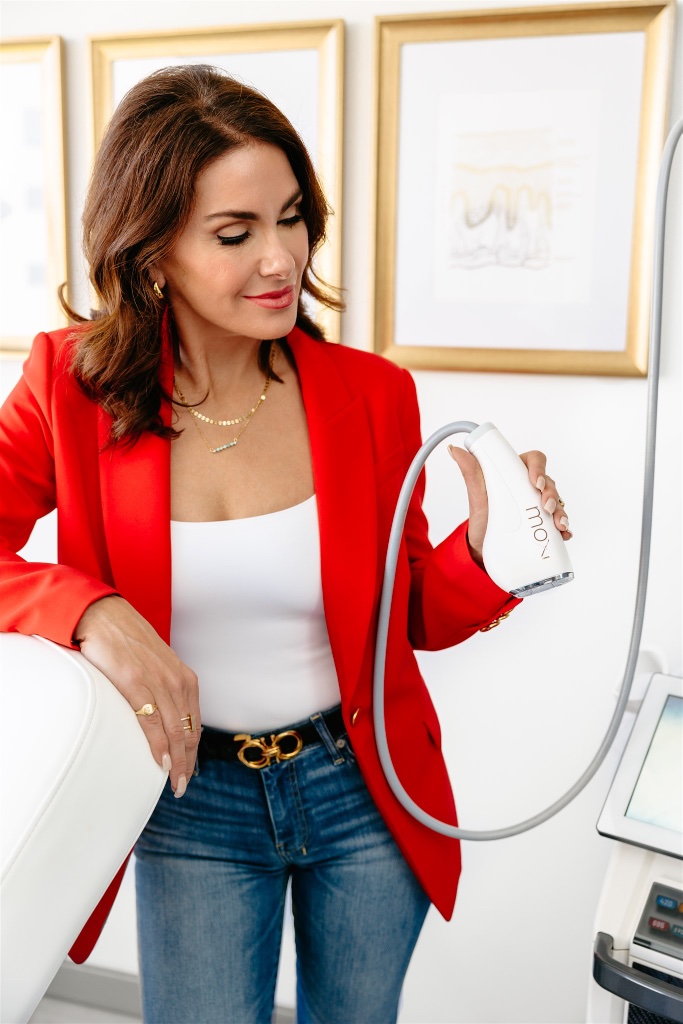
The treatment environment at Youthful Magnolia — where regenerative medicine is practiced with precision, thoughtfulness, and a genuine commitment to individualized care.
Candidacy
Who may be a good candidate
for peptide therapy.
Patients seeking a personalized wellness strategy
Those who are not satisfied with generic health advice and want a plan built around their specific biology, goals, and lifestyle — not a protocol designed for the average patient.
People curious about regenerative support
Patients who have heard about regenerative medicine and want to understand how it might apply to their situation, with guidance from a provider capable of giving them an honest, clinically grounded answer.
Those who value provider oversight
Patients who understand that biology is complex, that individualization matters, and that the quality of the guidance they receive is more important than the trendy-ness of the treatment.
Patients exploring recovery or metabolic support
Those with specific goals around healing, recovery, body composition, or metabolic function who want a clinical approach rather than a supplement-based guess.
Patients already in a broader wellness plan
Those who are thinking about their health as an integrated whole — where peptide therapy is one component of a longer-term, multi-faceted strategy rather than a standalone intervention.
Patients who want a treatment plan, not a trend
The most important candidacy criterion: a patient who is willing to approach peptide therapy as a thoughtful, ongoing clinical engagement — not a quick fix, a biohacking shortcut, or a purchase decision.
Before You Begin
Questions to ask before starting
peptide therapy.
A provider who cannot answer these questions clearly — or who discourages you from asking them — is not the right provider for this kind of care. These are not difficult questions. They are foundational ones.
What specific peptide are you recommending, and why for my goals?
The "why for my goals" part is critical. A recommendation that does not connect to your specific objective is not a clinical recommendation.
What outcomes should I realistically expect, and over what timeframe?
Realistic expectations are not a limitation — they are what allow you to make a genuinely informed decision and actually evaluate whether the plan is working.
How does this fit into my broader health and wellness plan?
Peptide therapy that is disconnected from your overall health picture is less effective than peptide therapy that is coordinated with it.
What monitoring or follow-up is involved?
Good peptide protocols include reassessment. If a provider does not have a follow-up plan, the protocol is not designed to be refined over time — it is designed to be sold.
What are the potential contraindications given my history?
Health history and current medications are relevant to peptide therapy. A consultation that does not include this assessment is not thorough.
Why is provider guidance important here, rather than a supplement approach?
This helps you understand what specifically is different about a clinically prescribed peptide approach versus something available over-the-counter — and why that difference matters for your goal.
The Youthful Magnolia Approach
How peptide therapy fits into
the Youthful Magnolia philosophy.
At Youthful Magnolia, peptide therapy is one layer of a broader regenerative medicine and wellness philosophy — not a standalone offering, and not a trend we have attached ourselves to because it is generating search volume.
The broader framework begins with education. We believe patients make better decisions when they understand what is being recommended and why — which means we invest time in explaining the biology, the goals, the realistic expectations, and the honest limits of what any given approach can do. This is especially important in a category like peptide therapy, where the gap between evidence and marketing can be significant.
From there, it is about integration. Peptide therapy may exist alongside IV therapy, NAD+ therapy, recovery support, aesthetic treatments, or whatever other clinical tools make sense for the individual patient. The goal is a plan that is coherent, not a list of services that a patient has accumulated from different sources without a unifying strategy.
And finally, it is about the long game. The patients who benefit most from any regenerative approach — including peptide therapy — are those who are thinking in months and years, not days and sessions. At Youthful Magnolia, we encourage this orientation from the very first conversation.
Amy Robbins · Founder
The best wellness plans are built around a person — their biology, their goals, their life. Peptides may be a part of that. But the plan comes first, and the plan only makes sense in context.
Why Us
Why Fort Worth patients choose
Youthful Magnolia.
Founder-Led, Personally Delivered
Every peptide consultation is led by Amy Robbins personally — not delegated to a junior provider following a protocol. Her depth of clinical training and regenerative medicine philosophy shapes every recommendation.
Genuinely Education-First
Amy will explain what is being recommended, why, and what realistic expectations look like before any protocol is started. This is not a sales conversation — it is a clinical one.
Honest About the Evidence
We distinguish between what the research clearly supports and what is still emerging or overstated. Patients hear the honest picture, not a curated one.
Personalization Is Not a Marketing Phrase
At Youthful Magnolia, personalization means the protocol is built around your biology, your goals, and your health context — not around a template adapted to look individual.
Integrated with Broader Care
Peptide therapy recommendations at Youthful Magnolia are made with your full care picture in mind — aesthetic treatments, regenerative therapies, and lifestyle context are all considered together.
Long-Term Relationship, Not One-Time Recommendation
We think in terms of years, not sessions. Our relationship with patients evolves as their goals and biology change — and the plan adjusts with them.
Common Questions
Peptide therapy in Fort Worth —
answered honestly.
What is peptide therapy?
What are peptides used for?
Is peptide therapy personalized?
Are peptides part of regenerative medicine?
Can peptide therapy support recovery?
Can peptide therapy support metabolic goals?
How do I know if peptide therapy is right for me?
What should I ask before starting peptide therapy?
Why is provider oversight important for peptide therapy?
Where can I find peptide therapy in Fort Worth?
Continue Reading
What Are Peptides Actually Used For? A Fort Worth Guide
A clear, clinical overview of the specific applications where peptide therapy has generated meaningful interest — and how to think about relevance for your goals.
Coming SoonPeptide Therapy vs Supplements: What's the Difference?
Why provider-prescribed peptide therapy and over-the-counter peptide supplements are not the same thing — and why that distinction matters.
Coming SoonRegenerative Medicine at Youthful Magnolia
How Amy Robbins approaches regenerative wellness — IV therapy, NAD+, peptides, and long-term health optimization as an integrated strategy.
What Is Forever Young BBL? A Fort Worth Guide
How consistent, long-term BBL maintenance may support skin health over years — and the research behind this approach.