Can Picofy Treat Melasma?
Why treating melasma isn't as simple as choosing a pigment laser.
A patient sees brown pigmentation and understandably thinks the goal is simple: find a laser that targets brown pigment. Melasma makes that conversation much more complicated.
Unlike an isolated sun spot, melasma is a chronic, often recurrent pigment condition influenced by multiple factors. Heat, ultraviolet exposure, visible light, hormones, inflammation, genetics, and individual skin characteristics may all play a role.
That means the most aggressive pigment treatment isn't automatically the best treatment. At Youthful Magnolia, the question isn't, "Which laser removes melasma?" It's: "What is driving this pigmentation, and what is the safest, most appropriate strategy for this skin?"

Written by
Amy Robbins, FNP-BC
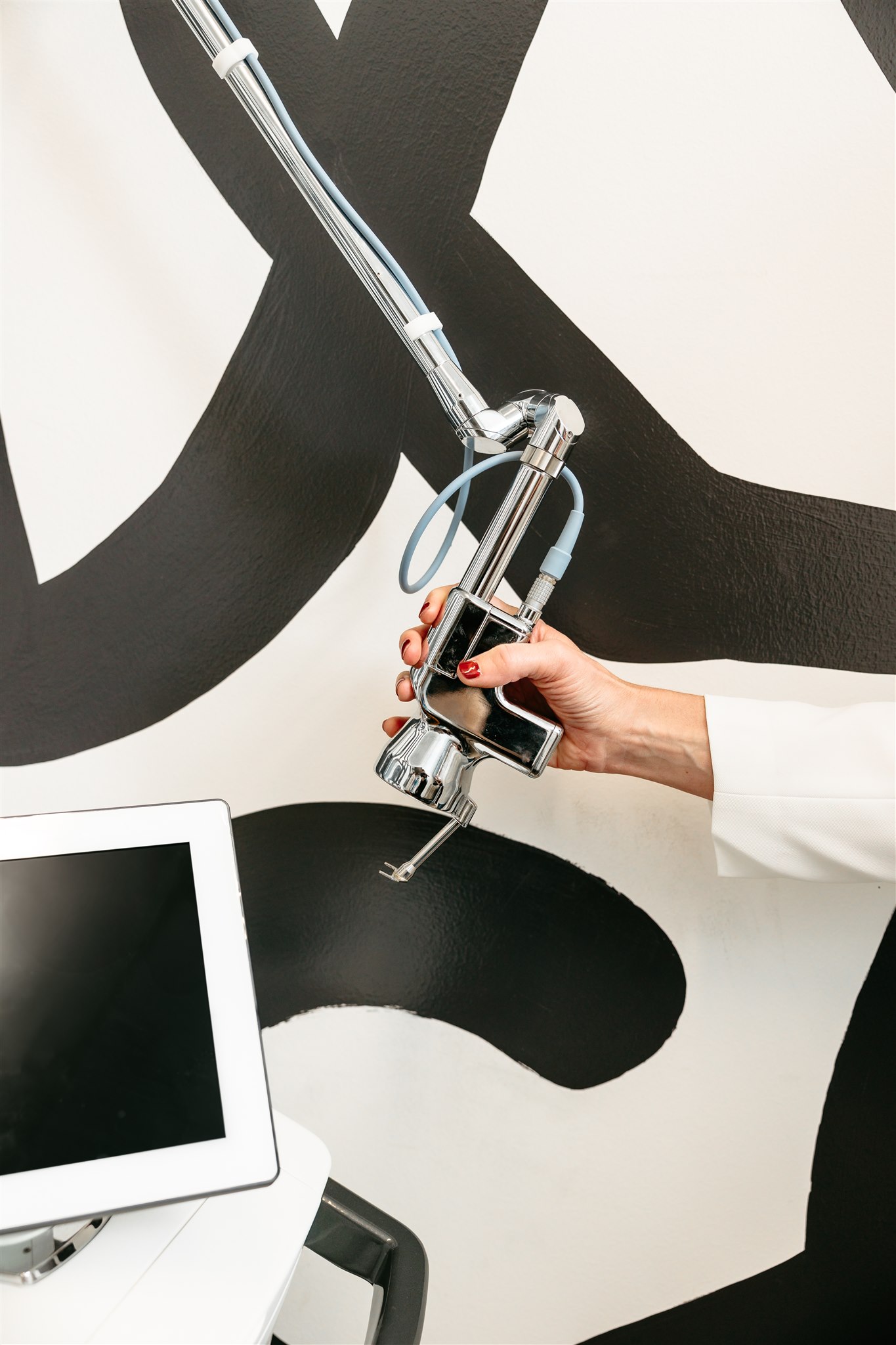
Can Picofy Be Used for Melasma?
Picosecond laser technology may be considered in selected melasma treatment plans, but melasma requires careful evaluation. Laser treatment is not appropriate for every patient, results can vary, and melasma can recur or worsen after inappropriate or overly aggressive energy-based treatment.
The treatment plan should be based on the individual — not simply on the fact that pigmentation is present.
What Is Melasma?
Melasma is an acquired hyperpigmentation — meaning it develops rather than being present from birth. It is often facial, frequently symmetrical (appearing on both sides of the face in a similar pattern), and can be chronic. It may fluctuate over time, appearing to improve and then worsening with certain triggers.
Multiple triggers and contributors may be involved, which is part of what makes melasma so challenging to manage. It is not a condition with a single cause or a single solution.
Melasma vs. Sun Spots: Why the Difference Matters
Two areas of pigmentation can look similar to a patient while requiring very different treatment strategies. Understanding which type of pigment you have is the first step in determining the right approach.
| Melasma | Sun-Related Spots | |
|---|---|---|
| Pattern | Often symmetrical, larger patches | Isolated, discrete spots |
| Common triggers | UV, hormones, heat, genetics | Cumulative UV exposure |
| Behavior | Chronic, may fluctuate with triggers | Generally stable once formed |
| Recurrence tendency | High — often recurs | New spots may form; treated spots less likely to recur |
| Treatment strategy | Cautious, individualized, multi-modal | Targeted pigment treatment may be appropriate |
| Laser considerations | Careful patient selection; risk of worsening | Often more straightforward pigment targeting |
Two areas of pigmentation can look similar to a patient while requiring very different treatment strategies.
Why Can Melasma Be So Difficult to Treat?
Melasma isn't simply pigment sitting on the surface waiting to be removed. The pigment may sit at different depths, the condition may be driven by ongoing triggers, and the skin's response to treatment is influenced by multiple factors.
Contributing complexity includes:
No single factor is the universal cause. This is why melasma treatment requires understanding the whole picture — not just the pigment visible on the surface.
What Can Trigger or Worsen Melasma?
Several established factors may trigger or worsen melasma. Not every patient has the same triggers — identifying individual triggers is part of the consultation process.
Not every patient has the same triggers. Understanding your individual triggers is part of building an effective long-term strategy.
With some aesthetic concerns, patients may assume that a stronger laser or more aggressive resurfacing will create a better result. Melasma does not necessarily behave that way.
Excessive inflammation or inappropriate energy-based treatment may aggravate pigmentation in some patients. The skin may respond to stress by producing more pigment — the opposite of the intended outcome.
The goal is controlled treatment — not maximum treatment.
Can Laser Treatment Make Melasma Worse?
Yes, melasma can worsen following inappropriate energy-based treatment in some patients.
This is not because laser is inherently unsafe — it is because melasma requires careful, appropriate use. The factors that matter include:
The point is not to avoid laser entirely — it is to use it appropriately, in the right patient, at the right time, with the right strategy.
Where Might Picofy Fit Into a Melasma Treatment Plan?
Picofy uses picosecond laser technology. Where clinically appropriate, a provider may consider picosecond technology as one component of a broader pigment strategy.
Having a laser capable of targeting pigment does not mean every pigment condition should be treated with that laser.
Picofy selection should depend on:
We do not publish specific treatment protocols. Your provider determines whether Picofy is appropriate during an individualized consultation.
How Does a Picosecond Laser Interact With Pigment?
Picosecond lasers deliver energy in extremely short pulses. When an appropriate wavelength interacts with targeted pigment, rapid energy delivery can create a photoacoustic effect that helps disrupt pigment particles. The body then processes those particles over time.
This mechanism can be useful for certain pigment concerns — but it does not automatically produce successful melasma treatment. Melasma's complexity means the decision to use any laser must be made carefully, based on the individual.
Learn more: Picosecond Lasers: What Makes Picofy Different?Why Wavelength and Treatment Settings Matter
Different wavelengths interact with pigment differently and reach different depths in the skin. The wavelength and settings selected for treatment depend on what is being targeted and the individual's skin characteristics.
Picofy vs. MOXI for Melasma
Picofy and MOXI use different technologies and may play different roles in a pigment strategy. Neither is universally better for melasma.
Picofy
Picosecond technology. May be considered for targeted pigment concerns in selected patients.
MOXI
Fractional laser. May be considered for a different skin-renewal strategy depending on the individual.
The comparison involves treatment mechanism, pigment strategy, skin-renewal strategy, inflammation considerations, downtime, and individual skin characteristics.
The better option depends on the patient and pigment pattern — not which device has the more impressive name.
What About HALO for Melasma?
Resurfacing technologies and pigment-targeting technologies are not interchangeable. HALO is a hybrid fractional laser that may be valuable for appropriate concerns — such as texture, tone, and broader photodamage — but melasma requires individualized treatment planning.
Aggressive resurfacing is not a universal melasma solution. In some patients, resurfacing may worsen pigmentation rather than improve it. This is why HALO should not be assumed to be appropriate for melasma without careful evaluation.
What About HALO TRIBRID?
Broader resurfacing with HALO TRIBRID may address combinations of texture, visible photodamage, tone, and other appropriate concerns. However, a patient with melasma requires careful evaluation before choosing an energy-based treatment.
HALO TRIBRID is not automatically appropriate for melasma. The decision depends on individual assessment — not on the breadth of what the device can treat.
Why Does Skin Tone Matter When Treating Melasma?
Melanin plays an important role in treatment planning. Patients with greater baseline pigmentation may have different risks for post-inflammatory hyperpigmentation, pigment alteration, and treatment-related inflammation.
This does not mean darker skin cannot be treated — it means that device selection, wavelength, settings, experience, and patient selection matter even more. A provider who understands how to calibrate treatment for different skin tones is essential for safe, appropriate care.
Is Laser the Only Part of Melasma Treatment?
No. Depending on the individual, a melasma strategy may include broader measures:
We do not prescribe specific medications or skincare regimens unless Youthful Magnolia has approved them for publication. Your provider discusses individualized recommendations during consultation.
Protecting against relevant light exposure — including UV and visible light — is an essential part of managing melasma. Treatment without ongoing sun protection may be undermined by the very triggers that caused the pigmentation in the first place.
General sun-protection education is appropriate for everyone. Specific product recommendations should be discussed with your provider during consultation.
Can Melasma Come Back After Treatment?
Yes. Melasma can recur.
Treatment may improve appearance without eliminating the underlying tendency toward melasma. Triggers may continue — sun exposure, hormonal changes, heat — and pigmentation may re-emerge over time.
Maintenance may therefore be part of the long-term conversation. This is important expectation-setting: melasma is often a condition to be managed, not a problem to be solved once and for all.
Does Anything Permanently Cure Melasma?
Melasma is often chronic and recurrent. Treatment generally focuses on managing pigmentation and reducing recurrence rather than permanently eliminating the condition. We do not use the word "cure" — and any treatment claiming to permanently cure melasma should be approached with caution.
What If I Have Melasma Plus Sun Damage, Texture, or Fine Lines?
Many patients don't have one isolated concern. Someone may have melasma alongside sun-related pigmentation, texture changes, acne scarring, fine lines, redness, or uneven tone.
This may require sequencing or combining different approaches rather than choosing one device. The order in which concerns are treated matters — and treating everything aggressively at once is not always the right strategy.
Sometimes the best treatment plan isn't one laser. It's knowing what to treat first — and what not to treat aggressively.
How Youthful Magnolia Approaches Stubborn Pigmentation
Our approach to pigment follows a structured, individualized process:
Identify the pigment
Understand the patient's skin
Review previous treatments
Consider triggers
Determine whether laser is appropriate
Select the appropriate technology
Build a longer-term pigment strategy
Amy's Perspective
Amy Robbins, FNP-BC
[AMY REVIEW REQUIRED]
Suggested commentary for Amy to review/edit: "Melasma is one of those conditions where doing more isn't necessarily doing better. I want to understand what type of pigment we're dealing with, what has triggered it, what has been tried before, and how that patient's skin responds before deciding whether a laser belongs in the plan."
This commentary will be published only after Amy explicitly reviews and approves it.
Why We May Tell You Picofy Isn't the Right Choice
Youthful Magnolia offers Picofy because it gives the practice another useful tool for treating appropriate concerns. But access to the device does not mean it should be used on every patient with pigmentation.
If another approach is more appropriate, the treatment recommendation should reflect that. We may tell you that a non-laser approach, a different laser, or a combination strategy makes more sense for your skin — and that honesty is part of how we build trust.
We choose the treatment based on the skin — not the skin based on the treatment we want to sell.
This statement should be provider-approved before publication.
What Happens During a Pigmentation Consultation?
A pigmentation consultation is a conversation — not a sales pitch. We discuss:
What concerns the patient
How long pigmentation has been present
Potential triggers
Previous treatments
Skin characteristics
Current skincare where relevant
Treatment goals
Appropriate treatment options
We do not promise a diagnosis solely through online photography. An in-person or virtual consultation is essential for appropriate evaluation.
Not All Pigmentation Behaves the Same
Sun-Related Pigment
May respond to pigment-focused treatment
Melasma
Requires a cautious, broader strategy
Post-Inflammatory Pigment
Inflammation and skin history matter
Other Pigmented Lesions
May require evaluation before cosmetic treatment
Identify first. Treat second.
Melasma & Pigmentation Treatment in Fort Worth
At Youthful Magnolia in Fort Worth, we understand that melasma and stubborn pigmentation require more than a device — they require a thoughtful, individualized strategy. Our consultations are designed to identify what is driving your pigmentation and determine the safest, most appropriate approach for your skin.
If you are dealing with melasma or stubborn pigmentation, the first step is a consultation — not a laser.
Pigmentation Is Complicated. Your Treatment Plan Should Be Thoughtful.
If you're dealing with melasma or stubborn pigmentation, start with an individualized consultation rather than choosing a laser on your own.
Frequently Asked Questions
References & Further Reading
Pigmentary Disorders Resources
Journal of the American Academy of Dermatology · Peer-Reviewed Literature
https://www.jaad.org ↗Author & Medical Reviewer
Amy Robbins, MSNA, APRN, CRNA, FNP-BC
Board-certified Family Nurse Practitioner and founder of Youthful Magnolia in Fort Worth, Texas.
Related Laser Treatments
Start With Understanding
The right melasma treatment starts with the right conversation.
Book a pigmentation consultation at Youthful Magnolia in Fort Worth. We will evaluate your skin, understand your pigment, and help you determine the safest, most appropriate approach.
Book a Consultation