
Can You Treat Acne Scars and Pigment at the Same Time in Fort Worth?
A modern Fort Worth guide to understanding when acne scars and pigment can be treated together — and why smarter sequencing matters when texture and discoloration overlap.
 Amy Robbins, MSNA APRN CRNA FNP-BC 14 min read July 2026Skin Renewal
Many patients come to us thinking they have one concern — acne scars. But what the skin is actually left with after acne is rarely one thing.
Acne can leave behind texture changes, lingering pigment, redness, or some combination of all three. A patient may have depressed scarring with minimal discoloration. Another may have smooth skin with stubborn dark marks. Another may have both — roughness and pigment layered together in ways that make treatment feel overwhelming. The assumption that post-acne skin is a single problem with a single solution is one of the most common — and most costly — misconceptions in aesthetic medicine.
At Youthful Magnolia, we approach post-acne skin with strategy, not one-size-fits-all resurfacing language. The smartest treatment is not always the strongest one. It is not always the one that targets only one concern. And it is rarely the one chosen from a device menu before anyone has actually looked at your skin. The right plan begins with understanding what the acne left behind — texture, pigment, redness, or mixed — and then building a path that respects what your skin actually needs.
This guide is designed to help you think about post-acne skin more intelligently: when acne scars and pigment can be treated together, when they may need different sequencing, and how we approach skin renewal when texture and discoloration overlap.
Section 01
Why acne scars and pigment
often show up together.
Acne is an inflammatory process. When a breakout is deep, prolonged, or severe, the inflammation affects multiple layers of the skin — and each layer may respond differently. The visible changes that remain after the acne resolves are the skin attempt to heal. Sometimes that healing is clean and complete. Sometimes it leaves evidence behind.
That evidence can take several forms. Texture changes — such as depressed scars, raised areas, or irregularities in the skin surface — occur when inflammation damages the dermal structure and collagen support is disrupted. Pigment changes — such as dark marks or brown discoloration — occur when inflammation triggers excess melanin production, a process known as post-inflammatory hyperpigmentation. Redness or pink marks may occur when vascular changes persist after the inflammation subsides.
Because all of these changes can stem from the same inflammatory process, they frequently coexist. A patient who had cystic acne may be left with both textural scarring and lingering dark marks. A patient who had superficial but persistent breakouts may have pigment without significant texture change. A patient who picked at their skin may have a combination of mild scarring, pigment, and redness. This is why one label — acne scars — rarely tells the whole story.
Understanding this overlap is the first step toward a treatment plan that actually works. If you have both texture and pigment, treating only one may leave you frustrated with the result. If you have pigment without true scarring, aggressive resurfacing may be unnecessary. And if you have redness that looks like pigment, the wrong treatment category may not help at all. To learn more about the specific differences between red and brown marks after acne, our guide to treating red and brown acne marks in Fort Worth breaks down how each type behaves.
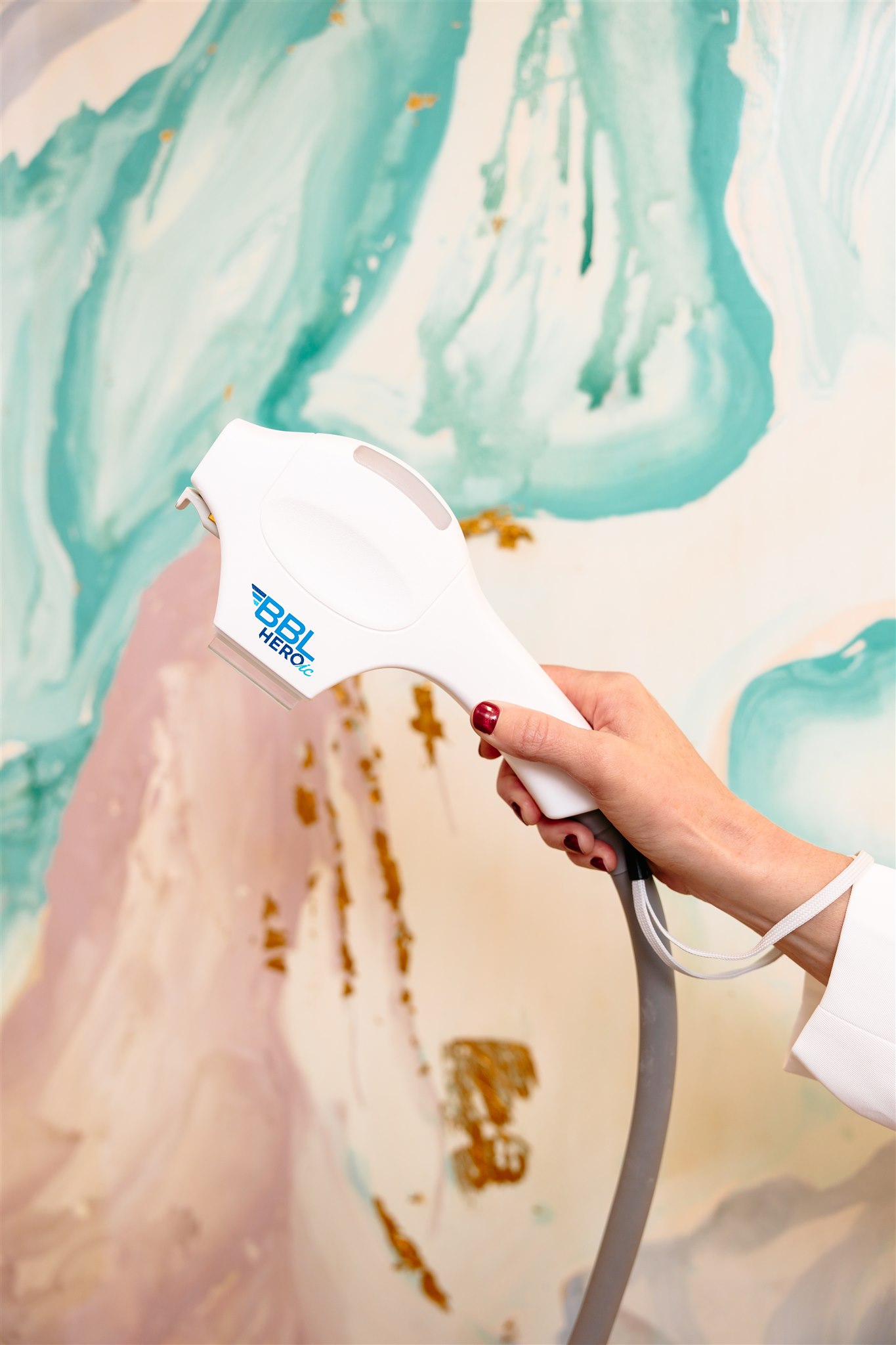
What acne leaves behind is rarely one thing. The first step in any post-acne plan is identifying what the skin was actually left with.
Section 02
Why texture and discoloration
are not the same problem.
This may be the most important distinction in post-acne skin planning: texture change and pigment change are different problems that may require different treatment logic. They may overlap, but they should not automatically be treated as identical — and the assumption that they can be addressed with the same approach is what leads many patients to disappointing results.
Texture change relates to the physical structure of the skin. When acne inflammation damages the dermis, the healing process may produce irregular collagen — leaving depressions, raised areas, or an uneven surface. Addressing texture typically involves treatments that support collagen remodeling, skin renewal, or controlled resurfacing — approaches that work with the skin structural repair processes. For a deeper look at how texture concerns are approached, our guide to the best treatment for acne scars and large pores in Fort Worth explores this in detail.
Pigment change relates to color, not contour. When inflammation triggers excess melanin production, the result is a dark mark that sits in the skin after the acne has resolved. This is post-inflammatory hyperpigmentation, and it is one of the most common post-acne concerns — particularly in patients with medium to deeper skin tones. Addressing pigment typically involves treatments that target melanin — whether through pigment-specific technologies, chemical peels, or skincare protocols that regulate pigment production. For a thorough explanation, our guide to post-inflammatory hyperpigmentation in Fort Worth covers what drives it and how it is approached.
Redness, when present, is vascular in origin — meaning it involves blood vessels, not melanin or collagen. It may fade on its own as the skin settles, but persistent cases may benefit from treatments that target vascular concerns. This is why simply labeling everything as acne scars and applying a single treatment is rarely effective — and why a careful assessment of what is actually in the skin matters more than the name of the device.
Texture, pigment, or both?
What post-acne skin may look like
Post-acne skin is rarely one thing. Understanding what your skin was left with — texture change, discoloration, redness, or a combination — is the first step in building a plan that actually fits.
Texture-dominant
The acne has left visible surface changes — depressions, unevenness, or irregularities — with minimal or no lingering discoloration. The primary concern is what the skin feels and looks like in angled light, not color.
Pigment-dominant
The acne has resolved, but dark marks, brown spots, or flat discoloration remain. The skin surface is relatively smooth — the issue is color, not contour. This may include post-inflammatory hyperpigmentation.
Mixed texture and pigment
Both texture change and discoloration are present. This is one of the most common presentations — and one of the most misunderstood, because each component may require different treatment logic.
Redness or vascular marks
Lingering redness or pink marks remain after acne. These are vascular in origin and behave differently from brown pigment — they may fade on their own, but persistent cases may benefit from targeted treatment.
Section 03
Can they be treated
at the same time?
The honest answer is: sometimes yes, sometimes no — and the difference matters. In some patients, parts of the plan may address both texture and pigment simultaneously. Certain resurfacing treatments, for example, may improve surface irregularity while also reducing superficial discoloration. Some collagen-supportive treatments may contribute to both structural improvement and a more even-looking tone over time. In these cases, a single treatment series may move both concerns forward at once.
But in many patients, sequencing matters more than simultaneity. If pigment is active, unstable, or inflamed, treating texture aggressively on top of it may increase the risk of post-inflammatory pigmentation — potentially worsening the very concern you are trying to improve. If redness is still present, certain resurfacing approaches may not be appropriate until the skin has settled. If the skin is sensitive or has been through recent active acne, pushing too hard too fast can backfire.
This is why the answer to whether acne scars and pigment can be treated together is never a simple yes or no. It depends on your skin behavior — how it responds to inflammation, how it heals, how it tolerates treatment. It depends on the severity and character of each concern. It depends on your goals and your downtime tolerance. And it depends on whether your provider is thinking about the skin as a system or simply treating one symptom at a time.
The most intelligent approach is consultative: assess what is present, determine what is stable, and build a plan that may treat some concerns simultaneously while staging others. Sometimes the smartest plan treats both at once. Sometimes the smartest plan treats one first so the second can be treated more safely. The decision should come from your skin, not from a treatment menu.
Section 04
When treatment may need
to be staged.
Staged planning is not a delay or a compromise — it is often the most effective strategy for complex post-acne skin. When multiple concerns are present, trying to address everything aggressively at once can overwhelm the skin, increase the risk of adverse pigmentation, or produce a result that is superficially improved but structurally incomplete. Staging means treating concerns in a deliberate sequence — one that respects how the skin heals and how each treatment interacts with the others.
In some patients, pigment should be addressed first. If dark marks are active, unstable, or hormonally driven, attempting aggressive texture treatment on top of unstable pigment may increase the risk of worsening the discoloration. Calming the pigment — through targeted skincare, pigment-specific treatment, or time — may create a safer foundation for texture-focused work later. This is particularly important for patients with deeper skin tones, where the risk of post-inflammatory pigmentation changes is higher.
In other patients, texture may be the priority. If the pigment component is minimal or already fading, the plan may focus on collagen-supportive treatment or resurfacing first — with pigment addressed as a secondary concern if it remains after the texture work. For patients whose primary frustration is the physical irregularity of the skin rather than color, this sequencing may make the most sense.
And for some patients, the right approach is a broader, phased skin-renewal strategy — one that begins with foundational support, moves through targeted treatment phases, and ends with long-term maintenance. This kind of planning is more involved than a single treatment, but it is often what produces the most meaningful and lasting improvement for patients with complex, overlapping concerns. The key is that staging is a choice made from intelligence, not from indecision.
Why staging is smarter, not slower
Staged planning treats the skin as a system that needs to heal in layers — not as a surface to be sanded down all at once. When pigment is unstable, when redness is still present, or when multiple concerns overlap, a phased approach often produces better outcomes with less risk. It is not about doing less — it is about doing things in the right order. The reasons pigment can return after treatment are often related to sequencing decisions made — or skipped — during the initial plan.
Section 05
What treatment categories
may fit mixed post-acne concerns.
No single treatment category is the answer for every mixed post-acne case. The right approach depends on what is present, what is stable, and what the skin can tolerate. These are the categories that may be part of the conversation.
Gentle skin-renewal support
For some patients, the smartest starting point is not the strongest treatment — it is foundational skin support. This may include medical-grade skincare, gentle resurfacing, or treatments that improve skin quality without creating additional inflammation. When the skin is sensitive or still settling after active acne, a gentler entry point may produce better long-term outcomes than aggressive intervention.
Pigment-focused planning
When discoloration is the primary concern, treatment may focus on addressing pigment through targeted approaches — which could include certain chemical peels, pigment-specific technologies, or skincare protocols. The approach is always calibrated to your skin tone, the type of pigment, and whether the discoloration is superficial or deeper.
Collagen-supportive conversations
When texture is the primary concern, collagen-supportive treatments like microneedling may be part of the discussion. These treatments work by supporting the skin natural remodeling processes rather than removing surface tissue — which can be valuable when the goal is texture improvement without aggressive resurfacing.
Resurfacing where appropriate
For selected patients, resurfacing treatments — such as fractional laser platforms — may address both texture and pigment simultaneously. However, resurfacing is not appropriate for every skin type, every concern, or every time of year. The decision to resurface depends on skin tone, sensitivity, downtime tolerance, and whether pigment is stable enough to treat safely.
Advanced pigment- or texture-focused platforms
For select patients, advanced pigment- or texture-focused technologies may become part of the conversation — particularly when post-acne texture and discoloration overlap in ways that simpler treatments cannot fully address. Newer skin-renewal platforms may broaden options for patients whose concerns are complex or who have not responded to first-line approaches.
Maintenance and long-term planning
Post-acne skin is not a one-and-done project. Even after the primary treatment phase, maintenance matters — protecting the skin from UV exposure, supporting ongoing skin quality, and preventing new pigment from forming. A truly smart plan includes what happens after the treatment series ends, not just the treatments themselves.
Section 06
Amy Robbins on
post-acne skin planning.
One of the first things I tell patients who come in with post-acne concerns is this: you probably do not have just acne scars. That phrase — acne scars — has become shorthand for everything acne leaves behind. But it is not accurate, and treating everything under that label the same way is why so many patients feel like their treatment did not work.
When I am evaluating post-acne skin, I am asking a specific set of questions. Are we seeing texture change — depressions, irregularities, roughness? Are we seeing pigment change — dark marks, brown discoloration, uneven tone? Are we seeing redness or vascular marks that have not resolved? And if multiple concerns are present, which is dominant, which is secondary, and how stable is each one?
That assessment shapes the plan. If a patient has active, unstable pigment, I may not want to resurface aggressively right away — because resurfacing on top of unstable pigment can trigger more pigmentation. If a patient has significant texture change with minimal pigment, the plan may focus on collagen-supportive treatment. If both concerns are present and the skin is stable, we may be able to address both within a single treatment series — but that decision comes from the assessment, not from a device preference.
The goal is not to throw the strongest technology at the skin. The goal is to understand what changed and build the cleanest path forward. Better results come from matching the plan to the skin, not just the diagnosis. And sometimes the most valuable thing a consultation provides is the recommendation to slow down — to stage treatment, to calm the skin first, to build a foundation before pursuing more intensive work.
When I am treating post-acne skin, I am asking whether we are seeing pigment, texture, redness, or some combination of all three. That answer shapes the plan. The smartest treatment is the one that respects what the skin actually needs.
Amy Robbins
MSNA · APRN · CRNA · FNP-BC · Founder, Youthful Magnolia
Section 07
When advanced technologies
may enter the conversation.
For many patients, foundational treatment — skincare, gentle resurfacing, pigment-focused planning, or collagen-supportive treatment — may be the appropriate starting point. Not every patient needs advanced device-based treatment right away. In fact, starting with the skin rather than the device is often the smarter approach, particularly when concerns are still settling or when the skin needs to be stabilized before more intensive work.
However, for select patients, advanced pigment- or texture-focused technologies may become part of the conversation. This is particularly relevant when post-acne texture and discoloration overlap in ways that simpler treatments cannot fully address — or when a patient has been through a foundational phase and is ready for a more targeted approach. Newer skin-renewal platforms may broaden options when both texture and pigment are present, offering ways to address both concerns with more precision than first-line treatments alone.
For example, our Picofy picosecond laser platform is one of the advanced tools that may enter the discussion for patients whose post-acne concerns include stubborn pigment alongside texture change. Picosecond technology delivers energy in ultra-short pulses, which may support both pigment fragmentation and skin renewal — though it is always matched to the individual, never applied generically. For patients comparing different approaches, our guide to picosecond laser vs chemical peel for pigment may help frame the conversation.
It is important to understand that advanced treatment is not the default — and it is not always the first recommendation. A consultation helps determine whether a more advanced device-based approach is appropriate for your specific skin and concerns, or whether foundational treatment is the smarter first step. The technology is a tool; the intelligence is in the planning.
Advanced technology is a tool. The intelligence is in the planning — and in knowing when it is the right tool for the right patient.
Section 08
What a consultation
at Youthful Magnolia may include.
A consultation for post-acne skin is never a sales conversation. It is an assessment — a careful, individualized evaluation of what your skin was left with, what is stable, and what the smartest treatment path could look like.
In-person skin evaluation
We examine your skin directly — not from a photo. We assess tone, texture, the character of any scarring, the type and stability of any pigment, and whether redness is present. Direct visual assessment is the foundation of any responsible post-acne plan.
Acne history review
We discuss your acne journey — when it started, how severe it was, whether it is still active, what you have tried, and how your skin has responded to previous treatments or products. This context informs how we approach your skin now.
Concern classification
We determine whether your primary concern is texture, pigment, redness, or a combination. This classification is not a label — it is the framework that determines which treatment categories are appropriate and in what sequence.
Goals and downtime tolerance
We discuss what you are trying to achieve and what your skin and lifestyle can tolerate. If you cannot afford significant downtime, the plan may be structured differently than if you have flexibility. Your goals and constraints shape the approach.
Treatment pathway identification
Based on the assessment, we identify whether your concerns fit skin-renewal, pigment planning, resurfacing, collagen-supportive treatment, or more advanced device-based care. Sometimes the recommendation is a combination — and sometimes it is a staged plan that sequences different categories over time.
Realistic expectations and phased planning
We set honest expectations about timelines, what is achievable, and what is not. If your concerns require a phased approach, we walk through what that looks like. If maintenance will be needed after the primary treatment phase, we discuss that too. No surprises, no overpromising.
Section 09
Why Fort Worth patients
choose Youthful Magnolia.
Fort Worth patients choose Youthful Magnolia because we approach post-acne skin differently. We are not a volume practice. We do not apply the same treatment to every patient who walks through the door. We are a founder-led clinic where every treatment plan begins with understanding the person in front of us — their skin, their concerns, their goals, and their history.
Amy Robbins built Youthful Magnolia on a simple principle: that advanced technology is only as good as the thinking behind it. That principle is especially relevant for post-acne skin, where the temptation to apply aggressive resurfacing to every concern is strong — and often wrong. When we recommend a treatment, it is because we have assessed your skin, considered the alternatives, and determined that this is genuinely the right approach for what your skin was left with.
Our patients value the experience as much as the outcomes: a calm, unhurried environment where questions are welcomed, expectations are set honestly, and the focus is always on natural-looking, strategic results. We do not chase trends. We do not overpromise. We build plans that are designed to produce real improvement — and to maintain it over time.
If you are in Fort Worth and dealing with acne scars, lingering pigment, or both at once, we would welcome the conversation. Our full laser treatment platform and facial and skin services are available as part of a personalized plan — but the plan always comes first.
The best post-acne outcomes come from understanding what the skin was left with — and building a plan that respects it.
Common Questions
Post-acne skin —
questions answered honestly.
Can acne scars and pigment be treated at the same time?
Are acne scars and dark marks the same thing?
What is the best treatment for acne scars and pigment?
When should acne-scar treatment be staged?
Can lasers help both texture and discoloration?
What if I have pigment but not true acne scars?
What if I have acne scars but only a little pigment?
When do advanced technologies enter the conversation?
What should a post-acne consultation include?
Where can I treat acne scars and pigment in Fort Worth?
Related Treatments
Picofy Picosecond Laser
An advanced pigment-focused platform that may become part of the conversation for select patients with overlapping texture and pigment concerns.
Laser Treatments
Explore our full laser platform — the foundation of light-based skin renewal and pigment treatment at Youthful Magnolia.
Sciton TriBrid
Triple-wavelength resurfacing for comprehensive texture, tone, and pigment correction in a single advanced platform.
HALO Laser
Hybrid fractional laser that addresses both surface discoloration and deeper texture in one treatment.
MOXI Laser
Non-ablative fractional resurfacing for prevention, texture improvement, and ongoing skin-quality maintenance.
Facials & Skin
Foundational skin treatments that may support post-acne recovery and maintenance alongside more intensive treatment.
BioRePeel
A medical-grade chemical peel that complements pigment and texture treatment for post-acne skin support.
Microneedling
Collagen-stimulating treatment often used for texture improvement in post-acne skin renewal plans.
Book a Consultation
Begin the conversation. A consultation is always the right first step toward a personalized post-acne plan.
Related Articles
Youthful Magnolia · Fort Worth, TX
Ready for a more thoughtful
post-acne skin plan?
If you are dealing with acne scars, lingering pigment, or both at once, our team can help you understand what kind of changes your skin was left with and what the smartest treatment plan could look like.