
Quick Answer
There isn't one Botox dose that works for everyone. The number of units depends on the treatment area, muscle strength, facial anatomy, desired degree of movement, and your provider's treatment plan. Botox Cosmetic has FDA-approved dosing for specific cosmetic indications, but your actual treatment should be determined after an in-person assessment rather than by copying someone else's unit count.
At a Glance
Botox Units at a Glance
Is there one standard Botox dose?
No. Dosing is individualized.
What affects dosing?
Treatment area, anatomy, muscle strength, goals, and product labeling.
Are Botox units interchangeable with Dysport or Daxxify?
No. Units are product-specific.
Does more Botox mean better results?
No. The goal is the appropriate dose, not the highest count.
Can I determine my dose online?
No. An injector should assess your anatomy and movement in person.
The Basics
What Does a "Unit" of Botox Mean?
A "unit" of Botox is a measure of biological potency — not a measure of volume like a milliliter. It describes how much active product is standardized in each dose according to the manufacturer's testing. Botox Cosmetic (onabotulinumtoxinA) is measured in units that are specific to that product.
This means a unit is not a simple amount of liquid. The same number of units may be reconstituted in different volumes depending on how the product is prepared for treatment. What matters clinically is the number of units placed into targeted muscles — and that number is determined by your provider based on your assessment.
Very Important
Botox Units Are Not the Same as Dysport or Daxxify Units
Botox Cosmetic, Dysport, Daxxify, and other neuromodulators use product-specific potency units. A unit of Botox is not the same as a unit of Dysport or Daxxify — the numbers cannot be compared directly, and there is no FDA-approved one-to-one conversion ratio.
For detailed comparisons, see our Botox vs Dysport and Botox vs Daxxify articles. The key point for this guide: all unit numbers discussed here refer to Botox Cosmetic (onabotulinumtoxinA) specifically.
The Variables
What Determines How Many Botox Units You Need?
Several factors influence how many units are appropriate for you:
- Treatment area — different areas involve different muscle groups.
- Muscle size — larger muscles may require different dosing considerations.
- Muscle strength — stronger movement may influence the treatment plan.
- Facial anatomy — your individual anatomy shapes the plan.
- Pattern of movement — how your face moves at rest and with expression.
- Prior treatment response — how you have responded to previous treatments.
- Desired degree of movement — whether you prefer softer movement or stronger reduction.
- Treatment goal — what you are trying to achieve.
- Sex-related anatomical differences — where clinically relevant.
- Provider judgment — the clinical assessment of your provider.
No single factor automatically determines your dose. Dosing is a clinical decision that weighs all of these factors together.
Your Preferences
Your Goal Matters as Much as the Treatment Area
Two patients with the same anatomy may choose different doses because they have different goals. You might want:
- Softer movement — reducing the intensity of expression while keeping natural movement.
- Stronger movement reduction — more substantial softening of expression-related lines.
- Prevention of deep expression-related creasing — addressing lines before they become static.
- Correction of a specific dynamic-line pattern — targeting a particular concern.
We do not use "preventative Botox" as a guaranteed anti-aging strategy. Treatment is based on your anatomy and goals, not on a marketing concept.

FDA-Approved vs Off-Label
Botox Treatment Areas: FDA-Approved vs Off-Label
| Treatment Area | FDA-Approved? | What Patients Should Know |
|---|---|---|
| Glabellar lines (frown lines / "11s") | Yes — FDA-approved | FDA-labeled dose exists (20 Units per current prescribing information). Individual treatment still requires assessment. |
| Lateral canthal lines (crow's feet) | Yes — FDA-approved | FDA-labeled dose exists (24 Units per current prescribing information). Individual treatment still requires assessment. |
| Forehead lines | Yes — FDA-approved (in conjunction with glabellar) | FDA-labeled dose exists (20 Units per current prescribing information). Often evaluated with brow position and glabellar activity. |
| Brow lift / brow positioning | Off-label | No universal patient-facing dose. Individualized based on anatomy and muscle balance. |
| Lip flip | Off-label | No universal patient-facing dose. Small differences can affect smile, speech, and lip movement. |
| Chin dimpling | Off-label | No universal patient-facing dose. Individualized based on anatomy. |
| Bunny lines (nose) | Off-label | No universal patient-facing dose. Individualized based on anatomy. |
| Masseter (jaw) | Off-label | No universal patient-facing dose. Anatomy and goals vary substantially. Individualized assessment required. |
FDA-labeled doses reflect the approved treatment pattern in current prescribing information and are not personalized recommendations. Off-label use may be medically appropriate when determined by a qualified provider, but is not the same as an FDA-approved indication. This table is educational and is not a substitute for product labeling or provider counseling.
Treatment Area
How Many Units of Botox Are Used for Forehead Lines?
According to current FDA prescribing information, the labeled dose for forehead lines is 20 Units. The label also notes that forehead lines should be treated in conjunction with glabellar lines to minimize the potential for effects on brow position.
Forehead anatomy varies significantly between patients. The frontalis muscle helps elevate the brows, and treating the forehead requires consideration of brow position and the balance between the upper and lower face. The labeled dose is the approved treatment pattern — not a universal personalized recommendation.
Your individual dose depends on your anatomy, muscle strength, and goals. This section does not prescribe individualized dosing.
Treatment Area
How Many Units of Botox Are Used for Frown Lines or "11s"?
According to current FDA prescribing information, the labeled dose for glabellar lines (the vertical frown lines between the brows, often called "11s") is 20 Units.
The glabellar complex includes the muscles that pull the brows together and down. In patient-friendly terms, these are the muscles that create the vertical lines between your eyebrows when you frown or concentrate. The labeled dose describes the approved treatment pattern for this area.
FDA-labeled dosing is not the same as telling every patient exactly what their individual dose should be. Your treatment depends on your muscle strength, anatomy, and goals. We do not create a DIY treatment plan.
Treatment Area
How Many Botox Units Are Used for Crow's Feet?
According to current FDA prescribing information, the labeled dose for lateral canthal lines (crow's feet) is 24 Units total (12 Units per side). The approved treatment pattern treats both sides.
Individual anatomy still matters clinically. The labeled dose is the approved treatment pattern — your individual treatment depends on your anatomy and goals. We do not provide injection locations or diagrams.
Combined Treatment
What If You Treat the Forehead and Frown Lines Together?
According to current FDA prescribing information, the labeled combined dose for forehead lines and glabellar lines together is 40 Units (20 Units for forehead plus 20 Units for glabellar). The label recommends treating forehead lines in conjunction with glabellar lines to minimize effects on brow position.
These areas are often evaluated together because the muscles that raise the brow (frontalis) interact with the muscles that pull it down (glabellar complex). Treating one area in isolation can affect the balance of the other. This is why a combined assessment often makes more sense than treating areas independently.
The labeled combined dose is the approved treatment pattern — not a universal total for every patient.
Combined Treatment
How Many Botox Units Are Used for the Upper Face?
"Upper-face Botox" may refer to different combinations of forehead, glabella, and crow's feet. Therefore one person's "full upper face" dose may not equal someone else's.
According to current FDA prescribing information, the labeled total for all three approved upper-face areas together (forehead lines, glabellar lines, and lateral canthal lines) is 64 Units (20 + 20 + 24). This is the approved combined treatment pattern — not a personalized recommendation.
Not every patient treats all three areas. Your treatment plan depends on your anatomy and goals.
Off-Label Area
How Many Units Are Used for a Botox Brow Lift?
Cosmetic Botox use for brow positioning is off-label — it is not an FDA-approved cosmetic indication. We do not provide an exact universal dose.
A chemical brow-lift effect depends on anatomy, muscle balance, placement, and brow position. It is not simply a matter of injecting a specific number of units. We do not tell patients how or where to inject — that is a clinical decision made by your provider.
Off-Label Area
How Many Units Are Used for a Botox Lip Flip?
Cosmetic Botox use around the lip for a "lip flip" is off-label. We do not provide a fixed dose as a recommendation.
The lip is a highly sensitive area where tiny differences in dose and placement can affect smile, speech, drinking, and lip movement. This is an area where precision matters enormously — and why it should only be planned by a qualified provider.
Off-Label Area
How Many Units Are Used for Chin Dimpling?
Cosmetic Botox use for chin dimpling is off-label. We do not provide personalized dosing. Treatment for this area is individualized based on your anatomy and goals, determined at consultation.
Off-Label Area
What About Botox for Bunny Lines?
Cosmetic Botox use for bunny lines (the wrinkles on the sides of the nose when you scrunch it) is off-label. We do not provide a universal dose. Treatment is individualized based on anatomy, determined at consultation.
Off-Label Area
How Many Units of Botox Are Used for the Masseter?
Cosmetic Botox use for the masseter (jaw muscle) is off-label. We do not provide a universal dose.
Masseter treatment can be performed for different reasons and may involve substantially different anatomy and treatment planning. Potential factors include:
- Muscle size
- Functional concerns
- Aesthetic goals
- Facial shape
- Asymmetry
Because anatomy and goals vary so substantially, there is no universal patient-facing dose for the masseter. Individualized assessment is required.
Anatomy, Not Stereotypes
Do Men Need More Botox Units Than Women?
We do not answer universally. Some patients with greater muscle mass or stronger movement may require a different dose, but sex alone should not determine treatment.
Dosing is based on anatomy and muscle activity — not on stereotypes about men versus women. A provider assesses each individual's facial movement and muscle strength regardless of sex. Two patients of the same sex can need very different doses; two patients of different sexes can need similar doses.
Getting Started
Do First-Time Botox Patients Need Fewer Units?
Not necessarily. Being new to Botox does not automatically determine dosage. Treatment depends on:
- Anatomy
- Muscle activity
- Treatment area
- Desired movement
- Provider strategy
A conservative approach may sometimes be chosen for a first-time patient — to see how you respond and adjust future treatments accordingly. But that is a clinical decision, not a universal rule that first-timers need fewer units.
Anatomy, Not Age
Does Age Determine How Many Units of Botox You Need?
Age alone does not determine dose. A younger patient can have strong muscle activity, and an older patient may have a different pattern of movement and static lines. Treatment should be based on anatomy and goals — not on age alone.
Muscle Activity
Do Stronger Facial Muscles Require More Botox?
Greater muscle activity may influence dosing, but treatment planning remains individualized. A provider assesses your movement at rest and with expression to guide the treatment plan. We avoid turning this into a self-assessment test — you should not try to determine your own dose based on how strong you think your muscles are.
Important
Does More Botox Mean Better Results?
No. More Botox does not automatically mean better results. Excessive neuromodulation can potentially create unwanted effects depending on the area and anatomy — such as heaviness, altered expression, or effects on adjacent muscles.
The goal is the appropriate dose and placement — not the highest unit count. We do not use scare tactics, but we are honest: more is not inherently better, and in some cases it can be counterproductive.
Balance
What Happens if the Botox Dose Is Too Low?
If the dose is lower than what your anatomy and goals call for, the effect may be more subtle, movement may remain more than expected, or the degree of correction may differ from your goal. This does not mean something is wrong — it may simply mean the treatment plan needs adjustment.
Follow-up decisions belong to your treating provider. We do not encourage patients to self-adjust or request additional units without assessment.
Balance
Can You Get Too Much Botox?
Yes, overtreatment can affect movement and appearance. Appropriate dosing and anatomy-aware placement are important. Excessive neuromodulation can create a heavy or unnatural appearance, affect adjacent muscles, or alter expression in unintended ways.
We do not give toxicity thresholds or unsafe dosing information. This is not overdose guidance — it is a reminder that the right dose is the appropriate dose, not the maximum dose. If you have concerns about your treatment, discuss them with your provider.
Aesthetics
How Many Units Give the Most Natural Result?
There is no universal number. Natural-looking results depend on:
- Anatomy
- Treatment area
- Movement goal
- Placement
- Dose
- Injector technique
It is not accurate to imply that fewer units always equals a more natural look. Sometimes the right dose for a natural result is higher than a patient expects; sometimes it is lower. The natural result comes from the right plan, not from a specific unit count.
Terminology
What Is "Baby Botox"?
"Baby Botox" is an informal marketing term, not a separate medication. It may refer to lower-dose treatment, smaller treatment areas, or a more conservative movement-reduction strategy. It uses the same product — Botox Cosmetic — just approached with a more conservative plan.
There is no standardized "Baby Botox" dose. The term describes a philosophy of conservative treatment, not a specific protocol. Whether a conservative approach is right for you depends on your anatomy and goals.
Duration
Do More Botox Units Make Results Last Longer?
We do not give a simplistic yes. Duration is influenced by multiple factors:
- Dose
- Treatment area
- Muscle activity
- Individual response
- Treatment pattern
Increasing dose indefinitely is not an appropriate strategy for extending duration. Your provider can discuss what maintenance timing may look like for your specific treatment.
Investment
How Do Botox Units Affect Cost?
If pricing is structured per unit, the total cost of your treatment depends on the total units in your individualized plan. We do not list specific pricing online because treatment plans are individualized. For a full guide to Botox pricing and cost factors, see Botox Cost in Fort Worth. Schedule a consultation for current treatment recommendations and pricing.
The most meaningful cost number is the total treatment cost for your plan — not the per-unit price in isolation.
Cost Trap
Is a Lower Price Per Botox Unit Always a Better Deal?
Not necessarily. Patients should consider:
- Actual product — is it FDA-approved Botox Cosmetic?
- Treatment plan — what is the total plan and total cost?
- Provider qualifications — who is performing the treatment?
- Total units recommended — does the plan make sense for your anatomy?
- Total treatment cost — what will you actually pay?
- Follow-up policy — what happens if you need a touch-up?
We do not disparage lower-priced competitors, and we do not equate price with safety without evidence. But we do encourage patients to look beyond the per-unit number and consider the total value of the treatment experience.
Product Comparison
Why Can't Botox and Dysport Units Be Compared Directly?
Botox and Dysport use different potency-unit systems. The units are product-specific and cannot be compared directly. There is no FDA-approved one-to-one conversion ratio.
For a detailed comparison, see our Botox vs Dysport article. We do not provide conversion ratios.
Product Comparison
Are Botox and Daxxify Units Comparable?
No. Botox and Daxxify use different potency-unit systems. Units are product-specific and are not interchangeable. There is no one-to-one conversion rule.
For a detailed comparison, see our Botox vs Daxxify article.
The Assessment
How Does an Injector Decide How Many Units to Use?
An injector's clinical assessment may include:
- Movement at rest and with expression
- Asymmetry
- Muscle strength
- Brow position
- Facial proportions
- Prior treatments and previous response
- Desired degree of movement
- Current FDA labeling
- Provider judgment
This is why an in-person assessment is essential. We do not describe injection-point technique — that is a clinical skill that cannot be replaced by an article.
Patient Safety
Why You Shouldn't Choose Your Botox Dose From a Chart Online
Online Botox unit charts cannot account for:
- Your individual anatomy
- Asymmetry between your sides
- Brow position and compensatory movement
- Facial proportions
- Previous treatment and your response
- Your individual goals
This is one of the most important messages in this guide: a chart that says "forehead = X units" is not a treatment plan. It is a generalization that may or may not apply to you. The only way to determine your dose is through an in-person assessment with a qualified provider.
Preparation
What Should You Tell Your Injector Before Botox?
Reasonable information to share with your provider includes:
- Previous neuromodulator treatments
- Which product was used
- Approximate treatment date
- Previous response — how well it worked and how long it lasted
- Medications and medical conditions, where medically appropriate
- Your goals
- Any concerns about retaining movement
This section is not an exhaustive contraindication checklist. Your provider will guide the full pre-treatment conversation.
After Treatment
When Should Botox Results Be Evaluated?
Results develop gradually rather than instantly. Effects become noticeable over a period of days, with continued development over the following weeks. Assessment timing matters because evaluating too early — before the product has taken full effect — can lead to incorrect conclusions.
We do not tell patients to immediately add units because movement remains during early onset. Your provider will guide appropriate follow-up timing based on current product information and your individual response.
Expectations
Why Botox Isn't About Making Both Sides Mathematically Identical
Natural facial asymmetry is common — almost everyone has some degree of asymmetry between their left and right sides. Treatment may seek balance rather than exact numerical symmetry.
We do not promise perfect symmetry. In some cases, a provider may intentionally treat one side slightly differently to improve overall balance. The goal is a natural, harmonious result — not a mathematical equation.
Amy's Perspective
The Number Isn't Where I Start
Unit count is useful for documenting treatment, but it isn't where the conversation starts. The conversation starts with watching how your face moves, looking at muscle strength, and understanding how much movement you want to keep. Two patients can treat the same area and need different plans. The goal isn't to reach a certain number of units — it's to use the right amount for that patient's anatomy and goals.
[AMY REVIEW REQUIRED — draft direction, not for publication as a direct quote until approved]
Draft: "Unit count is useful for documenting treatment, but it isn't where I start. I start by watching how your face moves, looking at muscle strength and understanding how much movement you want to keep. Two patients can treat the same area and need different plans. The goal isn't to reach a certain number of units—it's to use the right amount for that patient's anatomy and goals."
— Amy Robbins, Founder of Youthful Magnolia
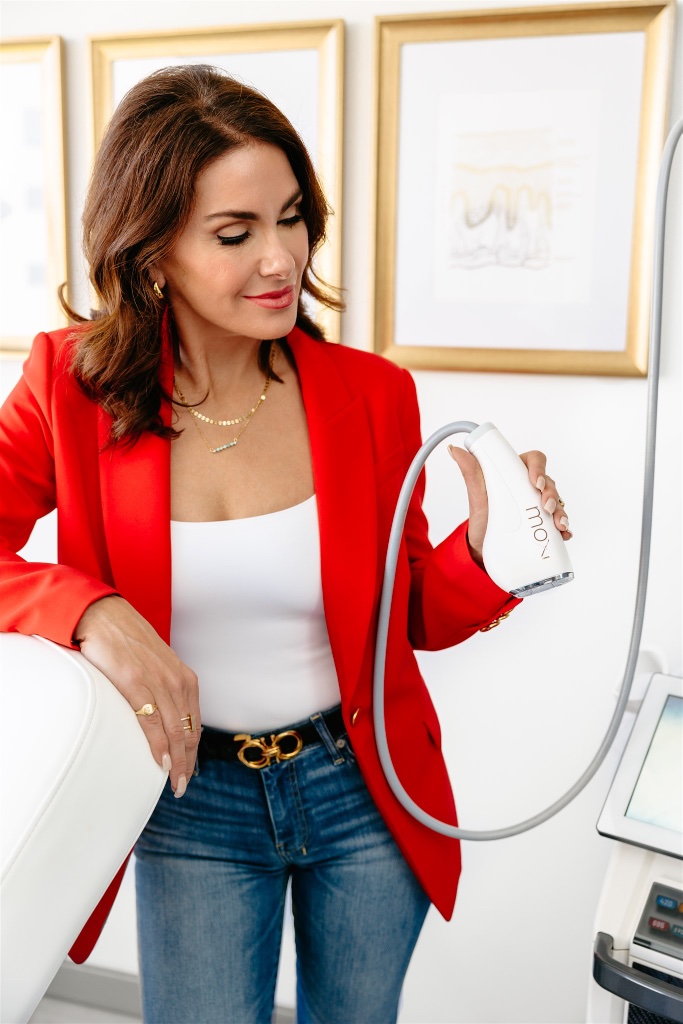
In Fort Worth
Botox at Youthful Magnolia in Fort Worth
At Youthful Magnolia in Fort Worth, every Botox consultation begins with a facial assessment and movement analysis. We discuss your treatment goals, plan individualized dosing based on your anatomy, review the expected degree of movement, and schedule follow-up where appropriate.
We do not default to a standard unit count. The right dose follows the right assessment. For a full overview of Botox at Youthful Magnolia, see our Botox treatment page.
Not Sure How Much You Need?
Wondering How Much Botox You Actually Need?
The best way to determine Botox dosing is to evaluate your facial movement, muscle strength and treatment goals in person — not to copy someone else's unit count.