Renuva in Fort Worth: Injectable Fat Grafting Alternative at Youthful Magnolia
By Amy Robbins, MSNA, APRN, CRNA, FNP-BC | Founder, Youthful Magnolia

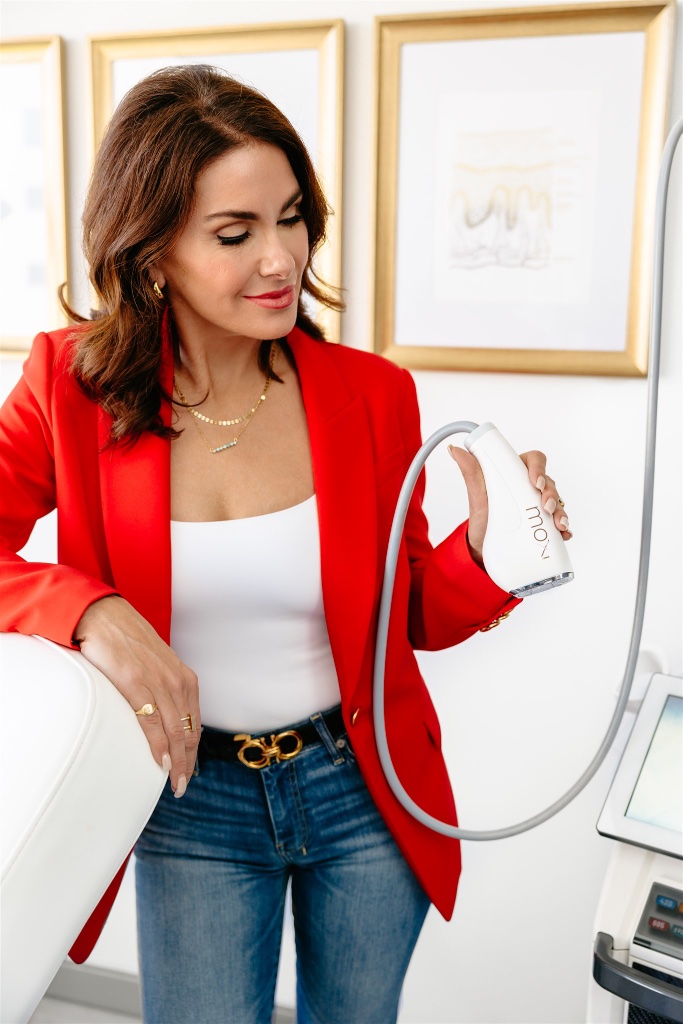
Expert Perspective
Amy Robbins
MSNA · APRN · CRNA · FNP-BC · Founder, Youthful Magnolia
Every recommendation at Youthful Magnolia begins with a genuine conversation — about your biology, your goals, and what will actually move the needle for your skin long-term. No trending protocols. No shortcuts.
The Problem With Traditional Volume Restoration
Volume loss is one of the defining features of facial aging. As we move through our 30s and 40s, facial fat compartments deflate, descend, and redistribute — creating hollows in the temples, mid-face, and under-eye area while contributing to jowling and loss of mandibular definition.
The traditional solutions have always sat at opposite ends of a spectrum:
Synthetic fillers — immediate, predictable, reversible, but temporary and increasingly costly to maintain as volume needs grow.
Fat grafting surgery — uses the patient's own fat, transferred surgically from another body area. More durable, but involves anesthesia, liposuction, variable retention rates, and meaningful recovery.
Renuva occupies a genuinely novel position between these two: an injectable biologic that stimulates the body to regenerate its own fat cells in the treatment area — without surgery, without synthetic filler, without a donor site.
At Youthful Magnolia in Fort Worth, Renuva is one of the treatments I'm most excited to discuss with patients exploring regenerative volume restoration.
What Is Renuva?
Renuva (ATCell® adipose matrix) is a human-derived, decellularized adipose tissue matrix — meaning the cellular components have been removed, leaving behind the structural scaffold that adipose (fat) tissue is built on.
When injected into an area of volume deficit, this scaffold:
- Signals the body that fat tissue is needed in this location
- Recruits the patient's own adipose progenitor cells (pre-fat cells) to the site
- Those cells differentiate into mature fat cells within the existing structural framework
- Over 3–6 months, the patient's own fat repopulates the area
The result is authentic, living fat tissue — your own biology, regenerated in the location where volume has been lost.
"Renuva is one of the most intellectually interesting treatments I've added to our practice. It doesn't fill — it regenerates. And the tissue that develops is yours, not a substance we placed." — Amy Robbins
How Renuva Compares to Other Volume Restoration Options
Understanding where Renuva fits requires comparing it honestly to the alternatives:
Renuva vs Hyaluronic Acid Filler
Hyaluronic acid filler provides immediate volume and is fully reversible with hyaluronidase. It is the right choice for patients who want fast, controllable, temporary results. Renuva is slower to show results (3–6 months) and cannot be reversed — but it produces living tissue rather than a gel.
Renuva vs Sculptra
Sculptra stimulates collagen production and provides gradual volumetric support. It's an excellent biostimulatory option, particularly for diffuse facial volume loss. Renuva specifically recruits fat cells, making it more targeted to areas where adipose volume is the primary deficit.
Renuva vs Fat Grafting Surgery
Fat grafting requires liposuction of a donor site, processing, and surgical reimplantation — with variable retention rates (typically 30–70%). Renuva eliminates the donor site, the surgery, and the anesthesia. Results develop more slowly but the process is significantly less invasive.
Where Renuva Is Used at Youthful Magnolia
Renuva's regenerative fat recruitment makes it most appropriate in areas where adipose volume loss — not just collagen loss — is the primary concern:
Face
- Temples: One of the earliest areas to show volume loss; Renuva restores the natural convex contour
- Mid-face / cheeks: Addresses the hollow, skeletonized appearance of mid-face fat pad descent
- Under-eye area: For patients with deep tear trough hollowing beyond what PRF alone can address
- Jawline / pre-jowl: Supports the architectural base that reduces the visual prominence of jowling
Body
- Hands: Volume loss in the dorsal hands is one of the most age-revealing changes; Renuva restores natural hand fullness
- Other body areas: Renuva can be used wherever fat volume has been lost to aging, weight changes, or procedural treatments
“Renuva is one of the most intellectually interesting treatments I've added to our practice. It doesn't fill — it regenerates. And the tissue that develops is yours, not a substance we placed."* — Amy Robbins”Amy Robbins, Founder · Youthful Magnolia Fort Worth
Integrating Renuva Into a Comprehensive Rejuvenation Strategy
Renuva works best as one component of a coordinated approach to facial aging. At Youthful Magnolia, we typically consider it alongside:
- Sculptra for diffuse collagen-based volumization in areas where fat loss is not the primary concern
- PRF as regenerative support that can amplify cellular recruitment and collagen building
- Ultherapy + XERF for structural tightening — because volume restoration without tightening often creates an over-filled appearance
- Peptide therapy to support the systemic regenerative environment
- Neuromodulators for dynamic line management as part of a complete plan
See our overview of injectables in Fort Worth for the full picture of how we approach facial rejuvenation planning.
The Renuva Patient Experience
Consultation We assess the pattern and degree of volume loss, determine which areas would most benefit from fat regeneration vs. other volume approaches, and discuss realistic timelines and expectations.
Treatment Renuva is injected in a clinic setting using a cannula or needle technique, similar to standard filler injection. Topical numbing is applied. Treatment time is typically 30–60 minutes depending on areas treated.
After Treatment Mild swelling and occasional bruising are expected. Some initial firmness at injection sites is normal and resolves as the matrix integrates. Patients return to normal activities within 24–48 hours in most cases.
Results Timeline Fat cell recruitment and maturation takes time. Most patients see early volume development at 6–8 weeks, with full results visible at 3–6 months.
Who Is a Good Candidate for Renuva?
Renuva may be appropriate for patients who:
- Have visible facial fat volume loss in specific anatomical zones
- Want a biological, non-synthetic approach to volume restoration
- Are comfortable with a slower timeline to results
- Want to reduce long-term dependence on repeated filler maintenance
- Are exploring regenerative alternatives to fat grafting surgery
Renuva is not appropriate for patients who are pregnant, have active infections, or have certain autoimmune conditions. A consultation is required to determine candidacy.
Frequently Asked Questions
Is Renuva permanent? Renuva recruits your own fat cells, which are living tissue. As with all living tissue, they are subject to the natural changes that come with aging, weight fluctuation, and time. Results are more durable than synthetic filler but are not strictly permanent.
Does Renuva hurt? The injection experience is similar to standard filler treatment — mild discomfort managed with topical numbing. Most patients tolerate it well.
How is Renuva different from PRP or PRF? PRF and PRP stimulate collagen and tissue quality through growth factors derived from your blood. Renuva specifically recruits adipose (fat) cells — a distinct biological process targeting a different tissue type.
Can Renuva be used at the same time as fillers? In many cases, yes — Renuva and filler can be used in the same appointment or closely sequenced to address different aspects of volume loss. Your provider will determine the right approach.
What happens if I lose weight after Renuva? As with natural fat, the regenerated tissue in Renuva-treated areas may reduce somewhat with significant weight loss. This is a consideration worth discussing during your consultation.
Related Services at Youthful Magnolia