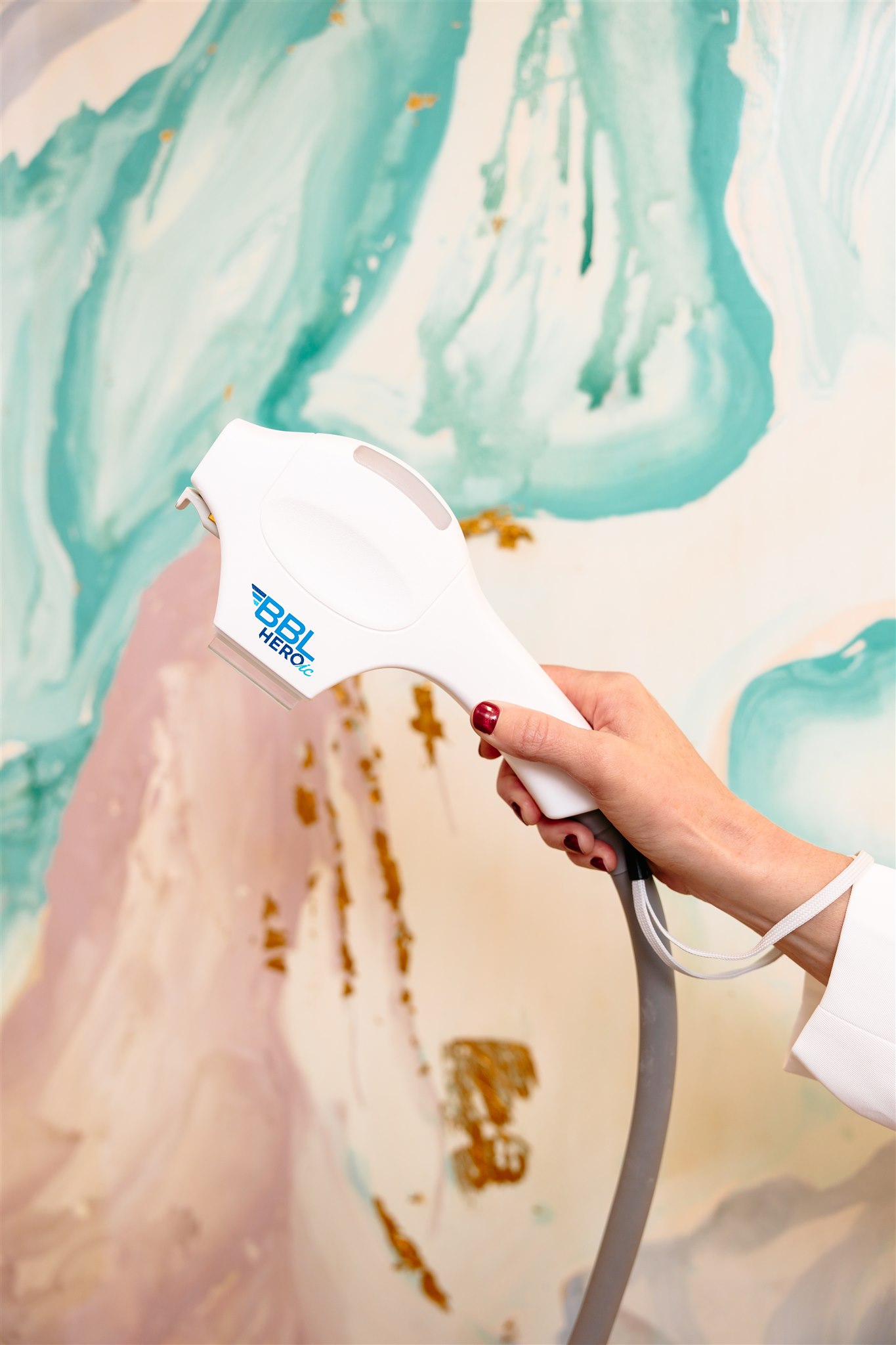
HALO vs MOXI: Which Laser Treatment Is Right for Your Skin?
HALO and MOXI are different laser treatments with different treatment approaches. Learn how they compare for skin texture, pigmentation, downtime, recovery, and results.
 Amy Robbins, MSNA APRN CRNA FNP-BC 14 min read October 2026Laser & Light
HALO and MOXI are different laser treatments. HALO is a hybrid fractional laser platform that combines ablative and non-ablative wavelengths in a single pass. MOXI is a non-ablative fractional laser treatment designed for gentle, low-downtime skin maintenance.
They differ in treatment approach, intensity options, recovery considerations, and the concerns they may address. The appropriate treatment depends on skin concerns, skin type, treatment goals, medical history, desired recovery profile, and provider assessment.
At Youthful Magnolia, both HALO and MOXI are available, and the choice between them is always guided by a full skin assessment — not by which laser sounds more powerful.
Comparison
HALO vs MOXI
at a glance.
| HALO | MOXI | |
|---|---|---|
| Treatment technology | Hybrid fractional — combines ablative (2940 nm) and non-ablative (1470 nm) wavelengths in a single pass | Non-ablative fractional — 1927 nm wavelength that delivers gentle energy without removing the skin surface |
| Primary treatment goals | Visible correction of texture, tone, fine lines, and overall skin quality in a single treatment | Prevention, early pigment correction, luminosity, and gradual skin maintenance |
| Skin texture | Addresses moderate to more established texture irregularities | Improves mild texture and surface roughness |
| Pigmentation | Addresses visible sun damage and uneven tone | Targets early pigmentation and brightness |
| Fine lines | May improve fine lines and early wrinkles through dermal remodeling | Supports collagen production but is not a primary wrinkle treatment |
| Acne scars | May improve mild to moderate acne scarring; deeper scars may require ProFractional | Not a primary treatment for acne scarring |
| Treatment intensity | Customizable — settings can be adjusted from moderate to more aggressive | Gentle and consistent — designed for low-intensity maintenance |
| Recovery considerations | Moderate — redness, swelling, and MENDs (bronzy texture) are common | Minimal — mild redness and warmth, typically brief |
| Expected downtime | Generally more social downtime than MOXI; varies by settings | Generally low social downtime; many resume activities quickly |
| Results timeline | Visible improvement often within weeks; collagen remodeling continues over months | Gradual glow and tone improvement; builds over a series |
| Number of treatments | Many patients see meaningful results from a single session; others benefit from a series | Often performed as a series for optimal results |
| Maintenance | Annual maintenance is common for sustained skin quality | Often performed 2–4 times per year as part of a maintenance program |
| Suitability | Determined by provider assessment of skin type, concerns, and goals | Determined by provider assessment; popular as a first laser experience |
| Cost considerations | Generally higher per session due to treatment intensity and technology | Generally lower per session; series pricing is common |
Section 01
What is HALO
laser treatment?
HALO is a hybrid fractional laser developed by Sciton. It is distinguished by combining two different laser wavelengths — an ablative erbium wavelength (2940 nm) and a non-ablative wavelength (1470 nm) — delivered in a single synchronized treatment pass. This hybrid approach means the treatment delivers both surface renewal and deeper collagen stimulation simultaneously.
The ablative component targets the skin surface for visible texture renewal, while the non-ablative component reaches the deeper dermis to stimulate collagen production. The combination is designed to produce more visible correction than a purely non-ablative treatment, with a recovery profile that is generally more manageable than a fully ablative resurfacing procedure.
Common treatment goals for HALO include improving skin texture, addressing uneven tone and visible sun damage, refining the appearance of fine lines, and enhancing overall skin quality. Treatment settings are customizable — the provider can adjust depth and intensity based on the patient's concerns, skin type, and downtime tolerance. This flexibility is one of HALO's defining characteristics.
Recovery considerations include redness, swelling, and the appearance of MENDs (microscopic epidermal necrotic debris) — small bronzy particles on the skin surface that slough over several days. The expected recovery depends on the settings selected and the individual's response.
Explore the HALO service page for more information about the treatment at Youthful Magnolia.
Section 02
What is MOXI
laser treatment?
MOXI is a non-ablative fractional laser on the Sciton platform. It delivers a 1927 nm wavelength that creates microscopic treatment zones in the skin to stimulate collagen production and promote cellular renewal — without significant disruption of the skin surface. This non-ablative approach means the treatment works gradually and with minimal downtime.
MOXI is designed for low-downtime skin rejuvenation. It is particularly popular as a first laser experience, as a preventative treatment for patients who want to stay ahead of early aging, and as a consistent component of a long-term skin maintenance program. Common treatment goals include addressing early pigmentation, improving skin tone and brightness, refining mild textural irregularities, and supporting ongoing collagen production.
Treatment intensity is intentionally gentle and consistent. While the settings can be adjusted to some degree, MOXI is not designed for the more aggressive correction that HALO can deliver. Its value lies in its gradual, cumulative approach — results build over a series of treatments rather than appearing dramatically after a single session.
Recovery considerations are generally minimal. Most patients experience mild redness and warmth that resolves relatively quickly. Many patients resume normal activities within a short period. However, individual recovery varies, and the provider can discuss expected recovery based on the treatment plan.
Explore the MOXI service page for more information about the treatment at Youthful Magnolia.
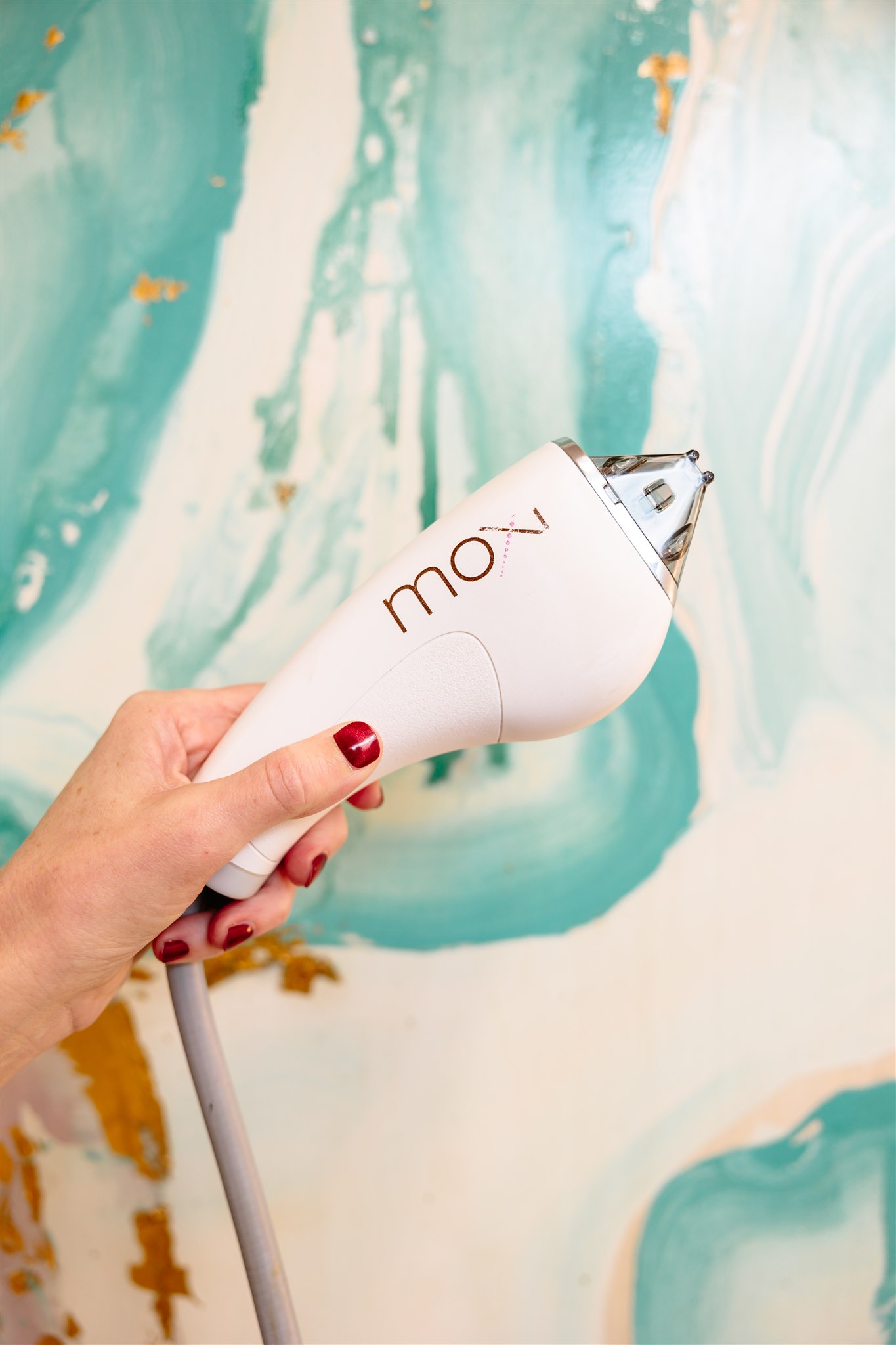
MOXI is designed for gentle, low-downtime skin maintenance — a different treatment goal than HALO's hybrid resurfacing.
Section 03
How is HALO TRIBRID different
from traditional HALO?
This distinction is critical when comparing HALO with MOXI. Youthful Magnolia offers both HALO and HALO TRIBRID, and they are not the same platform.
Traditional HALO combines two wavelengths: 2940 nm (ablative) and 1470 nm (non-ablative). It is a two-modality hybrid fractional resurfacing treatment.
HALO TRIBRID integrates three independently controlled wavelengths into a single resurfacing handpiece: 2940 nm (ablative), 1927 nm (non-ablative), and 1470 nm (non-ablative). The 1927 nm wavelength corresponds to the MOXI technology — meaning HALO TRIBRID already incorporates MOXI's wavelength as one of its three components.
MOXI is a standalone 1927 nm non-ablative fractional treatment.
This means the comparison between HALO and MOXI depends on which HALO platform is being discussed. Traditional HALO and MOXI are distinct treatments with distinct mechanisms. HALO TRIBRID, by contrast, integrates MOXI technology into its platform — making it a more comprehensive resurfacing option that addresses what both HALO and MOXI address, in a single synchronized pass.
For a detailed comparison of HALO TRIBRID and traditional HALO, see our HALO TRIBRID vs HALO article. For HALO TRIBRID recovery information, see our HALO TRIBRID downtime and recovery article.
Section 04
HALO vs MOXI: what's the biggest difference?
The biggest difference is the treatment mechanism. HALO combines ablative and non-ablative energy in a single pass — meaning it both removes damaged skin surface and stimulates deeper collagen simultaneously. MOXI is purely non-ablative — it delivers energy without removing the skin surface, working through controlled thermal injury to stimulate renewal.
This mechanism difference drives the other differences. HALO's hybrid approach offers more depth and intensity options, making it suitable for more visible correction. MOXI's non-ablative approach is gentler, with a recovery profile that is generally more manageable.
The treatment goals also differ. HALO is often chosen when the goal is visible, corrective improvement in texture, tone, and fine lines. MOXI is often chosen when the goal is prevention, maintenance, and gradual improvement with minimal interruption to daily life.
Recovery expectations follow from the mechanism. HALO generally involves more social downtime — redness, swelling, and MENDs. MOXI generally involves less — mild redness and warmth that resolves quickly. However, HALO settings can be adjusted, and individual recovery varies. Not every HALO session is identical, and not every MOXI session is identical.
Section 05
HALO vs MOXI
for sun damage.
Sun damage presents in different forms — early pigmentation, visible brown spots, uneven tone, and texture changes. The type and severity of sun damage influence which treatment may be more appropriate.
MOXI may address early pigmentation and brightness concerns. It is often considered for patients whose sun damage is in earlier stages or who want to maintain skin quality and prevent progression.
HALO may address more visible sun damage, including uneven tone and texture changes, through its hybrid resurfacing approach. The ablative component targets the surface where visible pigmentation sits, while the non-ablative component supports deeper renewal.
However, not every pigmented lesion is appropriate for cosmetic laser treatment. Some pigmentation requires medical evaluation before any treatment is considered. The correct diagnosis and provider assessment determine the appropriate treatment — and whether a laser is appropriate at all. For more on this topic, see our best laser for sun damage article.
Section 06
HALO vs MOXI
for fine lines.
Halo is generally more directly relevant for fine lines because its hybrid energy reaches the dermis where collagen remodeling occurs. The ablative component renews the surface, and the non-ablative component stimulates collagen in the deeper layers — both of which may improve the appearance of fine lines over time.
MOXI supports collagen production but is not a primary wrinkle treatment. Its 1927 nm wavelength works gradually and is better suited to prevention and maintenance than to visible line correction.
However, the severity of fine lines and the patient's overall goals determine the appropriate approach. A patient with very early fine lines who is focused on prevention may be well served by MOXI. A patient with more visible lines seeking corrective improvement may be better served by HALO. Neither treatment promises wrinkle elimination.
Section 07
HALO vs MOXI
for skin texture.
Uneven texture, roughness, and surface irregularities are common concerns that both treatments may address — but to different degrees.
HALO's hybrid resurfacing approach is designed to produce more visible texture refinement. The ablative component removes the damaged surface layer, revealing smoother skin beneath. This makes HALO more directly relevant for patients with moderate to more established texture concerns.
MOXI may improve mild texture and surface roughness through its gradual collagen-stimulating approach. The improvement builds over a series of treatments rather than appearing dramatically after a single session.
The tradeoff is recovery. HALO's more intensive resurfacing generally involves more social downtime. MOXI's gentler approach allows for quicker return to normal activities. The right choice depends on the severity of the texture concern and the patient's recovery flexibility.
Section 08
HALO vs MOXI
for acne scars.
Not all acne scars are the same. Scar type and depth matter significantly in treatment selection. Atrophic scars, boxcar scars, ice pick scars, and rolling scars each present differently and may respond differently to laser treatment.
HALO may improve mild to moderate acne scarring through its hybrid resurfacing approach. The combination of surface renewal and deeper collagen stimulation can help refine the appearance of certain scar types.
MOXI is not a primary treatment for acne scarring. Its gentle, non-ablative approach is not designed for the deeper correction that many acne scars require.
For deeper or more significant scarring, ProFractional or a combination approach may be more appropriate. Some scars require combination approaches that go beyond what either HALO or MOXI alone can deliver. Neither HALO nor MOXI removes acne scars completely. A provider assessment is essential before any acne scar treatment.
Section 09
HALO vs MOXI
for large pores.
Both treatments may improve the appearance of pore-related texture concerns. HALO's resurfacing may produce more visible refinement in pore appearance, while MOXI may support gradual improvement over a series.
However, neither treatment promises permanent pore reduction. Pore size is influenced by genetics, skin type, oil production, and age. Laser treatments can improve the appearance of pores by refining the surrounding skin texture, but they do not permanently shrink pore structures.
The appropriate treatment depends on the severity of the concern and the patient's recovery preferences. A provider assessment can help determine which treatment may produce the most meaningful improvement for the individual.
Section 10
HALO vs MOXI
for melasma.
Melasma is a complex pigmentation condition that can be difficult to manage and may worsen with inappropriate treatment. This section requires careful medical review and should not be used to make a treatment decision without consultation.
Neither HALO nor MOXI is universally recommended for melasma. The decision to use any laser for melasma depends on the correct diagnosis, skin type, pigment behavior, treatment history, and the risk of post-inflammatory hyperpigmentation — a condition where the skin darkens in response to inflammation or heat.
Some patients with melasma may benefit from certain laser approaches under careful medical supervision. Others may not be appropriate candidates for laser treatment at all. Heat-based treatments, in particular, can sometimes trigger melasma to worsen rather than improve.
This decision requires careful medical assessment and should never be made based on general information alone. For more on this topic, see our melasma and stubborn pigment article.
Section 11
HALO vs MOXI
for different skin types.
Neither treatment is automatically safe for every skin tone. Both require medical screening and individualized settings. Fitzpatrick skin type is an important factor in laser selection, and pigmentation risk varies across skin types.
MOXI is often described as one of the more versatile laser treatments for a range of skin tones, because its non-ablative approach involves less heat and surface disruption. However, patient assessment is always required before treatment.
HALO's ablative component involves more intensive energy delivery, which may carry different considerations for certain skin types. The settings can be adjusted, but the treatment is not automatically appropriate for every patient.
The provider evaluates skin type, pigmentation risk, medical history, and treatment goals before recommending either treatment. Do not assume that either treatment is automatically safe for your skin tone without a professional assessment.
Section 12
HALO vs MOXI
downtime.
Downtime comparison is one of the most important factors for many patients. HALO and MOXI differ significantly in expected recovery — but individual variation is substantial.
HALO generally involves more social downtime. Common experiences include redness and swelling initially, followed by MENDs (microscopic epidermal necrotic debris) — small bronzy particles that appear on the skin surface and slough over several days. The visible recovery period depends on the settings selected.
MOXI generally involves less social downtime. Most patients experience mild redness and warmth that resolves relatively quickly. Many patients resume normal activities within a short period.
However, treatment intensity and selected settings influence recovery for both treatments. A more aggressive HALO session will involve more downtime than a conservative one. Individual skin characteristics and response also vary. Do not expect specific recovery days without current supporting evidence and clinical review. Your provider can discuss expected recovery based on your specific treatment plan.
Section 13
HALO vs MOXI recovery: what should you expect?
Recovery can differ depending on treatment intensity, skin characteristics, treatment settings, individual response, and provider protocol. There is no single recovery timeline that applies to every patient.
HALO recovery typically progresses through phases: initial redness and swelling, followed by the appearance of MENDs, and then sloughing to reveal fresh skin. The duration of each phase depends on the settings and the individual.
MOXI recovery is generally shorter and less visually dramatic. Mild redness and warmth are common, but the recovery is typically brief and manageable.
For HALO TRIBRID recovery information specifically, see our HALO TRIBRID downtime and recovery article. Your provider can discuss expected recovery based on your treatment plan and individual factors.
Section 14
Does HALO have more downtime
than MOXI?
Generally, yes — HALO involves more social downtime than MOXI. However, this answer requires nuance. Treatment intensity and selected settings influence recovery significantly. A conservative HALO session may involve less downtime than a more aggressive one. Not every HALO session is identical.
Similarly, not every MOXI session is identical. While MOXI is consistently gentler, individual skin response and treatment settings still affect recovery.
The most accurate answer is: HALO generally involves more downtime than MOXI, but the specific downtime for any individual depends on the treatment settings, skin characteristics, and individual response. Your provider can discuss expected recovery based on your specific plan.
Section 15
Which treatment
is more comfortable?
Comfort is individual and depends on pain tolerance, treatment settings, and clinical protocol. Both treatments are typically performed with topical numbing to manage sensation.
HALO, being more intensive, may involve more sensation during treatment. The hybrid energy delivery — combining ablative and non-ablative wavelengths — produces a more noticeable treatment experience.
MOXI is generally described as more comfortable. Its non-ablative approach delivers gentler energy, and many patients tolerate the treatment well with standard comfort measures.
However, neither treatment is painless. Comfort measures, treatment settings, and clinical protocol all influence the experience. Your provider can discuss comfort expectations and measures based on your treatment plan.
Section 16
HALO vs MOXI
results.
Results differ in treatment goals, expected changes, and progressive improvement. Neither treatment universally delivers better results — they deliver different types of results for different types of concerns.
HALO results tend to be more visible and corrective. The hybrid resurfacing approach produces noticeable improvement in texture, tone, and skin quality. Many patients see visible improvement within weeks, with collagen remodeling continuing over months.
MOXI results tend to be more gradual and cumulative. The non-ablative approach builds improvement over a series of treatments, with progressive enhancement in tone, brightness, and skin quality.
Individual response varies for both treatments. The same treatment can produce different results in different patients depending on skin condition, treatment plan, and individual healing. Do not assume that one treatment universally delivers better results than the other.
Section 17
How long do HALO and MOXI
results last?
Results longevity varies based on skin condition, treatment plan, ongoing sun exposure, aging, skincare, and maintenance. Neither treatment offers permanent results.
HALO results may last longer per session due to the intensity of treatment. Annual maintenance is common for sustained skin quality. However, ongoing sun exposure, aging, and individual skin condition all affect how long results last.
MOXI results build over a series and are maintained through ongoing treatments. Many patients incorporate MOXI into a regular maintenance program to sustain results over time.
Do not expect results to last for a fixed, guaranteed period. Your provider can discuss a maintenance plan based on your goals and individual factors.
Section 18
How many HALO or MOXI
treatments do you need?
Treatment count depends on the condition being treated, the settings, individual response, and goals. There is no universal session requirement.
Many HALO patients see meaningful results from a single session. Others benefit from a series, particularly those with more advanced concerns. Annual maintenance is common for sustained skin quality.
MOXI is often performed as a series for optimal results. The gradual, cumulative approach means that results build over multiple sessions rather than appearing dramatically after one.
The treatment plan is determined by the provider assessment. Do not assume a specific number of sessions without consulting a provider about your individual needs and goals.
Section 19
Can HALO and MOXI
be combined?
HALO and MOXI may be used in a broader treatment plan, but whether combination treatment is appropriate depends on the individual patient's skin, goals, and provider assessment. Combination treatment is not appropriate for every patient.
If HALO TRIBRID is being considered, it is important to understand that HALO TRIBRID integrates the 1927 nm wavelength (which corresponds to MOXI technology) as one of its three wavelengths. This makes HALO TRIBRID a different conversation than combining separate HALO and MOXI sessions — HALO TRIBRID already incorporates MOXI technology into its platform.
The BBL + MOXI combination is a popular and well-established pairing for comprehensive skin rejuvenation. However, any combination decision should be made through provider assessment, not assumed to be appropriate for every patient.
Section 20
HALO vs MOXI vs BBL.
BBL (BroadBand Light) is a different category of treatment — a light-based approach rather than a laser. BBL delivers broad-spectrum light energy to target pigment, redness, and visible sun damage. It may be considered for different concerns than either HALO or MOXI.
BBL is often paired with MOXI for comprehensive skin rejuvenation — the BBL + MOXI combination is one of the most popular pairings. BBL targets pigment and redness while MOXI addresses texture and stimulates collagen.
This is not a three-way mega comparison. Each treatment has a distinct role: BBL for light-based pigment and redness correction, MOXI for gentle non-ablative maintenance, and HALO for hybrid resurfacing correction. The appropriate treatment — or combination — depends on the individual assessment.
For more on BBL, explore the BBL service page or our BBL vs IPL article.
Section 21
HALO vs MOXI
cost.
Cost depends on factors including treatment area, treatment intensity, individualized plan, and number of sessions. HALO is generally higher per session due to treatment intensity and technology. MOXI is generally lower per session, with series pricing common.
Only current Youthful Magnolia-approved pricing should be considered. Pricing is discussed at consultation based on the individualized treatment plan. We do not publish specific pricing figures online, because the appropriate treatment plan — and therefore the cost — varies significantly by patient.
Some patients find that a single HALO session delivers meaningful results, while others benefit from a MOXI series. The total investment depends on the treatment plan, not on a single session price. Your consultation will include a discussion of expected costs based on your recommended plan.
Section 22
Which is better for
preventative skin treatments?
Treatment selection should depend on actual skin concerns and goals, not on age-based marketing. MOXI is often described as a preventative treatment because its gentle, low-downtime approach supports ongoing skin maintenance. However, not every younger patient needs MOXI.
A younger patient with more established sun damage or texture concerns may be better served by HALO. An older patient focused on maintenance may be well served by MOXI. The appropriate treatment depends on the skin's actual condition and the patient's goals — not on assumptions about what a certain age group should choose.
Prevention is a valid goal, but it should be guided by the provider assessment, not by marketing language that suggests every younger patient needs a specific treatment.
Section 23
Which is better for
more advanced skin concerns?
Severity and type of concern may affect treatment selection. HALO is generally more directly relevant for more advanced concerns because its hybrid resurfacing approach delivers more visible correction.
However, do not automatically assume that HALO is the right choice for every patient with more advanced skin aging. The type of concern matters — texture, pigmentation, fine lines, and acne scars each respond differently to treatment. Some advanced concerns may require ProFractional or a combination approach rather than HALO alone.
The provider assessment determines the appropriate treatment based on the specific concern, its severity, and the patient's goals and recovery preferences. More advanced does not automatically mean HALO.
Section 24
Can either treatment
replace a facelift?
No. Neither HALO nor MOXI can replace a facelift. Resurfacing treatments address the skin surface — texture, tone, pigmentation, and skin quality. A facelift addresses tissue repositioning — lifting and repositioning the underlying structural tissues that have descended with age.
These are fundamentally different goals. A laser treatment, no matter how advanced, does not replicate surgical tissue repositioning. Similarly, a facelift does not address the skin quality concerns that lasers target.
Some patients benefit from combining resurfacing treatments with surgical procedures, but they serve different purposes. Do not expect any laser treatment to produce the structural changes that only surgery can achieve.
Section 25
How do you choose
between HALO and MOXI?
The choice between HALO and MOXI depends on several factors that should be evaluated together, not in isolation:
Main skin concern
What is the primary issue you want to address? Texture, pigmentation, fine lines, or overall maintenance?
Desired improvement
Are you seeking visible corrective change or gradual preventative maintenance?
Recovery flexibility
How much social downtime can you accommodate? This is often a deciding factor.
Skin type
Your Fitzpatrick skin type influences which treatment is appropriate and how settings are adjusted.
Medical history
Prior treatments, skin conditions, and medical history all factor into the recommendation.
Prior treatments
What you have tried before and how your skin responded helps guide the next step.
Treatment goals
Are you focused on a specific event, long-term maintenance, or corrective improvement?
Provider assessment
The most important factor. A professional evaluation determines the appropriate treatment for your skin.
This is not a diagnostic quiz that makes medical recommendations automatically. The decision should be made through a consultation with a qualified provider who can assess your skin, discuss your goals, and recommend the treatment that matches your specific needs.
Section 26
Amy's perspective
on HALO vs MOXI.
Editorial Note
[AMY REVIEW REQUIRED] — The following perspective is a draft direction and has not been approved as Amy's direct quote. It will be reviewed and finalized before publication as a verified statement.
"When I'm comparing HALO and MOXI for a patient, I start with the skin concern we're trying to address. Someone focused on early texture changes may need a different approach than someone with more established sun damage or acne scarring. The goal is to match the treatment to the skin, rather than choosing based on which laser sounds more powerful."
Amy Robbins
MSNA · APRN · CRNA · FNP-BC · Founder, Youthful Magnolia
Section 27
HALO and MOXI laser treatments
at Youthful Magnolia in Fort Worth.
At Youthful Magnolia, the approach to laser treatment selection begins with a comprehensive skin assessment. Every consultation evaluates the patient's skin type, concerns, goals, medical history, and recovery preferences before any treatment is recommended.
Treatment selection is individualized. We do not apply a default protocol or recommend the same treatment to every patient. The assessment determines whether HALO, MOXI, HALO TRIBRID, or another treatment is most appropriate — and whether a combination approach may serve the patient better.
Recovery education is part of every consultation. We discuss expected downtime, recovery phases, and what to expect at each stage. Realistic expectations are essential — we do not overpromise results or minimize recovery. The goal is for every patient to make an informed decision based on accurate information.
Both HALO and MOXI are available at Youthful Magnolia, along with HALO TRIBRID and the full range of laser treatments. Your consultation will help determine which is right for your skin.
Common Questions
HALO vs MOXI —
answered honestly.
What is the difference between HALO and MOXI?
Is HALO stronger than MOXI?
Is MOXI better for younger skin?
Which is better for sun damage?
Which is better for fine lines?
Which is better for acne scars?
Which is better for large pores?
Is HALO or MOXI better for melasma?
Which has less downtime?
Is HALO more painful than MOXI?
How long does HALO recovery take?
How long does MOXI recovery take?
How many treatments do you need?
How long do results last?
Can HALO and MOXI be combined?
What is HALO TRIBRID?
Is HALO TRIBRID different from HALO?
How much do HALO and MOXI cost?
Which is better for sensitive skin?
How do I know which treatment is right for me?
Related Services
HALO Laser Treatment
Hybrid fractional laser for texture, tone, and visible skin quality.
MOXI Laser Treatment
Non-ablative fractional laser for prevention and maintenance.
HALO TRIBRID
Three-wavelength resurfacing platform integrating MOXI technology.
BBL + MOXI Combo
Comprehensive dual-treatment for tone and texture.
BBL
BroadBand Light for sun damage, redness, and pigmentation.
All Laser Treatments
Explore the full laser and light treatment menu.
Related Articles
Your Provider
Amy
Robbins
MSNA · APRN · CRNA · FNP-BC
Book a Consultation"The right laser is the one that matches what your skin actually needs. That answer comes from the assessment, not from the product name."
— Amy Robbins, Founder · Youthful Magnolia
Youthful Magnolia · Fort Worth, TX
Not sure whether HALO or MOXI
is right for your skin?
The right laser treatment depends on your skin concerns, treatment goals, medical history, and recovery preferences. A consultation at Youthful Magnolia can help determine which available treatment may be appropriate for you.