
What Does XERF Actually Treat? A Fort Worth Guide to Tightening, Texture, and Skin Renewal
A modern Fort Worth guide to understanding what XERF may actually help, where it fits best, and how to think about tightening and skin renewal more strategically.
 Amy Robbins, MSNA APRN CRNA FNP-BC 16 min read June 2026Skin Tightening
One of the most common questions patients ask is not just "What is XERF?" — but "What is it actually good for?"
That is the right question. A treatment is only useful if it matches the real concern. Some patients are dealing with visible skin laxity. Some are focused on neck changes. Some are noticing early jowling or lower-face softening. Some have overlapping concerns that span tightening, texture, and overall skin quality. And not all of them are the same problem — even if they look similar in the mirror.
Understanding what XERF may actually help — and where it fits most naturally — is the kind of clarity that makes a consultation genuinely valuable. At Youthful Magnolia, we approach XERF through treatment fit and anatomical honesty, not device hype. This article is designed to give you the strategic context to ask better questions before your appointment.
Section 01
What XERF is —
in plain language.
XERF belongs in the non-surgical tightening and skin-renewal conversation. It uses radiofrequency energy — delivered into the tissue — to initiate a collagen and elastin remodeling response from within. The treatment is designed to address skin laxity and tissue quality through the body's own healing and regenerative mechanisms, without disrupting the skin's surface.
Where ablative resurfacing treatments — like HALO or ProFractional — work by creating controlled surface renewal that drives collagen synthesis from the outside in, XERF works from within the tissue outward. This distinction matters when thinking about which concerns it is best positioned to address, and why it fits certain patients and certain goals more than others.
XERF is generally discussed for patients who want support for visible skin laxity, lower-face changes, neck-related concerns, or overall tissue quality — particularly those who want a non-surgical approach and who are earlier in the laxity curve rather than at the more advanced end. It may also intersect with texture and skin-quality goals for patients whose concerns overlap multiple categories.
For a direct comparison of how XERF relates to Ultherapy — another non-surgical tightening option — see our Ultherapy vs XERF guide.
Section 02
What XERF may
actually treat.
The following concerns represent the areas where XERF tends to be most clinically relevant. This is not an exhaustive list of every possible use case — it is an honest summary of where the treatment's mechanism fits most naturally.
Mild to moderate skin laxity
Skin laxity — the loss of tissue firmness and tone that comes with reduced collagen and elastin density — is the primary indication for XERF. When the skin feels looser, less firm, or more "slack" than it used to, this reflects a change in tissue quality at the structural level. XERF's radiofrequency mechanism targets this structural layer, stimulating the collagen and elastin renewal that supports firmer-feeling, better-quality tissue over time.
Provider note
XERF tends to be most relevant for mild to moderate laxity. More advanced or structurally significant sagging typically requires a deeper conversation about available options.
Lower-face softening and early jowling
The lower face is one of the areas where laxity changes are often first and most noticeably visible — the slight softening of the jawline, the early appearance of jowling, the loss of crispness at the cheek-to-jaw transition. These changes reflect tissue laxity, and XERF's tightening mechanism may offer support for patients in the earlier-to-moderate range of this progression.
Provider note
For more advanced jowling or significant lower-face structural descent, a broader conversation — including facial balancing, deeper support, or other approaches — may be more appropriate. See our guide to non-surgical jowl treatment options for more context.
Neck laxity and neck skin quality
The neck is one of the areas where XERF's mechanism may be particularly relevant. Neck laxity — loose, less firm skin along the front of the neck, under the chin, or around the lower jaw — responds to collagen-stimulating approaches in part because the neck's tissue architecture responds meaningfully to the remodeling process. Patients with loose or crepey-looking neck skin, early platysmal band visibility, or loss of neck definition may find that XERF is worth a direct conversation.
Provider note
Neck concerns vary widely in cause and degree. A direct evaluation determines which approach is most appropriate. See our Fort Worth non-surgical neck tightening guide for more context.
Crepey or thin-looking skin
Crepey skin — the fine-textured, thin, slightly papery quality often associated with reduced collagen density — is a concern where the tissue's structural quality is the primary driver of the visible change. Because crepey skin reflects collagen and elastin depletion at the dermal level, collagen-stimulating approaches like XERF may improve the tissue quality that gives skin its firmness and smoothness over time.
Provider note
The extent of improvement depends on the degree of crepiness, skin quality baseline, and individual biological response. This is one area where realistic expectations and a direct evaluation are particularly important.
Jawline definition loss
As tissue laxity progresses, the jawline definition that comes from a crisp cheek-to-jaw boundary may begin to soften. This is a laxity concern — not primarily a volume concern — and may be relevant for XERF. For patients whose jawline change is driven by tissue laxity rather than primarily by volume loss or structural anatomy, the tightening mechanism may offer visible support.
Provider note
Jawline changes often have multiple contributing factors. A direct evaluation will clarify whether laxity, volume, anatomy, or a combination is the primary driver.
Non-surgical tissue quality support
Some patients come to XERF not with a specific dramatic concern but with a broader goal: maintaining tissue quality, supporting collagen density, and slowing the progression of laxity-driven changes over time. This "maintenance and support" use case is one where XERF's mechanism fits naturally — it stimulates the body's own collagen renewal process, which supports tissue quality even before visible changes become significant.
Provider note
For patients in this category, XERF may be part of a longer-term treatment strategy that includes skin-health support, regenerative approaches, and periodic tightening sessions.
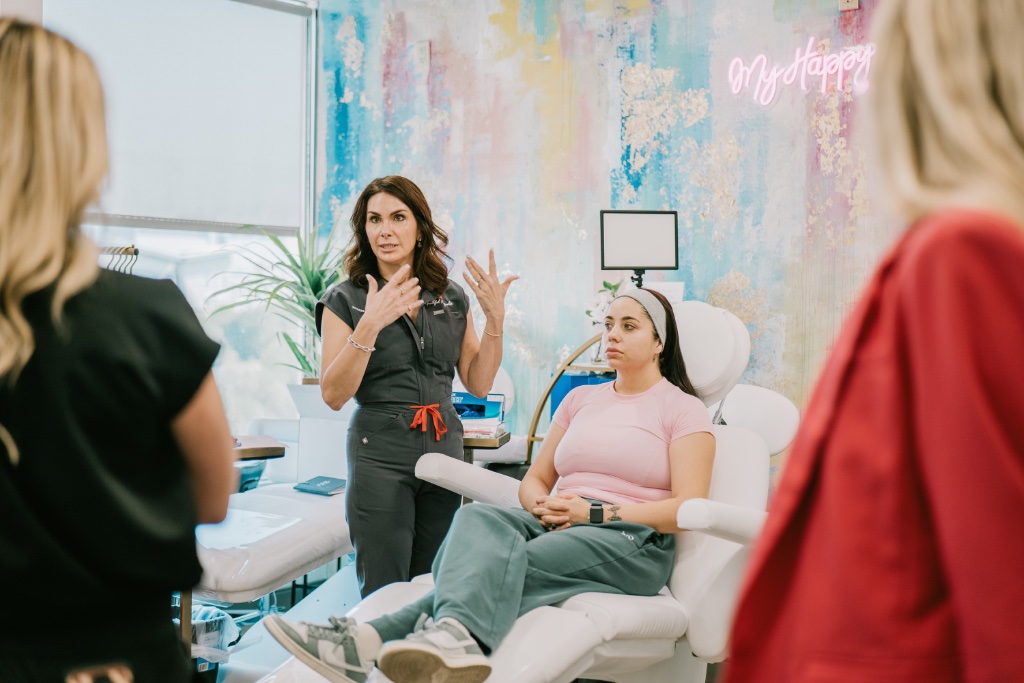
Treatment fit starts with the right question: what is this skin actually doing, and what mechanism addresses that most appropriately?
Section 03
Where XERF tends
to fit best.
Not every patient with aging-related skin concerns is a strong candidate for XERF — but some patient profiles align more naturally with what the treatment does well. Here is how to think about the XERF conversation in terms of patient fit.
Earlier in the laxity curve
XERF tends to produce the most meaningful support for patients who are earlier in the laxity progression — those with mild to moderate tissue softening rather than advanced structural descent. The treatment works with the body's own regenerative capacity, which is more responsive when tissue quality is not yet severely compromised.
Lower-face and neck as primary areas
Patients whose primary concerns center on the lower face, jawline, neck, and under-chin area are often well-positioned for the XERF conversation. These areas are where laxity-driven change tends to be most visible and where collagen-stimulating tissue support may have the most meaningful impact.
Non-surgical as a genuine preference
Patients who are genuinely committed to a non-surgical path — not just those who have ruled out surgery without exploring it — tend to approach XERF with more realistic expectations and stronger motivation to follow through on aftercare and follow-up plans.
Interest in collagen-supportive renewal
Patients who understand that XERF results develop gradually through the body's own collagen remodeling process — and who are not expecting an immediate dramatic transformation — tend to have the best experiences. The result arc is meaningful, but it requires patience and realistic expectations.
Maintenance and long-term skin investment
Patients who view XERF as part of a longer-term skin-health strategy — not a one-time fix — often find the most satisfaction. A series of treatments over time, combined with a thoughtful skincare and skin-health plan, tends to produce more sustained and cumulative benefit.
Ready for an honest planning conversation
The patients who get the most out of XERF are those who come to a consultation willing to hear an honest assessment of their anatomy — and whether XERF is truly the most appropriate choice for what they are dealing with. That kind of openness makes the planning process meaningfully better.
Section 04
When something else may
be a better fit.
Good treatment planning is equally about knowing when a treatment is not the right answer. Not every aging concern is a tightening concern — and not every tightening concern is best addressed by XERF alone. Here is how to think about when the conversation may need to go in a different direction.
Significant volume loss
May consider instead
Facial balancing / PRF / regenerative restoration
Clinical rationale
When the primary driver of facial aging is loss of volume — deflation of the midface, temples, under-eye area, or perioral region — tightening alone does not address the structural change that is creating the visible concern. A conversation about facial balancing or regenerative restoration may be more central.
Advanced structural facial sagging
May consider instead
Surgical consultation, deeper lifting approaches
Clinical rationale
When facial descent is significant — substantial drooping, deep jowling, or loss of facial structure that has progressed well beyond the mild-to-moderate range — non-surgical tightening alone is unlikely to produce the kind of outcome the patient is seeking. An honest conversation about the realistic limits of non-surgical approaches is an important part of the consultation.
Primary texture, pigment, or tone concerns
May consider instead
HALO, MOXI, BBL, ProFractional, resurfacing
Clinical rationale
Patients whose primary concern is surface-level — uneven skin tone, pigment spots, rough texture, or acne scarring — are better served by resurfacing-based treatments that address the surface and upper dermis directly. XERF does not primarily work at the surface level. Explore the full laser treatment options at Youthful Magnolia for resurfacing-specific conversations.
Primarily looking for a dramatic or rapid transformation
May consider instead
More intensive resurfacing, lifting, or combination approaches
Clinical rationale
XERF results are gradual, develop over months, and are real but not dramatic. Patients who are expecting an immediate and significant visual transformation from a single session are likely to be disappointed regardless of treatment quality. Understanding and accepting the result timeline is an essential part of appropriate candidacy.
Concerns that primarily need lifestyle or skin-health support
May consider instead
Peptides, systemic wellness, skincare optimization
Clinical rationale
Some patients are experiencing skin changes that are as much about lifestyle, nutrition, hydration, and systemic health as they are about tissue structure. For these patients, a regenerative approach — including peptide support, optimized skincare, and systemic health improvements — may produce more meaningful improvement than device treatment alone.
Section 05
Amy Robbins' expert
perspective on XERF.
The most useful question in any treatment planning conversation is not "What's the newest device?" or "What is everyone else getting?" It is: "What is this treatment actually designed to help — and does my concern fit that design?"
XERF is a treatment I genuinely believe in for the right patients and the right concerns. When a patient comes to me with mild to moderate laxity in the lower face or neck — tissue that has lost some of its structural quality but is not deeply descended — XERF's mechanism fits that concern well. The radiofrequency energy initiates a collagen renewal process that supports the tissue from within, and over time, that translates into meaningful improvement in firmness, tissue quality, and contour.
But I also see patients who have been told XERF is the answer for concerns that are primarily about volume loss, or deep structural change, or surface-level texture that needs a resurfacing conversation instead. In those cases, XERF alone would not address what is actually happening — and the patient would be left with a disappointing result and a treatment that was never appropriate for their anatomy in the first place.
The consultation is where this clarity happens. When a patient leaves their first appointment at Youthful Magnolia, they should understand not just what we are planning to do, but why that specific approach fits what their skin and anatomy are actually showing. That knowledge makes the decision — and the outcome — fundamentally more meaningful.
"The most useful treatments are the ones that fit the patient's actual anatomy and concern. XERF can be a great part of the plan — but only when we're clear about what it's really treating."
Amy Robbins
MSNA · APRN · CRNA · FNP-BC · Founder, Youthful Magnolia

The right treatment is not the most popular one. It is the one that fits the anatomy and concern most precisely.
Section 06
Face vs neck:
does XERF treat them the same way?
Face and neck aging do not always behave the same way — and treatment goals for the neck may differ meaningfully from treatment goals for the lower face. Understanding this distinction helps patients approach the XERF conversation with better-calibrated expectations.
Lower face and jawline
Concerns here are typically about softening of contours, early jowling, and loss of crisp lower-face definition
Tissue laxity is often combined with some degree of volume change — both may be relevant to the full treatment picture
XERF may support the laxity component; volume-related changes may require a separate conversation about facial balancing
The relationship between laxity and anatomy in the lower face is complex — a direct evaluation is the most reliable guide
Neck and under-chin
The neck is often one of the areas where XERF's mechanism is most clearly relevant — laxity is frequently the primary driver of neck-related concerns
Crepey neck skin, loose under-chin tissue, and loss of neck definition are concerns where collagen-stimulating tightening may produce meaningful support
The neck tends to be a more straightforward anatomy for non-surgical tightening conversations than the lower face, where more variables interact
Patients with primarily neck-driven concerns often find that XERF aligns well with what they actually need
This distinction — between face and neck as distinct treatment conversations — is one of the reasons a direct evaluation matters more than general guidelines. What is right for the neck may not be sufficient for the lower face, and what the lower face needs may require more than tightening alone. The consultation maps the terrain honestly.
Section 07
When XERF may be part
of a bigger treatment plan.
Non-surgical rejuvenation rarely works best as a single-treatment, single-session approach. For patients whose goals span multiple categories of concern — tightening, volume, texture, and skin quality — XERF may be one part of a broader, more strategic plan.
This does not mean every patient needs combination treatment. It means that for patients with overlapping concerns, building a plan that addresses each component through the most appropriate mechanism often produces better outcomes than forcing one treatment to do the work of several.
XERF + Facial Balancing
For patients with both tissue laxity and volume loss — a common combination — XERF may address the tightening component while targeted injectable restoration addresses the volume and structural support component. These two mechanisms work on different layers and may complement each other meaningfully.
Full facial balancingXERF + Resurfacing
For patients whose laxity concerns are accompanied by texture or tone irregularities, combining XERF with a resurfacing treatment — such as HALO or MOXI — may address both the surface-level concerns and the deeper tissue quality in a coordinated plan.
Explore laser treatmentsXERF + Regenerative Support
Some patients may benefit from systemic regenerative support alongside tightening treatment — including peptide therapy or PRF, which may support the body's collagen synthesis capacity from the inside. This is an area where Youthful Magnolia's regenerative philosophy and treatment depth adds clinical value.
Peptide therapyXERF + Long-term strategy
For patients who view their aesthetic health as an ongoing investment — not a one-time event — XERF can be positioned as part of a recurring skin-quality maintenance strategy, paired with consistent skincare, seasonal treatments, and periodic collagen-support sessions.
Amy Robbins · Founder, Youthful Magnolia
"A treatment plan that addresses tightening, volume, and skin quality through the most appropriate mechanism for each concern produces a fundamentally more natural and satisfying outcome than one that asks a single device to do the work of several."
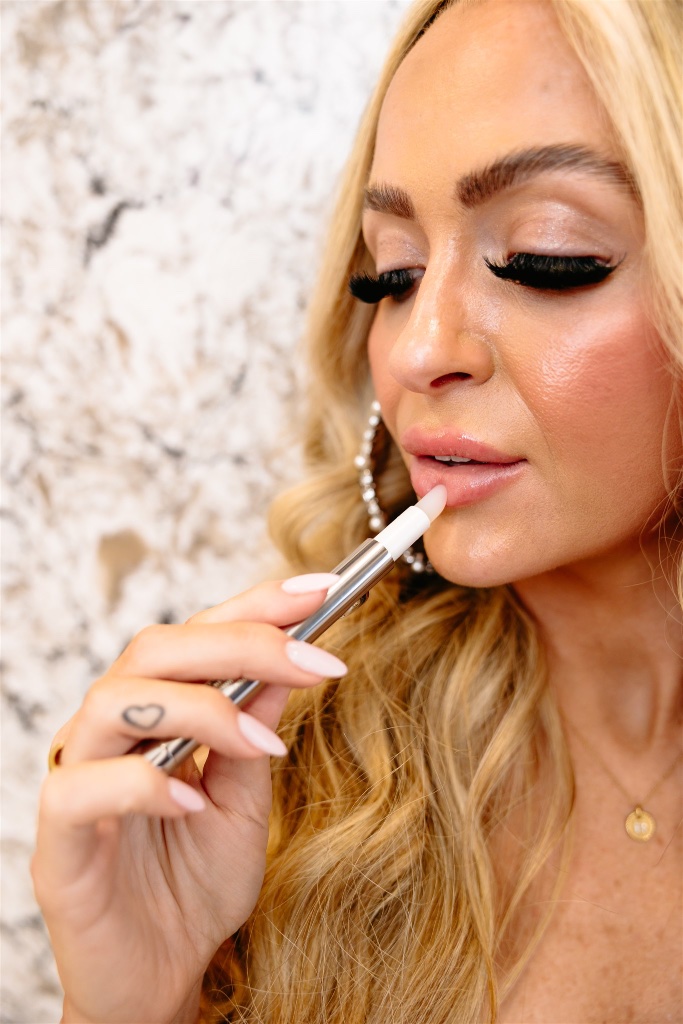
The best outcomes in non-surgical rejuvenation come from matching each concern to the mechanism that fits it most precisely — not from a single-device approach.
Section 08
What a consultation at Youthful Magnolia
may include.
Direct skin and facial anatomy assessment
Amy evaluates the skin, lower-face anatomy, neck, and tissue quality directly — looking at what the tissue is actually showing, not what the patient describes from memory or online research.
Concern pattern clarification
A structured conversation about what you are most concerned about — lower face, neck, jawline, overall laxity, texture, or a combination — and how those concerns map to available treatment options.
Treatment fit evaluation
An honest discussion of whether XERF is the most appropriate primary approach, whether it should be combined with other treatments, or whether a different path — facial balancing, resurfacing, or a combination — is more aligned with what the anatomy is showing.
Comparison to Ultherapy and other tightening options
For patients whose concerns may also fit Ultherapy or other energy-based tightening approaches, Amy will explain how the options differ, what each addresses more effectively, and why the specific recommendation was made.
Downtime and recovery discussion
A direct conversation about the recovery timeline and what the healing arc will involve — so that nothing about the post-treatment experience is left to assumption. Learn more in our XERF downtime and recovery guide.
Realistic expectations and honest outcomes
Every consultation ends with the patient having a clear, grounded understanding of what the treatment can realistically deliver, over what timeline, and what the result arc will likely look like for their specific anatomy and plan.
Section 09
Why Fort Worth patients choose
Youthful Magnolia for XERF.
Amy Robbins evaluates every patient's anatomy personally — treatment fit is never delegated
Deep expertise across tightening options: XERF, Ultherapy, and combination approaches
Honest comparison of all relevant options — not inventory-driven recommendations
Anatomy-aware planning: tightening, volume, texture, and skin quality addressed separately and strategically
Long-view skin strategy that treats rejuvenation as an investment, not a one-time event
Regenerative philosophy that may pair tightening with systemic skin-health support
Premium boutique experience in Fort Worth's most thoughtful aesthetics practice
Natural-looking outcomes rooted in precision, restraint, and clinical honesty
Common Questions
What XERF treats —
answered honestly.
What does XERF actually treat?
Is XERF good for jowls?
Can XERF help the neck?
Can XERF help crepey skin?
Is XERF for tightening or texture?
Does XERF help lower-face laxity?
What concerns are not the best fit for XERF?
Is XERF a good non-surgical treatment option?
How do I know if XERF is right for me?
Where can I get XERF in Fort Worth?
Related Services
XERF Laser Tightening
The XERF radiofrequency skin-tightening treatment at Youthful Magnolia.
Laser Treatments
Explore the full Sciton-based laser and energy treatment menu.
Ultherapy
Ultrasound-based tightening — a common comparison and complement to XERF.
Weight & Body
Non-surgical tightening and body treatment options.
Full Facial Balancing
Injectable restoration — often paired with tightening in a comprehensive plan.
PRF Under Eyes
Regenerative platelet-rich fibrin for under-eye restoration.
Book a Consultation
Begin with a personalized anatomy evaluation and treatment planning discussion.
Your Provider
Amy
Robbins
MSNA · APRN · CRNA · FNP-BC
Book a Consultation"Every XERF conversation at Youthful Magnolia begins with the same question: does this patient's anatomy actually fit what XERF does? When the answer is yes, we can plan with real confidence. When it's not, I'd rather say so than force a treatment onto a concern it wasn't designed for."
— Amy Robbins, Founder · Youthful Magnolia
Youthful Magnolia · Fort Worth, TX
Ready to find out whether XERF
fits your goals?
If you're trying to understand whether XERF may actually help your face, neck, or lower-face concerns, our team can help you think through the right treatment path with more clarity and strategy.