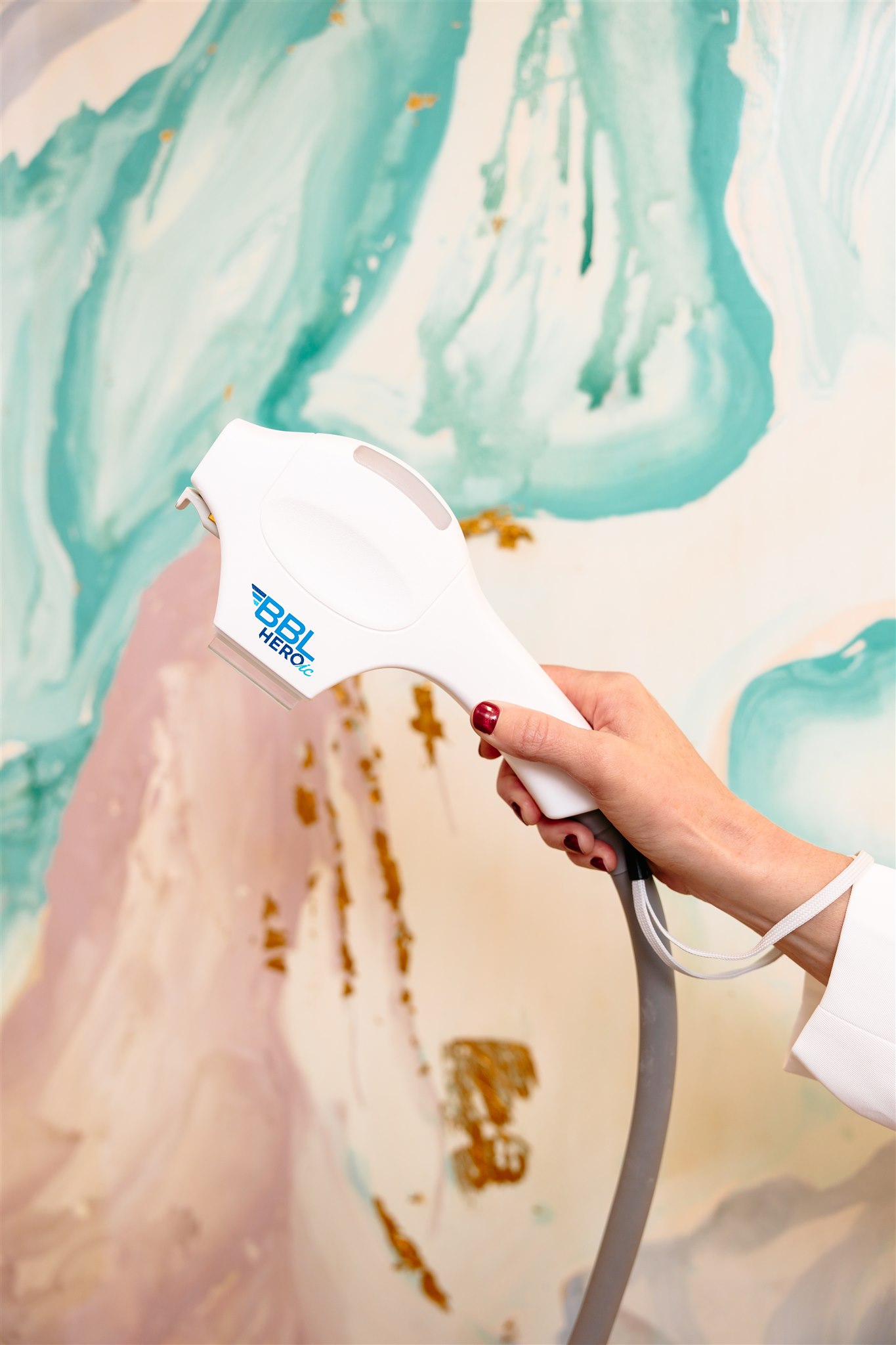
Face Tightening vs Skin Resurfacing in Fort Worth: What Actually Changes What?
A modern Fort Worth guide to understanding the difference between skin tightening and skin resurfacing — what each one may actually improve, and why so many patients confuse texture, laxity, wrinkles, and pores.
 By Amy Robbins, MSNA APRN CRNA FNP-BC 16 min read June 2026Treatment Planning
Many patients walk into a consultation asking for "tighter, smoother skin" — without realizing that tightening and resurfacing are two fundamentally different conversations that work at two fundamentally different depths.
If you are searching for "face tightening vs skin resurfacing" in Fort Worth, you are likely trying to decide between two categories of treatment that sound similar but address different layers of the skin, different concerns, and different goals. Tightening targets the deeper structural layers — restoring firmness, lift, and architectural support. Resurfacing targets the surface and near-surface layers — refining texture, tone, pigment, and fine lines. These are not interchangeable approaches.
The confusion is understandable. Wrinkles, sagging, pores, rough texture, and crepey skin can all look related in the mirror. But they have different causes, live at different depths, and respond to different treatments. A patient who is concerned about a softening jawline needs a different conversation than a patient who is concerned about sun spots and rough texture. Treating one with the other's tool produces disappointing results — not because the technology failed, but because the wrong question was asked.
The most important concept to understand before choosing is this: texture and laxity are not the same thing. Texture is a surface concern. Laxity is a structural concern. Resurfacing changes the surface. Tightening changes the structure. Many patients benefit from addressing both — but the starting point depends on what is actually driving the concern, not on which treatment is most marketed.
At Youthful Magnolia in Fort Worth, Amy Robbins approaches skin planning with a diagnostic-first philosophy: understand whether the concern is structural, surface, or both — and build a plan that makes sense for the person in front of us, not for a generic protocol.
Section 01
What skin tightening
actually treats.
Skin tightening targets the deeper structural layers of the skin — the dermis and the supportive architecture beneath it. As we age, collagen and elastin production decline, and the skin gradually loses the firmness and density that kept it taut and youthful. The result is laxity: a gradual loosening, descent, and softening of the facial architecture that no surface treatment can meaningfully address.
Tightening treatments — whether RF-based, ultrasound-based, or other energy modalities — deliver controlled energy into the deeper layers to stimulate collagen production and, over time, restore a sense of firmness and lift. The goal is structural: to rebuild the scaffolding that supports the skin, not to change what the surface looks like.
What tightening does best is address the feeling that the skin has settled — a softening jawline, early jowling, crepey thinning skin, and the loss of definition along the lower face and neck. These are architectural concerns, and they respond to architectural solutions. A tightening treatment does not meaningfully change pigment, pore size, or surface texture — those are surface concerns that require a surface approach.
It is also important to understand that tightening results are gradual. Collagen remodeling takes time — most patients see building improvement over 3 to 6 months as the skin responds to the energy delivered during treatment. This is not an instant transformation; it is a structural process that unfolds over time as the skin rebuilds its own support.
Skin laxity
The gradual loosening and descent of skin that comes with collagen loss and aging — the feeling that the skin has settled or lost its youthful firmness.
Jawline and lower-face definition
Softening along the jawline, early jowling, and loss of the crisp transition between face and neck that tightening may help restore.
Crepey or thinning skin
Skin that has lost density and structural support — often appearing delicate, finely lined, and less resilient to the touch.
Subtle lift and firmness
The goal of tightening is structural — restoring a sense of lift, firmness, and architectural support rather than changing the surface texture.
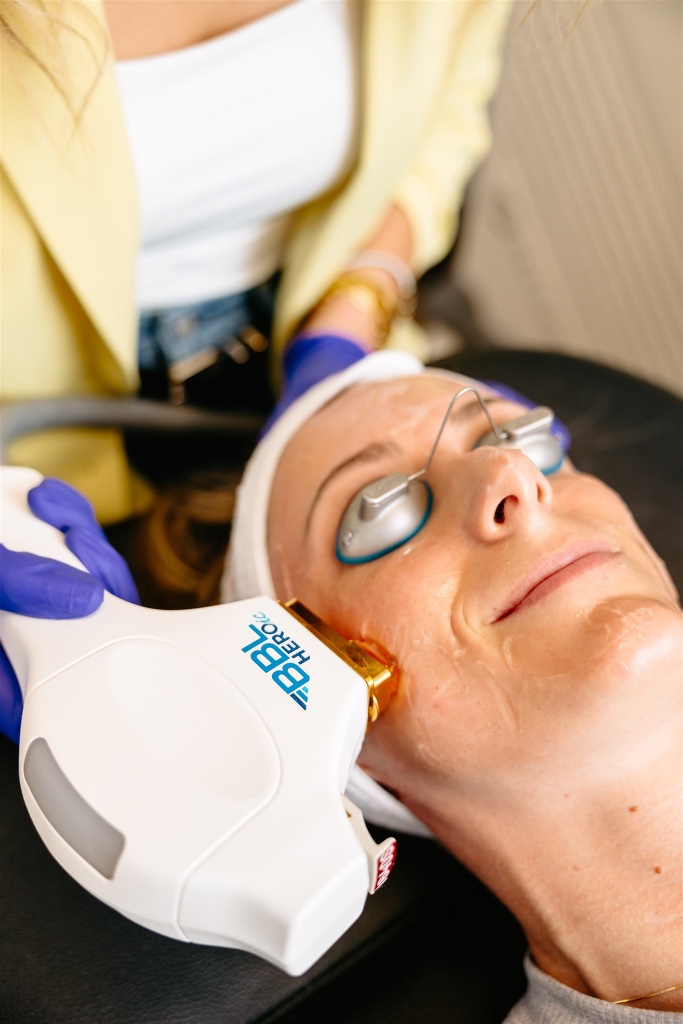
Tightening addresses architecture — the firmness, lift, and structural support beneath the surface. It is a gradual process, not an instant transformation.
Section 02
What skin resurfacing
actually treats.
Skin resurfacing targets the surface and near-surface layers of the skin — the epidermis and upper dermis. Over time, sun exposure, aging, and environmental damage accumulate in these layers, producing the texture changes, pigment irregularities, fine lines, and pore enlargement that make skin look older, rougher, and less luminous. These are surface concerns, and they respond to surface solutions.
Resurfacing treatments — whether fractional laser, chemical peel, or other modalities — work by either removing damaged surface skin or stimulating controlled renewal within it. The goal is surface refinement: smoother texture, more even tone, reduced pigment, refined pores, and a visible improvement in the quality of the skin's outermost layers.
What resurfacing does best is address what you can see and feel on the surface — roughness, uneven tone, sun spots, fine lines, enlarged pores, and the textural aftermath of acne. These are the concerns that live in the layers resurfacing directly targets. Resurfacing does not meaningfully address laxity, sagging, or structural descent — those are deeper concerns that require a tightening conversation.
Resurfacing results are generally visible sooner than tightening results. Surface improvement often appears within days to weeks, depending on the depth of the treatment. Deeper resurfacing — like HALO or Sciton TriBrid — may involve more downtime but produce more comprehensive surface renewal.
Surface texture and roughness
Uneven texture, roughness, and the lack of smoothness that comes from sun damage, aging, and accumulated surface irregularity.
Pigment and tone
Sun spots, uneven tone, redness, and discoloration that sit in the surface and near-surface layers of the skin.
Fine lines and pores
Fine lines around the eyes and mouth, enlarged pores, and the visible signs of surface-level aging and sun exposure.
Acne scars and surface irregularity
Atrophic scarring, surface unevenness, and textural concerns that resurfacing may help smooth and refine.
Section 03
Why patients confuse
tightening and resurfacing.
The confusion between tightening and resurfacing is one of the most common — and most consequential — misunderstandings in skin treatment planning. Patients look in the mirror and see skin that looks older, and they assume the solution is singular. In reality, what they are seeing is often a combination of surface changes and structural changes that require different approaches.
Wrinkles are the most common source of confusion. Deep wrinkles and folds — those caused by the descent and laxity of the skin — are a tightening conversation. Fine surface lines — those caused by sun damage, dehydration, and surface aging — are a resurfacing conversation. Many patients have both, and assume a single treatment will address all of them. It will not.
Pores are another common source of confusion. Patients often assume that tightening will shrink pores, but pores are a surface and texture concern — resurfacing is the more appropriate conversation. A tightening treatment does not meaningfully change pore size, just as a resurfacing treatment does not meaningfully lift a sagging jawline.
Crepey skin sits at the intersection. It involves thinning skin, loss of density, and fine surface lines — which means it has both a structural component and a surface component. This is one of the few concerns where both tightening and resurfacing may play a role, and the right balance depends on the specific character of the concern and the patient's skin.
Understanding which concern points to which conversation is the foundation of a smart skin plan. The visualization below maps common concerns to the conversations they actually belong to.
Concern mapping
Which concerns point to which conversation
Directional only — not a guarantee of your outcome. Every concern must be assessed in person before a treatment plan is built.
Wrinkles
Tightening: May help deeper lines
Resurfacing: May help surface lines
Deep wrinkles are often a laxity conversation; fine surface lines are often a resurfacing conversation. Many patients have both.
Sagging jawline
Tightening: Primary target
Resurfacing: Not the right tool
A softening jawline is a structural concern — tightening addresses the architecture, not the surface.
Enlarged pores
Tightening: Not the primary tool
Resurfacing: Strong fit
Pores are a surface and texture concern — resurfacing is generally the more appropriate conversation.
Sun damage and pigment
Tightening: Not the right tool
Resurfacing: Primary target
Pigment and tone live in the surface layers — resurfacing directly addresses what tightening cannot.
Crepey skin
Tightening: May help
Resurfacing: May also help
Crepiness sits at the intersection of thinning skin and texture — both approaches may play a role depending on the specific concern.
Overall skin quality
Tightening: Supports structure
Resurfacing: Supports surface
Skin quality is both structural and surface — which is why layered plans are often the most comprehensive answer.
Section 04
Amy Robbins on skin planning —
what she wants patients to understand first.
Skin planning should be approached with diagnosis, not impulse. The patients who have the best experiences are the ones who started by understanding what was actually driving their concern — not which treatment sounded the most impressive. Better understanding creates better plans, and better plans create better outcomes.
Not every skin concern responds to the same approach. A patient concerned about a softening jawline is in a very different conversation from a patient concerned about sun spots and rough texture. The concerns may look related in the mirror, but they live at different depths and respond to different treatments. Any consultation that treats all skin aging as interchangeable is not giving you accurate information.
The most strategic plans often layer approaches over time. Tightening may restore structure and firmness, while resurfacing refines the surface for tone and texture. These are complementary, not competing — and for many patients, addressing both produces more comprehensive results than either alone. But the sequencing, calibration, and timing must be planned thoughtfully.
The best consultation is honest, specific, and individualized. It starts with understanding what is actually changing in your skin — structure, surface, or both — and builds a plan that addresses the real cause, not the surface symptom. That kind of consultation is exactly what we offer at Youthful Magnolia.
“Texture and laxity are not the same thing. Resurfacing changes the surface. Tightening changes the structure. The best skin plans start by understanding which one — or both — is actually driving what you see in the mirror.”
Amy Robbins
MSNA · APRN · CRNA · FNP-BC · Founder, Youthful Magnolia
Section 05
When tightening
may make more sense.
Skin tightening may be the more sensible starting point when the primary concern is structural — laxity, sagging, loss of firmness, and the architectural changes that come with collagen loss and aging. If what you see in the mirror is skin that has settled, a jawline that has softened, or early jowling, tightening is the conversation that addresses the root cause.
Tightening may also make more sense for patients concerned about crepey or thinning skin — skin that has lost density and structural support and appears delicate and finely lined. While resurfacing may improve the surface texture of crepey skin, the underlying density loss is a structural concern that tightening is better equipped to address.
For patients whose primary concern is the lower face and neck — jawline definition, early jowling, submental softening — a tightening conversation is often the right starting point. Energy-based platforms like XERF or ultrasound-based treatments like Ultherapy represent the kind of technology that may enter this conversation.
It is worth noting that tightening is not a substitute for surgery in cases of significant laxity. For patients with advanced sagging, a tightening treatment may produce modest improvement but cannot replicate the results of a surgical lift. Honesty about what is realistically achievable is an essential part of the consultation — and a responsible provider will tell you when a non-surgical approach is not the right answer.
Section 06
When resurfacing
may make more sense.
Skin resurfacing may be the more sensible starting point when the primary concern is surface-level — texture, tone, pigment, pores, and fine lines. If what you see in the mirror is roughness, uneven tone, sun spots, enlarged pores, or fine surface lines, resurfacing is the conversation that directly addresses what is happening in the layers you can see and feel.
Resurfacing may also make more sense for patients whose primary concern is the aftermath of acne — atrophic scarring, surface irregularity, and the textural changes that breakouts leave behind. These are surface and near-surface concerns that tightening cannot meaningfully address, and resurfacing — particularly fractional laser — is often the more appropriate tool.
For patients concerned about sun damage and its visible effects — pigmentation, dullness, rough texture, and fine lines — resurfacing is generally the primary conversation. Platforms like HALO, Sciton TriBrid, and MOXI represent the range of resurfacing options, from low-downtime maintenance to deeper corrective treatment.
The depth of resurfacing matters. Lighter treatments like MOXI may involve minimal downtime and produce gradual, building improvement — ideal for maintenance and mild concerns. Deeper treatments like HALO or TriBrid involve more recovery but produce more comprehensive surface renewal. The right depth depends on the concern, the skin type, and the downtime tolerance — all of which are assessed during consultation.

Resurfacing refines the surface — texture, tone, pigment, and fine lines. It is the conversation that addresses what you can see and feel, not the structure beneath.
Section 07
When both may be
part of the plan.
For many patients, the most strategic plan is not tightening or resurfacing — it is both, sequenced thoughtfully over time. Aging skin changes in multiple ways simultaneously: structure loosens, surface roughens, pigment accumulates, and texture declines. Addressing only one dimension often leaves the other unaddressed, which is why layered plans frequently produce more comprehensive results than any single approach.
A layered plan might begin with tightening to restore structural support and firmness, followed by resurfacing to refine the surface once the architecture has been addressed. Or it might begin with resurfacing to improve surface quality, followed by tightening to address the deeper structural concerns. The sequence depends on the patient's specific concerns, goals, timeline, and downtime tolerance.
The spacing between treatments matters as much as the sequence. Tightening results build over months, and resurfacing requires healing time. Layering these treatments too closely can overwhelm the skin; spacing them thoughtfully allows each to produce its full effect before the next is introduced. This is the kind of sequencing that a diagnostic-first consultation is designed to plan.
It is also worth understanding that some platforms blur the line between tightening and resurfacing. Advanced energy-based treatments like XERF may contribute to both collagen support and surface renewal, while Picofy offers targeted pigment and skin-revitalization capabilities. The right combination — or the right single platform — depends entirely on what an in-person assessment reveals about your skin.
Section 08
What a skin-planning
consultation should include.
Before any tightening or resurfacing treatment begins, the consultation should cover all of the following. If it does not, ask why.
Direct visual assessment of the skin
The provider should examine your skin in person — evaluating texture, tone, laxity, pigment, and the overall character of your concerns. A consultation conducted from a photo alone is insufficient for skin planning.
Identification of structure vs. surface
The consultation should clarify whether your primary concern is structural (laxity, sagging, firmness) or surface (texture, pigment, pores, fine lines) — or a combination of both. This determines which conversation you are actually in.
Fitzpatrick skin type classification
Your skin tone must be formally assessed before any energy-based treatment. Treatment parameters must be calibrated to your Fitzpatrick type to minimize the risk of pigmentation changes, especially with resurfacing.
Goals: correction vs. maintenance
The consultation should clarify whether your goal is active correction of a specific concern, overall skin-quality improvement, or long-term maintenance. Different goals may point toward different approaches or combinations.
Realistic expectations
The provider should tell you what outcomes are realistic — including what tightening and resurfacing can and cannot do, estimated timelines, and how the plan may evolve. Honesty about limitations is essential.
Whether one or both approaches fit
The consultation should explain whether tightening, resurfacing, or a layered plan makes sense for your specific skin and why. For some patients, a single approach is sufficient; for others, sequencing both over time produces more comprehensive results.
Personalized sequencing and timing
A responsible plan includes treatment sequencing, spacing rationale, aftercare guidance, sun-protection strategy, and discussion of lifestyle factors. The plan should also address what happens if the skin responds differently than anticipated.
Side-by-side comparison
Tightening vs resurfacing at a glance
Primary target
Skin laxity, firmness, and structural support
Surface texture, tone, pigment, and fine lines
Layer of action
Deeper dermal and structural layers
Epidermis and upper dermis
Mechanism
Energy that stimulates collagen and tightening
Controlled removal or remodeling of surface skin
Best for
Sagging, jawline softening, crepey skin
Pigment, texture, pores, surface lines
Does not address
Surface pigment and pore size
Underlying laxity and structural descent
Timeline to results
Gradual — often 3 to 6 months
Visible sooner — days to weeks
Session approach
Often 1 to 3 sessions or a single treatment
Often a series or a single deeper treatment
Layered potential
May complement resurfacing
May complement tightening
Common Questions
Tightening vs resurfacing —
answered honestly.
What is the difference between skin tightening and skin resurfacing?
Does skin tightening help with wrinkles?
Does skin resurfacing tighten skin?
Which is better for sagging skin — tightening or resurfacing?
Which is better for pores and texture — tightening or resurfacing?
Can I combine skin tightening and skin resurfacing?
How long do results take for skin tightening vs resurfacing?
Is skin tightening or resurfacing better for sun damage?
What is crepey skin — a tightening or resurfacing concern?
Where can I get skin tightening and resurfacing in Fort Worth?
Related Services
XERF Laser
An advanced energy-based platform for skin renewal, collagen support, and tightening — one of the tools that may enter the tightening conversation.
HALO
Hybrid fractional laser for texture, tone, fine lines, and visible skin quality — a cornerstone of the resurfacing conversation.
Sciton TriBrid
Advanced triple-wavelength resurfacing for comprehensive surface renewal and skin-quality improvement.
MOXI
Low-downtime fractional laser for prevention, pigment, and maintenance of surface skin health.
Picofy by InMode
An advanced picosecond laser for pigment, tattoos, and skin renewal — a targeted tool within the broader laser pillar.
Ultherapy
Non-invasive ultrasound skin tightening and collagen-building for gradual lift and structural support.
Laser Treatments
Our full advanced laser platform — the foundation of light-based skin treatment at Youthful Magnolia.
Book a Consultation
Begin the conversation. A skin-planning consultation is always the right first step toward a realistic plan.
Related Articles
Your Provider
Amy
Robbins
MSNA · APRN · CRNA · FNP-BC
Begin the ConversationThe best skin plans do not start with a device — they start with understanding what is actually changing in your skin. Structure and surface are different conversations, and the right plan addresses the real cause, not the surface symptom.
— Amy Robbins, Founder · Youthful Magnolia
Youthful Magnolia · Fort Worth, TX
Ready for a more informed
skin-planning conversation?
If you are exploring skin tightening or resurfacing in Fort Worth, our team can help you understand what is actually changing in your skin, whether tightening or resurfacing may fit, and what a realistic plan may look like.