Quick Answer
XERF vs Ultherapy: What's the Main Difference?
XERF uses radiofrequency energy, while Ultherapy uses focused ultrasound energy. Both are non-surgical skin-tightening technologies, but they differ in how energy is delivered, treatment depth, sensation, treatment strategy, and which patient concerns they may be best suited for.
Neither is universally better — the right choice depends on your anatomy, skin, and goals.
Introduction
The wrong question gets
the wrong answer.
When patients come to Youthful Magnolia asking "which is better — Ultherapy or XERF?" it is a natural question. But it is also the wrong one. The better question is: which one is better suited to your anatomy, your concerns, your degree of laxity, and what you are realistically trying to achieve?
Ultherapy and XERF are both legitimate, effective non-surgical tightening technologies. They work differently, target different tissue depths, and suit different patients. Neither is universally superior. The decision between them — or the decision to combine them — is a clinical one that requires understanding the patient in front of you, not defaulting to whichever device is newer or more heavily marketed.
This guide is designed to give you an honest, educational framework for understanding both treatments — what they are, how they differ, who tends to respond well to each, and why the quality of the treatment planning conversation matters as much as the device itself.
The Real Conversation
Why tightening treatments
are so often misunderstood.
Non-surgical skin tightening is one of the most complex categories in aesthetic medicine — and one of the most frequently oversimplified. The core challenge is that the word "tightening" encompasses a spectrum of anatomical concerns that require very different interventions.
Laxity can exist at the level of the skin surface, the dermis, the subcutaneous fat layer, the SMAS (superficial musculoaponeurotic system), or the deeper structural ligaments and muscles. A treatment that works well for one level of laxity may be entirely wrong for another. This is why two patients who both describe "sagging skin" may need completely different approaches.
The aesthetic industry often presents non-surgical tightening as a simple upgrade path — "do X treatment and avoid a facelift." This is sometimes appropriate and sometimes genuinely misleading. Significant structural descent — advanced jowling, deep marionette lines, substantial skin excess — cannot be reliably addressed with energy-based treatments alone. Being honest about what non-surgical options can and cannot do is a fundamental part of ethical treatment planning.
What Ultherapy and XERF do well is address mild to moderate laxity at specific tissue depths — providing real, meaningful improvement for the right patient at the right stage of their skin aging journey. Understanding where you fall in that spectrum is the starting point for any honest tightening conversation.
Amy Robbins · Founder
The most important conversation in skin tightening is not 'which device?' — it's 'is this patient's degree of laxity actually addressable non-surgically, and if so, at which tissue depth does the problem primarily exist?' Everything else follows from that.
Non-surgical tightening planning at Youthful Magnolia begins with an honest assessment of anatomy, tissue depth, and what is realistically achievable.
The Technology
What Ultherapy is —
and how it works.
Ultherapy uses micro-focused ultrasound energy delivered to precise tissue depths. The key differentiator is its ability to visualize and target the SMAS layer — the same structural tissue layer addressed in a surgical facelift — at depths of 4.5mm, 3mm, and superficially at 1.5mm depending on the transducer used.
The mechanism is thermal coagulation: focused ultrasound creates precise thermal injury points (called thermal coagulation points, or TCPs) at the targeted depth. This initiates a wound-healing response in which the body produces new collagen and the tissue remodels over the following months. Because the energy is delivered in focused points rather than broadly, surrounding tissue is not damaged and the skin surface is left intact.
The clinical significance of the SMAS targeting is substantial. Most non-surgical tightening technologies work at dermal or subdermal depth. Ultherapy's ability to reach the SMAS means it can address foundational structural laxity — the kind of descent that drives jowl formation and neck laxity — in a way that most other non-surgical options cannot.
The result is gradual: collagen remodeling takes time, and most patients see continued improvement over 3–6 months. Ultherapy is not a same-day result treatment. It is a biological investment that pays off over months, not days.
Energy Type
Micro-focused ultrasound (MFU-V)
Primary Tissue Depth
SMAS layer (4.5mm), dermis (3mm, 1.5mm)
Mechanism
Thermal coagulation points (TCPs) → collagen remodeling
Result Timeline
3–6 months for full results
Downtime
Minimal — mild redness, occasional swelling 24–48hrs
Sessions
Often 1 session annually; series for some patients
The Technology
What XERF is —
and how it works.
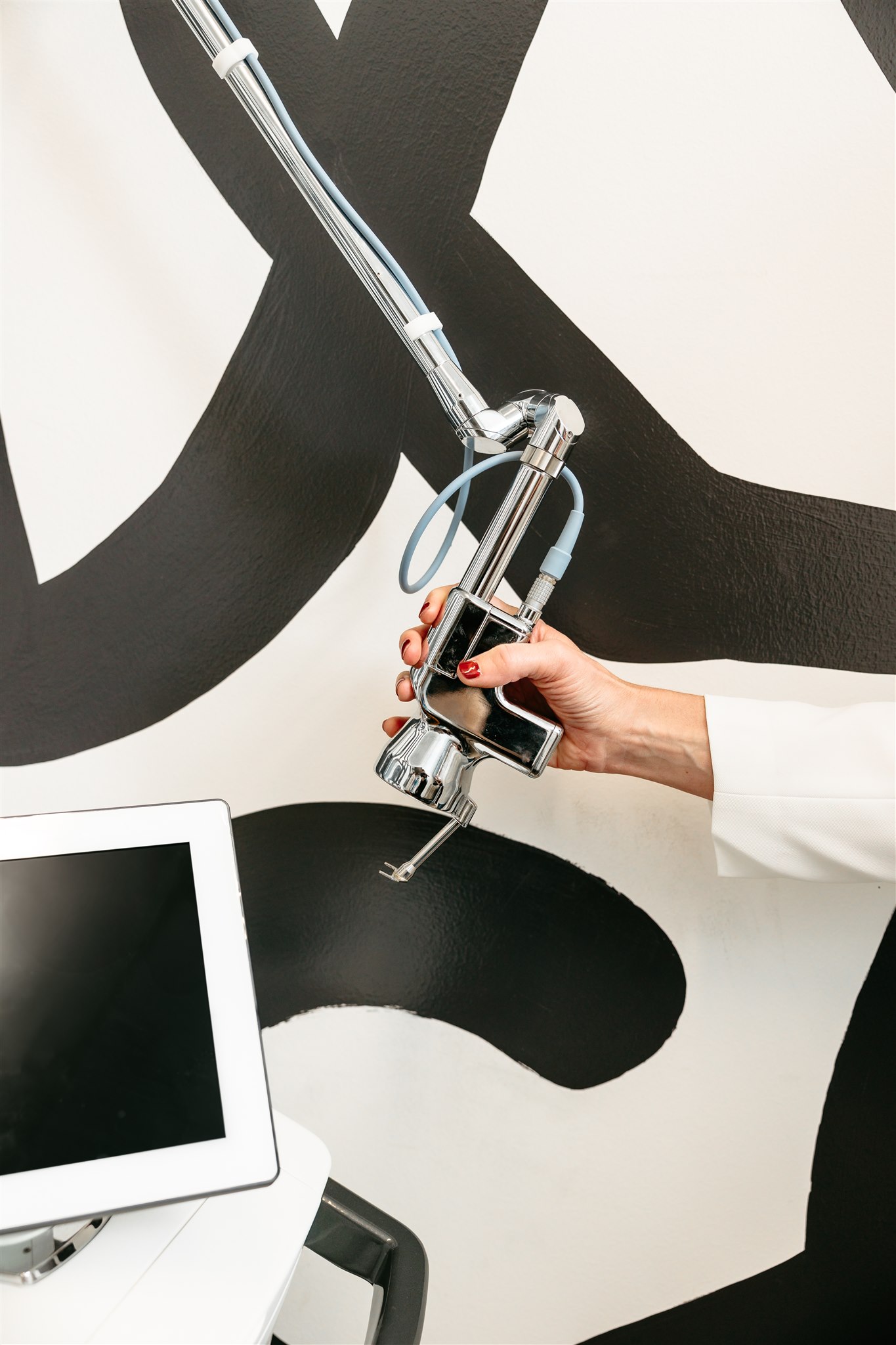
XERF (Extended RF) uses radiofrequency energy to heat the dermis and upper subcutaneous tissue, stimulating collagen contraction and the production of new collagen over time. RF energy is delivered through a handpiece that moves across the skin surface, delivering controlled thermal energy to the tissue below.
XERF's mechanism is thermal heating of dermal collagen: the heat causes immediate partial collagen contraction and triggers a fibroblast response that generates new collagen over the following weeks and months. Because RF energy heats a broader tissue volume rather than creating discrete focal points, the effect tends to be more diffuse — improving overall skin quality, tightness, and texture across a treatment area rather than creating focused structural lifting.
This makes XERF well-suited for patients whose primary concerns are skin quality — thinning, crepiness, surface laxity, early textural change — rather than deep structural descent. It is also typically more comfortable than Ultherapy and often performed in a series rather than as a single session.
XERF also has meaningful utility for skin texture improvement and is commonly used in areas where Ultherapy's SMAS targeting is less relevant — including areas with thinner tissue where RF's broader heating effect is the appropriate tool.
Energy Type
Radiofrequency (RF)
Primary Tissue Depth
Dermis and upper subcutaneous tissue
Mechanism
Broad thermal heating → collagen contraction + new collagen
Result Timeline
4–8 weeks, continuing through 3–4 months
Downtime
Minimal — mild redness, temporary sensitivity
Sessions
Typically 3–6 sessions in a series
Side by Side
How they differ
in treatment approach.
| Factor | Ultherapy | XERF |
|---|---|---|
| Energy type | Micro-focused ultrasound | Radiofrequency |
| Primary depth | SMAS layer (4.5mm) | Dermis / upper subdermal |
| Best for | Structural descent, foundational laxity | Skin quality, surface laxity, crepiness |
| Comfort level | More intense during treatment | Generally more comfortable |
| Sessions | Often 1–2 per year | Series of 3–6 |
| Results timeline | 3–6 months | 4–8 weeks, continued to 4 months |
| Tissue visualization | Yes — real-time ultrasound imaging | No tissue imaging |
| Best candidates | Mild–moderate structural laxity | Skin laxity, texture, early sagging |
| Combination value | Pairs well with XERF for surface | Pairs well with Ultherapy for depth |
Note: this table reflects general clinical patterns. Individual candidacy always depends on anatomy, skin condition, and goals. Determined at consultation.
Related Reading
For a deeper look at neck-specific tightening strategy, see our guide on non-surgical neck tightening options in Fort Worth — where Ultherapy and XERF are discussed in the context of neck laxity, crepey skin, and the platysmal layer.

"The tissue depth of the problem determines the tool. Not the other way around."
SMAS-level structural descent requires SMAS-level intervention. Dermal laxity and skin quality concerns respond to RF-based heating. Knowing which layer is driving a patient's concerns is the foundation of every tightening treatment plan at Youthful Magnolia.
— Amy Robbins, Founder
Amy's Perspective
Amy
Robbins
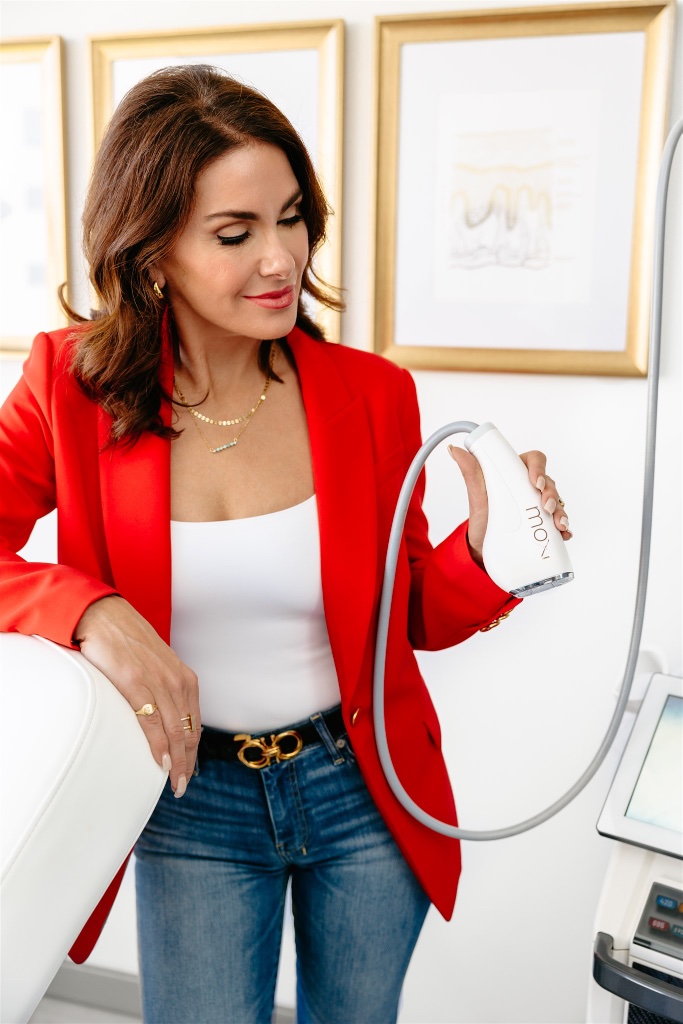
"When I sit across from a patient asking about Ultherapy versus XERF, I am not thinking about which device to recommend first. I am thinking about what is actually happening in their tissue — how much laxity exists, where it primarily lives, and what their expectations are. That's the only honest starting point."
— Amy Robbins, Founder · Youthful Magnolia
Amy approaches non-surgical tightening with the same clinical rigor she brings to all treatment planning — grounded in anatomy, honest about outcomes, and built around each patient's specific tissue reality. She is as likely to recommend against a treatment as to recommend it, because her goal is genuine results, not appointment volume.
Book a ConsultationWho Each Suits
Which patients may be better
suited to each treatment.
Ultherapy may suit
Patients with structural laxity goals
Mild to moderate jowl formation driven by SMAS descent
Visible neck laxity — early banding, loose skin under the chin
Brow heaviness or subtle brow ptosis
Patients seeking foundational structural lift rather than surface skin quality
Patients willing to wait 3–6 months for results
Patients with realistic expectations for gradual improvement
XERF may suit
Patients with skin quality & surface goals
Early skin laxity without significant structural descent
Crepey texture, skin thinning, surface softening concerns
Patients who prefer a series-based approach with gradual cumulative results
Patients for whom treatment comfort is a priority
Post-weight-loss patients with mild skin looseness
Patients wanting overall skin quality and firmness improvements
The combination option: Many patients benefit from both — Ultherapy addressing the foundational SMAS layer while XERF improves the overlying skin quality. This is not always necessary, but when both tissue levels are contributing to the concern picture, a staged or combined approach may deliver more comprehensive improvement. Amy will discuss this clearly at your consultation if it applies to you.
Expectations
What to expect from timing,
results, and longevity.
This is one of the most important — and most frequently mismanaged — parts of the non-surgical tightening conversation. Both Ultherapy and XERF work through collagen stimulation, which means results are biological and gradual. They are not instant. They are not dramatic in the way surgical procedures are. And they are not permanent.
Setting expectations accurately before treatment is not a way of underselling the treatments. It is the foundation of a satisfying outcome. Patients who understand the realistic timeline, scope, and longevity of results consistently report higher satisfaction than those who were given optimistic projections without honest context. For a detailed look at what to expect after XERF — including downtime, aftercare, and results timing — see our dedicated recovery guide.
When results begin
Both treatments begin stimulating collagen immediately after the session, but visible improvement takes time. Most patients notice subtle changes at 4–8 weeks. Results continue to develop through 3–6 months as new collagen matures and tissue remodels.
What improvement looks like
The changes from both treatments are typically described as improved firmness, subtle lift, and better skin quality — not dramatic visible transformation. Patients who are appropriate candidates notice real, meaningful improvement. Those expecting surgical-level correction from non-surgical treatments are set up for disappointment.
How long results last
Results from Ultherapy typically last 12–18 months. XERF results vary by series completion and skin condition but generally require maintenance every 6–12 months for sustained effect. The aging process continues after treatment, which is why a maintenance mindset is important.
What maintenance looks like
Most patients who see meaningful results from Ultherapy return annually or every 18 months. XERF maintenance is more frequent — often 1–2 sessions per year after the initial series. At Youthful Magnolia, we build maintenance into the plan from the beginning rather than treating it as an afterthought.
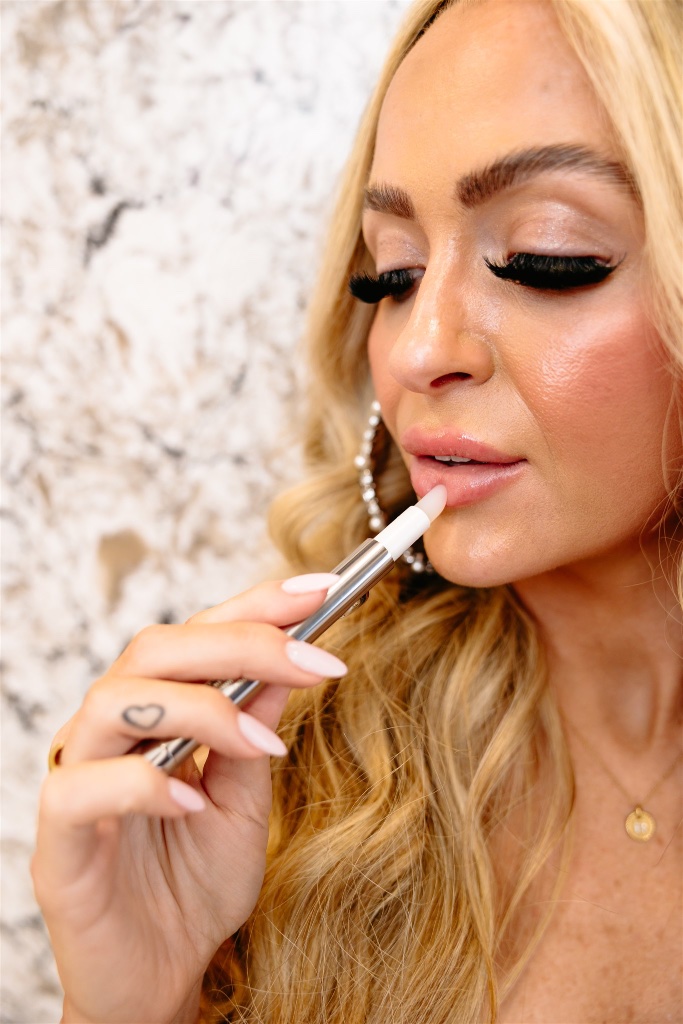
The treatment environment at Youthful Magnolia — where tightening treatments are delivered with precision, clinical knowledge, and genuine honesty about outcomes.
Why Us
Why Fort Worth patients choose
Youthful Magnolia.
Anatomy-First Planning
Every tightening consultation at Youthful Magnolia begins with an assessment of tissue anatomy — not a device recommendation. The right tool follows the right diagnosis.
Honest About Limitations
Amy will tell you directly if your degree of laxity is better served by surgical consultation. Over-treating patients with inadequate tools is not something we practice.
Founder-Led Care
Every Ultherapy and XERF consultation is led personally by Amy Robbins. Patients benefit from her clinical depth, nuanced judgment, and genuine investment in long-term outcomes.
Realistic Expectations
We set expectations accurately from the start — including timeline, scope of improvement, and what maintenance looks like. Patients who are well-informed are consistently more satisfied.
Long-Term Maintenance Mindset
Tightening treatment planning at Youthful Magnolia includes a discussion of how results are maintained over time — not just what happens in the first session.
Integrated Treatment Approach
Ultherapy and XERF are often part of a broader facial strategy at Youthful Magnolia — coordinated with injectables, laser treatments, and regenerative options for more complete outcomes.
Common Questions
Ultherapy vs XERF —
answered honestly.
What is the main difference between Ultherapy and XERF?
Which treatment is better for jowls?
Which is better for neck tightening — Ultherapy or XERF?
Does Ultherapy hurt?
How long until I see results from Ultherapy or XERF?
How long do Ultherapy results last?
Can I do Ultherapy and XERF together?
Who is NOT a good candidate for Ultherapy or XERF?
How many treatments of XERF do I need?
Where can I get Ultherapy or XERF in Fort Worth?
Related Treatments
Continue Reading
Best Treatment for Jowls Without Surgery in Fort Worth
A strategic overview of non-surgical options for jowl laxity — and why the planning conversation matters more than the device.
Best Non-Surgical Neck Tightening Options in Fort Worth
An honest guide to neck tightening without surgery — what works, what does not, and how to set realistic expectations.
Face Tightening vs Skin Resurfacing in Fort Worth
What actually changes what — and why patients confuse texture and laxity.
How Much Does XERF Cost? Pricing & What to Expect
A transparent guide to XERF pricing — what affects cost, how treatment area and planning influence investment, and what to ask before comparing prices.
XERF Downtime & Recovery: What to Expect After Treatment
A realistic guide to XERF healing, downtime expectations, aftercare, and how to plan your treatment around real life.